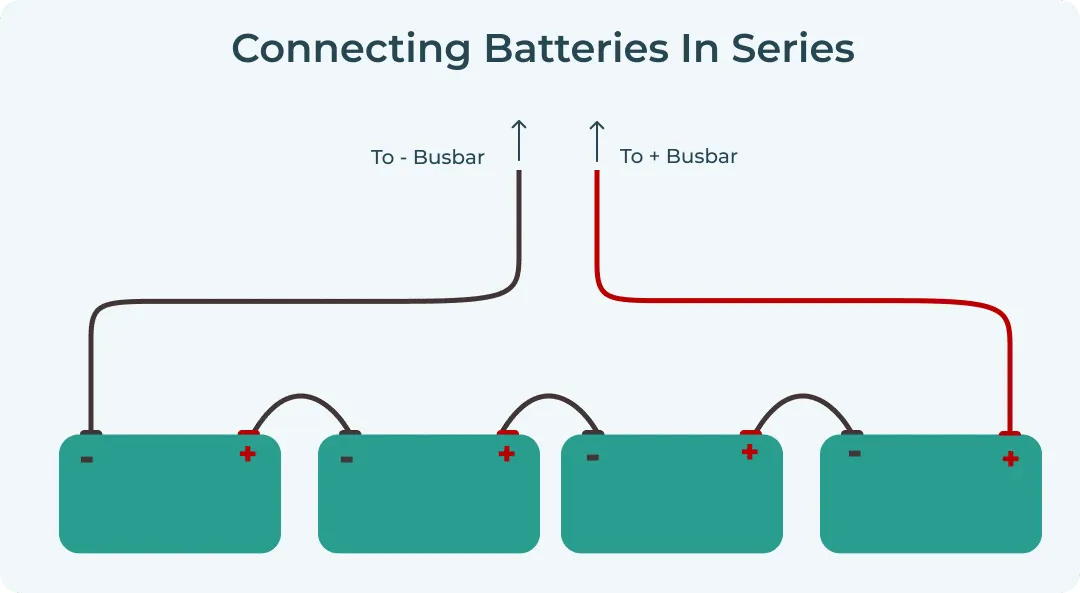
Series or parallel battery connections
Should I Wire My Campervan Leisure Batteries in Series or Parallel?
Should I wire my campervan leisure batteries in series or parallel? That, my friends, is the question. There comes the point in every van conversion where we must tackle these problems. They’re complex and confusing. Today, we’ll discuss the following:
- What do series and parallel mean?
- What is the difference between series and parallel for your campervan electrical system?
- Pros and cons of series and parallel?
- How to connect campervan leisure batteries in series?
- How to connect campervan leisure batteries in parallel?
Series? Parallel? What Does This Mean?
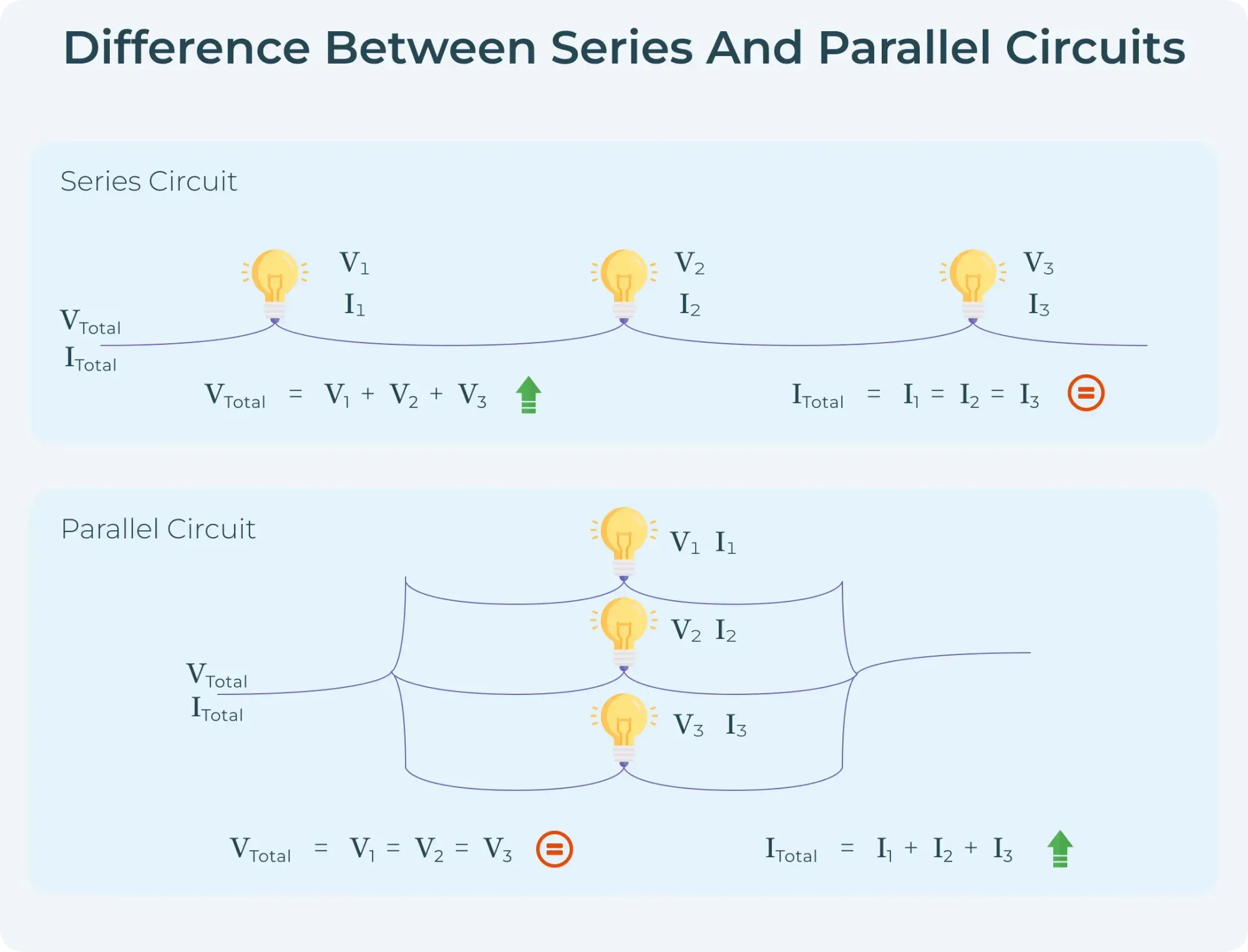
First off, we have to understand what series and parallel mean. Wiring in series means that components are connected end-to-end, providing only one path for the current to flow. For example, imagine water flowing through a pipe. In a series circuit, the water flows from the main pipe through your boiler to the kitchen tap.
A parallel circuit is the opposite - there is more than one path for the current to flow. Connect electrical cables to branches in the circuit to create a parallel circuit. In this scenario, your water pipe splits into 2, allowing the water to flow freely to the boiler and the kitchen tap. In the same way, the water flow must split between the two branches, and so must the electrical current in a parallel circuit.
Series Vs Parallel - Current
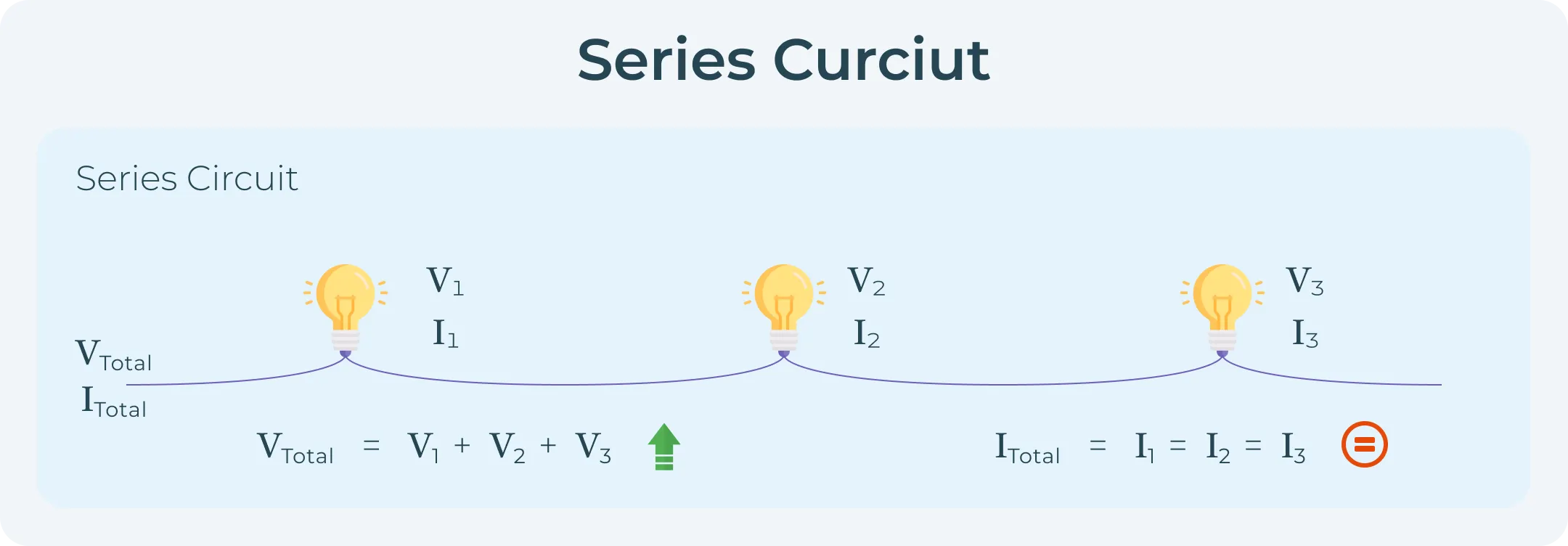
Regardless of whether your circuit is series or parallel, the same total energy and power will be available from your batteries. How it is connected will determine the voltage and current at various points in the system. As in water pipes, the current in a series circuit will be the same at all points in the circuit. In parallel, however, the current will be equal to the sum of the current through each branch.
Series Vs Parallel - Voltage
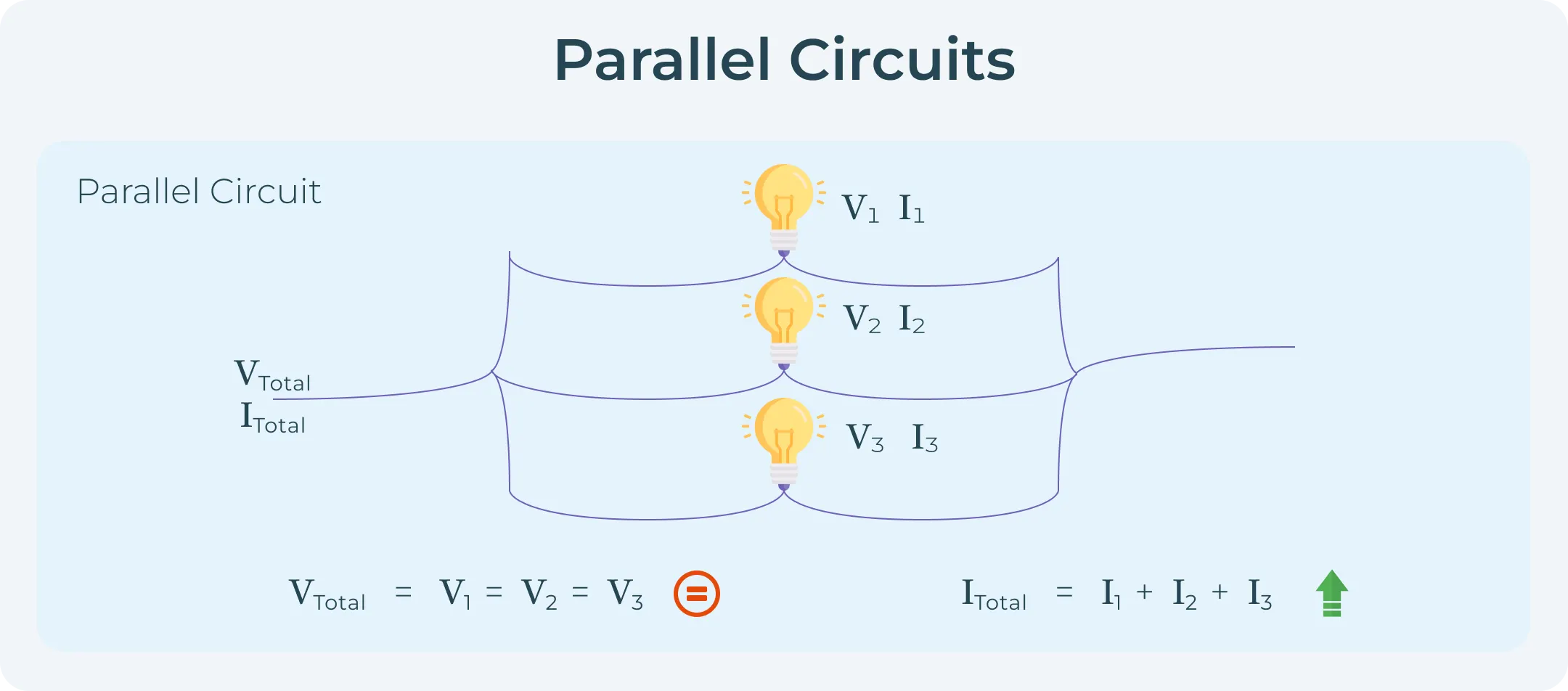
Voltage, on the hand, is the opposite. In parallel, the voltage is the same across all branches of the circuit whereas in series, the total voltage is the sum of the voltage across each component. It may seem like we’re getting into the nitty gritty here, but this is the important part for deciding how your batteries (and solar panels - but more on that later) will be wired.
Series VS Parallel - In A Nutshell
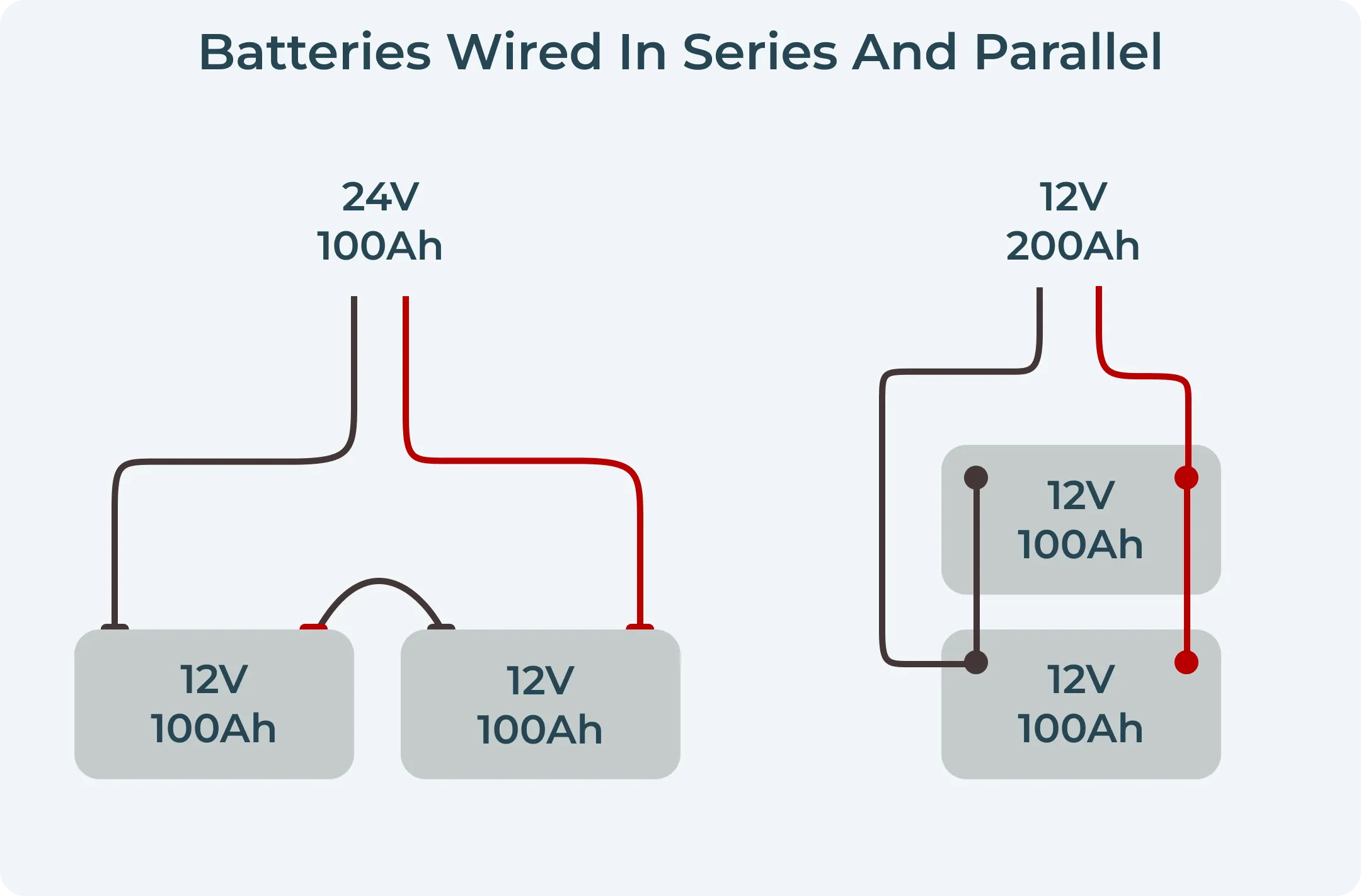
In a nutshell - batteries wired in series will increase the voltage of the system while the current stays the same as if there were only one battery. Batteries wired in parallel will result in an increased maximum current flow and capacity but the voltage will be the same as if there were only one battery.
What Does This Mean for My Campervan Electrical System?
Let’s assume for now that you’re using two 12V batteries. If they’re wired in series, your circuit will be 24V but the maximum current you can draw will be more limited. If wired in parallel, your circuit will be 12V but you’ll be able to draw a higher maximum current. When it comes to buying your appliances to use inside your van (like your USB chargers, lights, heater, etc.) they’ll be specific to one voltage. This means that lights designed to work on a 12V system will not work if you wire your multiple 12V batteries in series. This is the same reason we can’t use household electrical products in your campervan, they have been designed to be used with 230V. So the real issue behind how your batteries are wired is what voltage you want your system to be.
So What’s Better - Series or Parallel?
For the vast majority of van owners, you will want a 12V system powering your appliances. Most roof fans, van lights and USB chargers are available for a 12V circuit and this will dictate connecting your batteries in parallel. Connecting your batteries in series is useful if you’re trying to create a 24V system. This is a good option if you’re creating a large electrical system to go gas-free in your van - induction hobs and electric heaters are very power-hungry and a 24V system can be used to support this.
Wiring in Series - Advantages
As a rule of thumb, any appliances which pull less than 3000W can be run off a 12V system with no major difficulties. If you are planning on running any appliances which draw more than 3000W, you may want to consider a 24V system.
Wiring in Series - Disadvantages
Wiring your batteries in series to achieve a higher voltage also comes with other complications. If a fault develops in one of your batteries and is significant enough to break the circuit, you will have no power at all. If wired in parallel, your batteries offer redundancy, meaning they can each power your system on their own if needed.
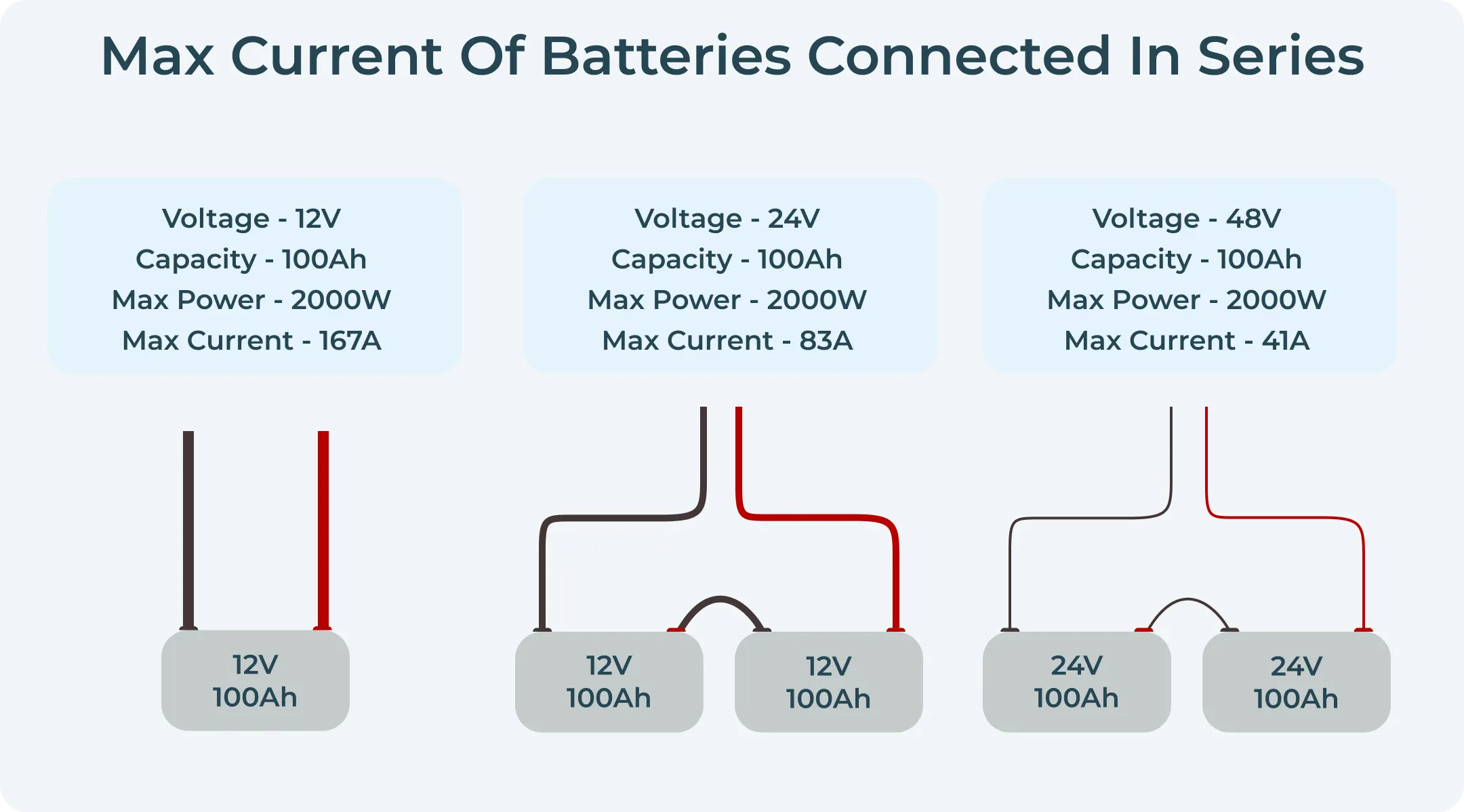
If you’re using a system voltage higher than 12V, any appliances you want to use that are designed for use at 12V (like most roof fans, fridges, lights, USB chargers, etc.) will need a step-down converter. Additionally, charging a 24V (or higher) battery array will require at least the same voltage input to charge the batteries. This means how your solar panels are wired and the battery-to-battery charger you’ve chosen are suitable to deliver a high enough charging voltage.
Vunked Recommends…
In general, wiring 12V batteries in parallel offers the optimal solution for most van converters. 12V appliances are relatively easy to come by and conductor sizes won’t be too onerous for most applications. However, there are a few niche conversions that may require wiring in series to achieve 24V or even higher. This usually applies to van lifers who want to go gas-free by installing an induction hob and electric heating. If you think this applies to you, we’d recommend getting in touch with our team before you make any concrete decisions or start placing orders - there’s a lot to be considered here and we can help you dive deeper into this subject.
It is also possible that if you’re converting a double-decker bus or something larger than just your average van, then your starter battery might already be 24V. Therefore, it would make sense to keep the rest of your system at 24V.
How to Wire Batteries in Parallel
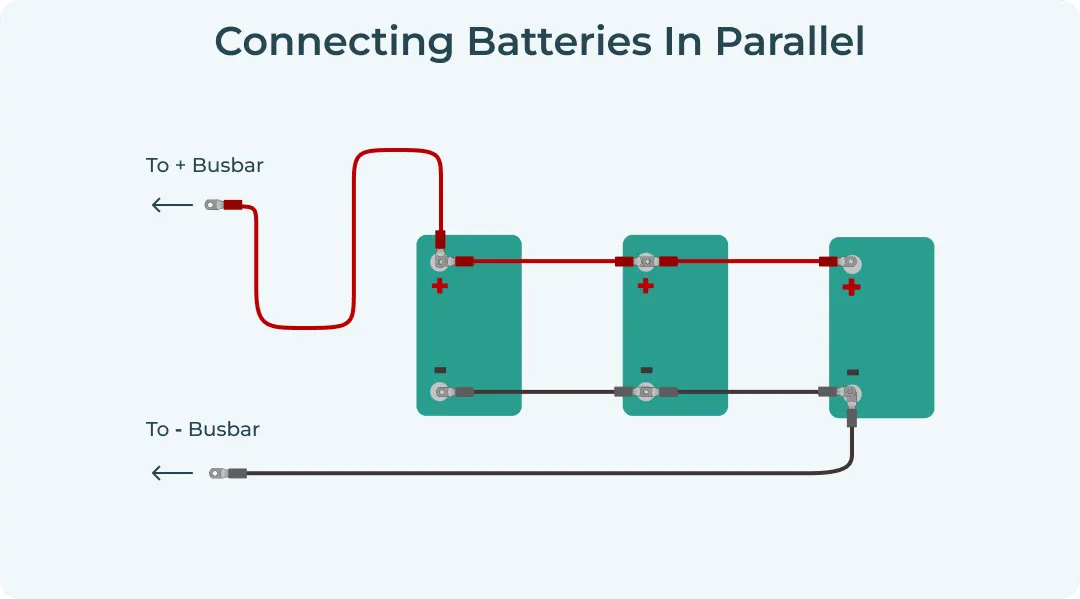
To wire your batteries in parallel, you will need to connect the positive terminal of one battery to the positive terminal of all other batteries in your array, and vice versa for the negative terminals. This is shown for a simple 2- and 3-battery array in the diagrams below. This is fairly straightforward to do but it’s worth making sure that the connections to the positive and negative busbars are made from the opposite ends of the battery array and the cables between your battery array and busbars are the same length. This will ensure your batteries are loaded equally as opposed to constantly draining one of your batteries before the others.
How to Wire in Batteries in Series
Wiring in series is rarely the way to go, but if you believe this is the approach that’s best for what you are looking to get from your van conversion then please get in touch with one of our team and we’ll be happy to help design a system that meets your needs. You’ll have to think about balancing your total battery capacity and required system voltage with the battery technology and how many batteries will make up your array. Wiring in series is generally done with 12V batteries to produce a 24V or 48V array (using 2 or 4 batteries respectively).