
Van Conversion
By Ross Deacon18 min read
Heating a campervan is an essential part of living a comfortable van life no matter where and when you decide to explore. But, with so many different options available (each with its own crowd of staunch fans) it can be difficult to work out which is actually right for your unique build.
There are also new types of heaters now entering the market, potentially shaking up the status quo and coming for the crown held by conventional diesel heaters. But are they actually any good?
In this comprehensive guide, we'll cover every type of campervan heater. We'll break down how they work, how much they cost, and which is best for every kind of adventure.
The importance of proper heating in a campervan
Whether it's weekend getaways or full-time van life, maintaining a comfortable temperature inside your van is a foundational part of how much you'll enjoy the experience, especially if you want to keep the campervan warm for winter camping and overnight use.
Without the right level of heating, sleeping during winter can be nigh on unbearable, and even dangerous in the coldest climates through the night. However, the importance of proper heating stretches beyond personal comfort and helps you stay warm.
Heating also plays a key role in preventing condensation. Moisture accumulates when the warm air inside your van meets cold surfaces like metal panelling or windows, where heat loss increases as cold air hits the glass and heat can escape through windows, worn seals, and doors. If this happens too often due to insufficient heating and proper insulation it can lead to mould, rust, and even structural damage.
You'll also need to protect your water systems during winter if you've got an onboard plumbing system for taps and showers. When the water in pipes and tanks freezes it expands, leading to burst pipes and potentially expensive repairs.
How a campervan heating system works
Heating your campervan effectively works in two parts. First, you'll need to generate warmth from an energy source, such as diesel, propane, wood, or electricity. Then that warmth needs to be evenly distributed throughout the van.
Since campervans need to spend time off-grid and be self-sufficient, campervan heating is just one of several heating options, and modern systems are designed to be as compact and efficient as possible. As we'll explore there are plenty of different types available, but the difference is that not all of them spread the heat throughout your van in the same way.
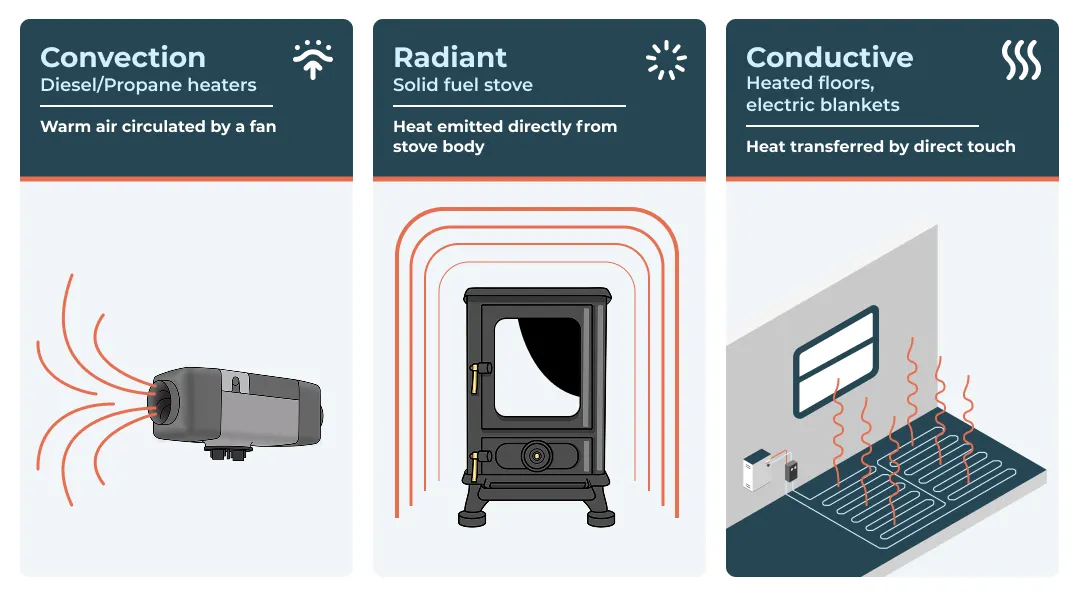
For example, diesel heaters warm your van up through convection, generating initial hot air through combustion and then using a fan to circulate it around your interior.
Wood stoves on the other hand use radiant heating, where heat is emitted directly from a surface (the body of the stove) and heats the surrounding objects and people directly (like the radiators in your house).
There's also conductive heating, where you are warmed up by directly touching the heat source, such as with heated floors or electric blankets.
We'll give you a thorough rundown of each technology available in the next section, but what kind to buy is only half the story. You'll also need to ensure the heater of your choice can put out enough heat to effectively warm up the size of your interior space.
When shopping around, look for what's called a BTU rating. This stands for British Thermal Unit and is the industry standard way of measuring heat energy.
In unsurprising fashion for a convoluted imperial measurement unit, one BTU represents the amount of heat energy needed to raise the temperature of a pound of water by one degree Fahrenheit.
Of course, this means absolutely nothing for campervan heating purposes, so all you really need to know is the more BTUs, the more heating power a particular heater produces, though a suitable output also depends on how well your van retains the heat generated inside.
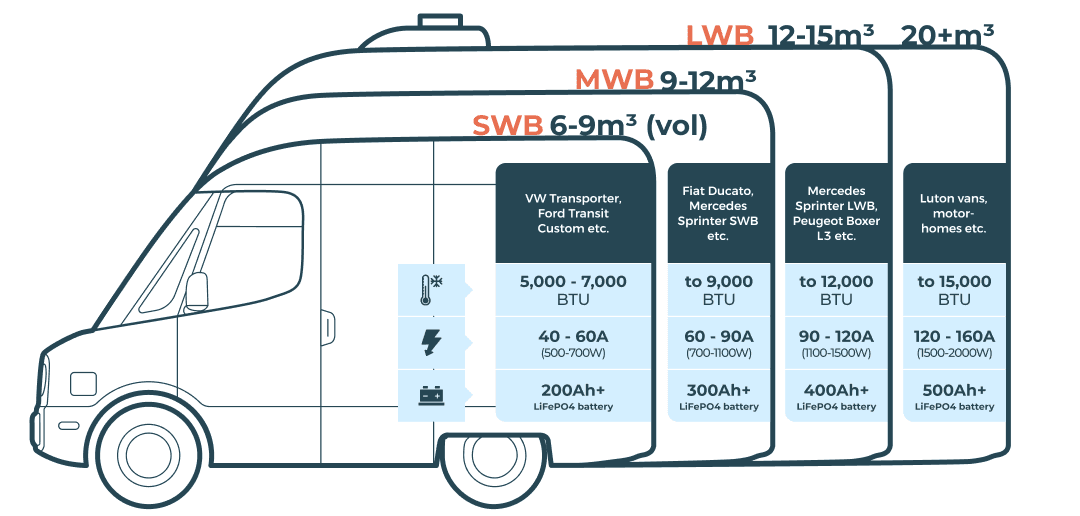
How many BTUs does a campervan need?
You'll see this question asked a lot, and as with most things, it depends. As a general guide:
- Small campervans. Vans like the VW Transporter, Transit Connect, and Nissan NV200 normally require about 2,500 to 5,000 BTUs in mild to cold weather.
- Large campervans. Models like the Mercedes Sprinter, Ford Transit, or Citroen relay can need more like 5,000 to 9,000 BTUs to stay toasty.
- Extra large campervans. Specialised vehicles and big motorhomes may need 10,000 to 20,000 BTUs for consistent heating, especially in very cold conditions.
However, it's important to remember that this also depends massively on the quality of your insulation. A van with excellent campervan insulation can require significantly fewer BTUs than the same van with air leaks and insulation gaps throughout, and good sealing reduces heat loss.
Similarly, climate also plays a huge part, because the outside temperature directly affects how hard your heater has to work. Even a small van might need over 7,000 BTUs in extreme cold weather, while a bigger van travelling in temperate spring could get away with 5,000 BTUs and some extra blankets.
You might also see heaters measured in kWh (sometimes abbreviated to kW) this offers more context as it shows how much heat energy can be produced over a given time period, in this case, an hour.
If you need to do the kW to BTU conversion, you can multiply a BTU measurement by 0.000293 to convert to kWh. Alternatively, multiply kWh by 3414 to convert to BTU.
To make it easy, you can use our handy kW to BTU calculator below!
< h2>Campervan Heater Energy Converter< /h2>
< p>Easily convert BTU to kWh and vice versa for your campervan heater< /p>
< !-- Options for campervan size and season -->
    < p>Size of Campervan:< /p>
    < button data-size="small" data-tooltip="VW Transporter, Transit Connect">Small< /button>
    < button data-size="large" data-tooltip="Mercedes Sprinter, Ford Transit, Citroen Relay">Large< /button>
    < button data-size="extraLarge" data-tooltip="Specialised vehicles and big motorhomes">Extra Large< /button>
    < p>Season:< /p>
    < button data-season="summer" data-tooltip="UK Summer (avg 18°C)">Summer< /button>
    < button data-season="winter" data-tooltip="UK Winter (avg 5°C)">Winter< /button>
    < label for="btuInput">BTU< /label>
    < input type="number" id="btuInput" placeholder="Enter BTU value">
    < label for="kwhInput">kWh< /label>
    < input type="number" id="kwhInput" placeholder="Enter kWh value">
No matter what measurement unit is used in advertising, nearly all types of heaters will come in varieties with temperature control, so be sure to choose one with a range of output that suits your intended use.
Also, be aware that manufacturer specs can sometimes be optimistic, so give yourself some wiggle room if, in reality, the heater produces about 80% of its stated BTUs.
Types of campervan heaters
Campervan heaters come in all sorts of flavours, and there's really no ‘right' answer.
There are most likely multiple types that would work for your build from a heat-output perspective, so the deciding factors will be things like budget, fuel availability, and space considerations.
Let's start with a quick comparison of the main options.
Heater Type | Pros | Cons |
|---|---|---|
Diesel heaters | Fuel-efficient, work in extreme cold, low electrical draw | Requires proper ventilation, moderate initial cost |
Propane heaters | Clean combustion, readily available fuel, dual-use for cooking | Requires ventilation, potential for gas leaks |
Solid fuel stoves | Off-grid capable, high heat output, cosy ambience | Requires wood storage, needs frequent maintenance, safety if used improperly |
Portable electric heaters | Instant heat, no fuel required, no emissions | High power consumption, unsuitable for off-grid |
Hydronic heaters | Radiant heat, very efficient, silent operation | High cost, complex installation |
Heat pumps | Energy-efficient, provides heating and cooling | Moderate cost, less effective in extreme cold, high power consumption |
Diesel heaters
Diesel heaters are probably the most popular choice on the market today and with good reason. They're efficient, fuel is easy to come by, and they use minimal electricity.
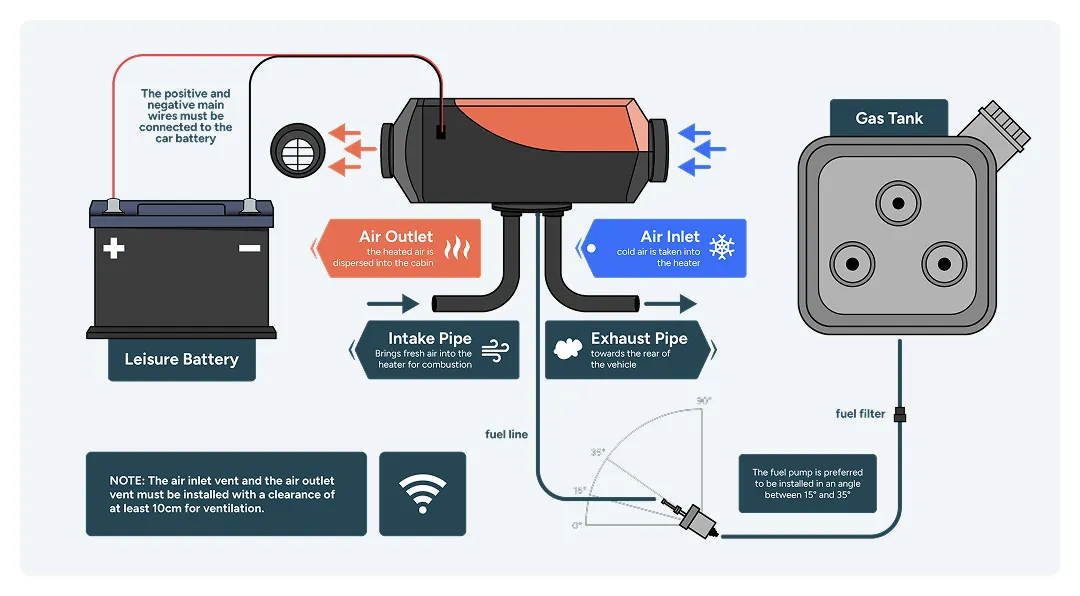
Diesel heaters for a van warm up air by internal combustion, like an engine, and then circulate it via some sort of fan system, either through ducts or directly into the surrounding air.
To do this they need a steady trickle of diesel, an intake of air for combustion to the burner, and a small amount of electricity for ignition.
They can produce excellent levels of heat, are usually pretty quiet bar a low hum, and work particularly well in extreme cold compared to other options. In terms of noise, many manufacturers sell sound deadening or silencing kits to make them even quieter, but even without these, a high-quality unit is unlikely to be overly disruptive.
Fuel-wise, 2kW diesel heaters often use around 200-300ml of diesel per hour, so fuel consumption is generally low. If your van runs on diesel as most do you can also feed this from the main fuel tank, eliminating the need for separate storage, which makes it practical on a long trip because refill points are easy to find, much like stopping at a petrol station for a quick top-up.
Be aware that this consumption figure will vary based on power setting, ambient temperature, and even altitude. In terms of electrical draw, on low settings expect around 10-15 watts an hour, or 30 - 35 on maximum output for larger diesel heaters.
Diesel heaters can be mounted in a variety of places including under seats and in storage compartments, as long as they have an exhaust vent to extract exhaust gases to the outside.
Cost-wise, premium brands like Webasto offer fantastic heaters with budget kits starting at around £800 and premium options running up to well over £1300.
A diesel model can also be a sensible upgrade if you're replacing a weaker or older heater.
However, cheaper diesel heaters can still be absolutely fine for a few hundred pounds if you're on a minimal budget.
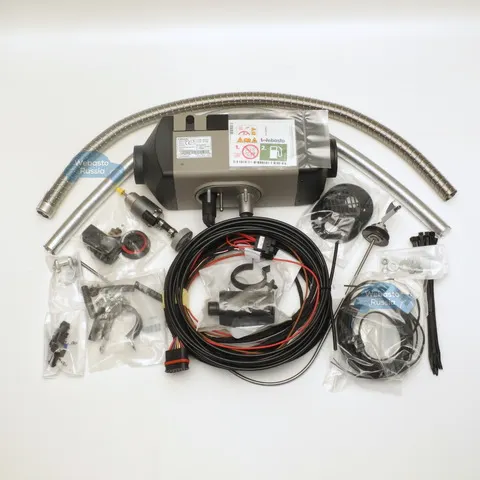
The Webasto Air Top 2000 is a great 2kw all-rounder if you're weighing up the purchase, with kits priced at around £850.
Propane (LPG) heaters
Propane heaters are another fuel-fed option, and a gas heater setup burns compressed propane instead of combusting diesel. This means you'll need separate storage for the propane, sometimes called LPG (Liquid Gas Propane), but it's usually quieter than diesel options.
This can be helpful to consolidate your fuel sources if you already use propane for other appliances, such as stoves or water heaters, and gas heating is a common campervan choice for that reason. If you plan on going down this route, ensure you can readily access propane when it comes time to refill as while it's common, it's not always as readily available as diesel.
Propane heaters still use electricity to power fans that circulate the hot air like a diesel heater. However, they tend to draw less electricity since they just need a small amount of power for initial ignition as opposed to constantly drawing glow plugs that a diesel heater uses.
Propane heaters come in both vented and unvented options. We would recommend vented options which expel combustion gas outside the vehicle since they eliminate C02 build-up and are the safer and more suitable option for most vans. Non-vented options aren't unusable, just ensure you have adequate ventilation and invest in a C02 monitor to be safe. Be aware that non-vented options also release more moisture into the air.
Premium brands include Propex who make extremely safe and high-performing propane heaters.
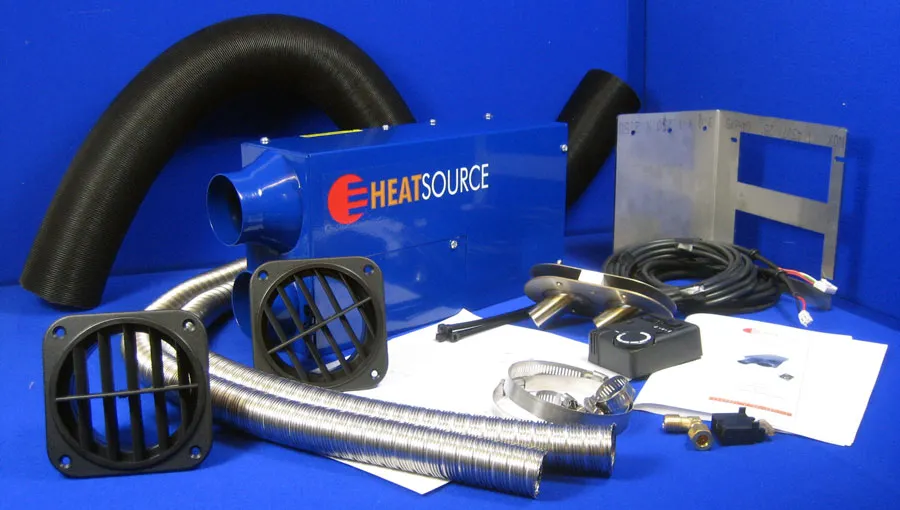
The Propex HS2000 kicks out a toasty 2.8kW.
At the budget end of the spectrum you'll find cost-effective unvented options such as the Mr Heater Buddy which are tried and tested by plenty of users in the community. Just be sure you have adequate ventilation.
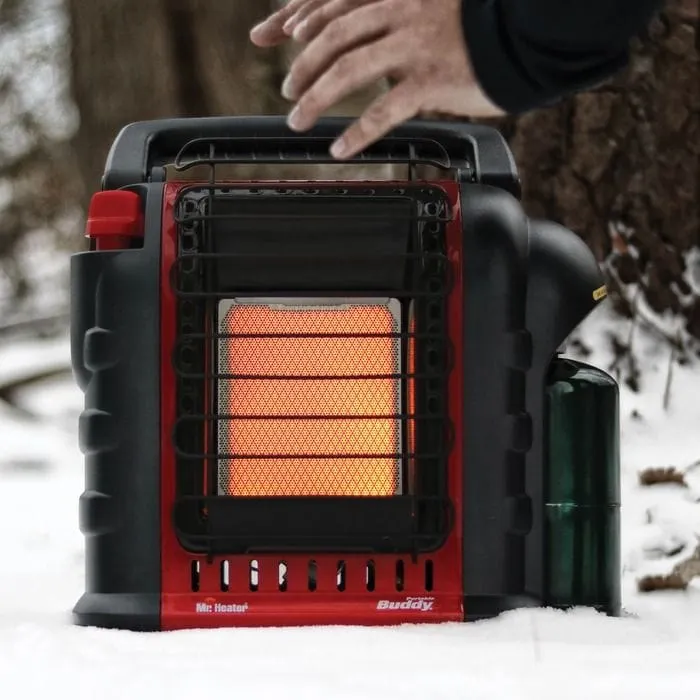
The Mr Heater Portable Buddy or ‘Mr Buddy' as it's colloquially known can be grabbed for as little as £100.
Combination heaters
You can get combination variants of both diesel and propane/LPG heaters which integrate heating and hot water systems. This allows you to have hot showers when needed as well as keeping your van at the right temperature.
Manufacturers like Truma Combi provide these sorts of systems, but be aware they are considerably more expensive than dedicated heating solutions and the installation can be significantly more complex.
However, for those living in their van full time who need heating and hot water in one system, a combination unit makes sense as a compact and efficient option.
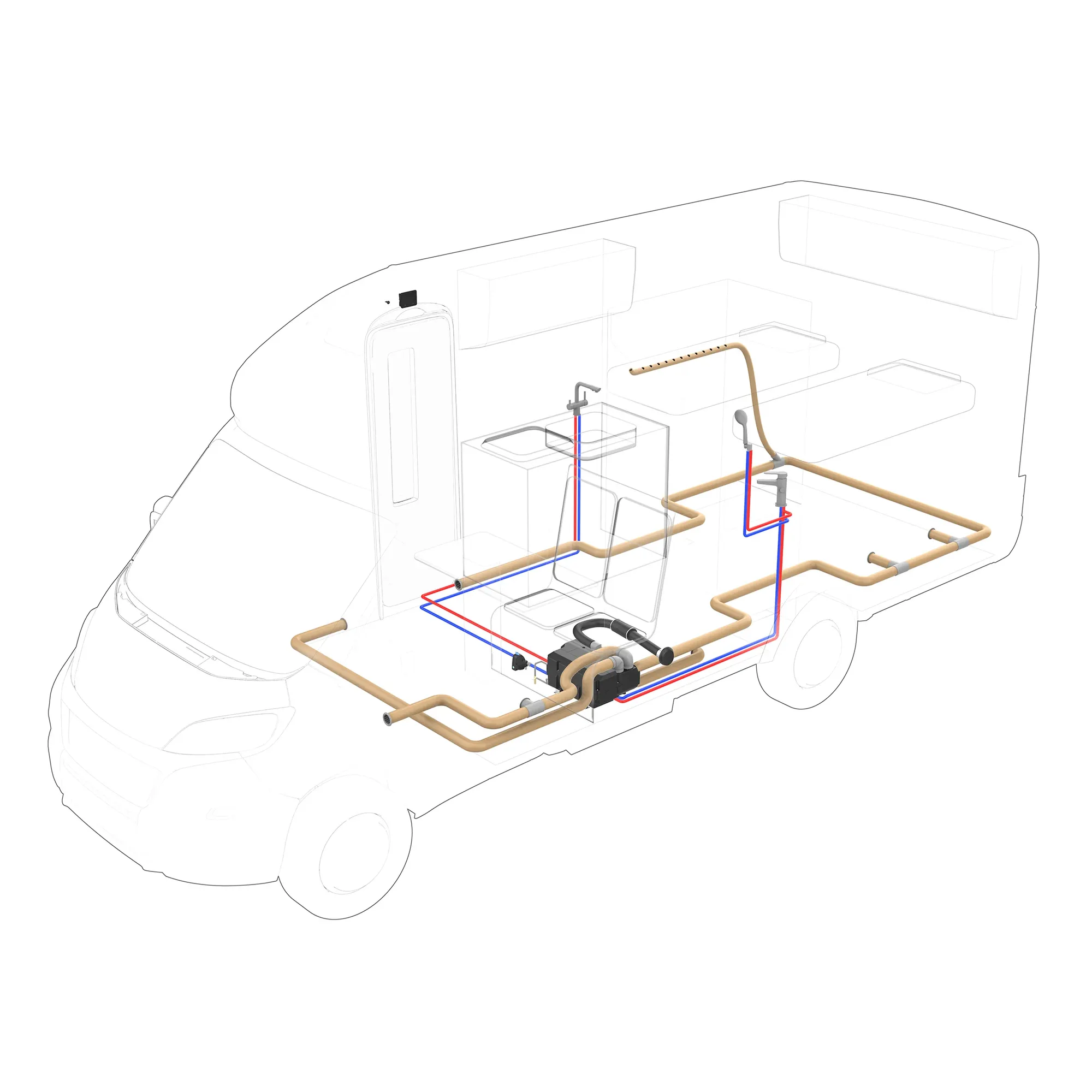
Modern combination systems like Truma Combi can provide hot water as well as reliable propane heating.
Solid fuel heaters
The cosy sustainable choice, solid fuel heaters like wood-burning stoves or pellet heaters are among the best options for off-grid users who want simple fuel independence, requiring easily sourced fuel and a lighter to get going.
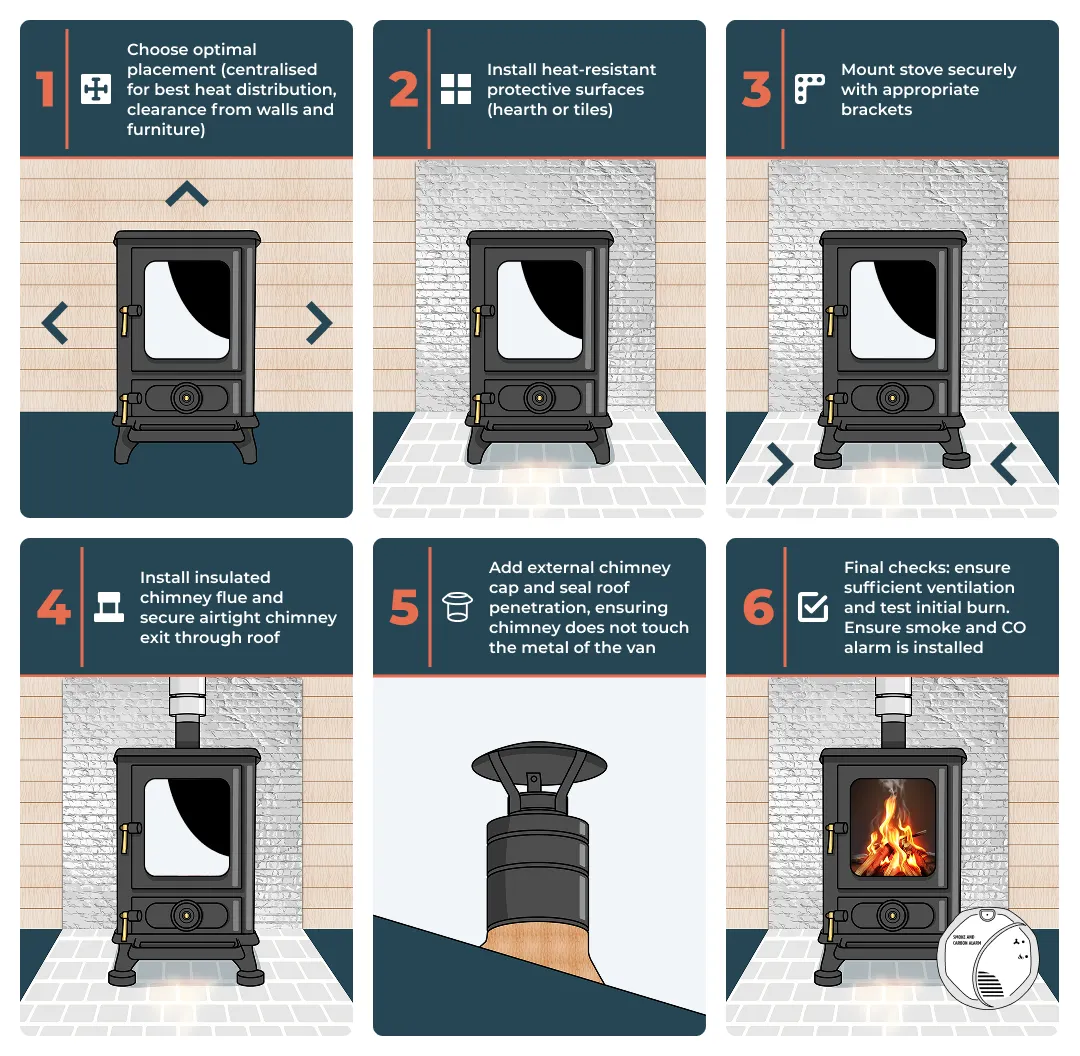
As well as their inherent ambience, solid fuel heaters can provide high heat output through radiant heating, and fuel is generally cheap, easy to source, and sustainable.
You'll generally find that since they don't require electricity, they're also incredibly off-grid friendly. The main challenge really comes down to fuel storage and manual intervention, since you'll need to physically add wood from a dedicated storage place around the van.
Wood-burning stoves also need to be placed a bit more strategically in your camper to ensure they heat the space evenly since they don't fan hot air around like a diesel or propane heater.
Finally, it's important to ensure that you have plenty of ventilation and an air-tight chimney system to keep the smoke produced from burning down to a minimum.
Even with these measures in place, the small amount of smoke produced will be visible from the outside, so keep this in mind when trying to stealth camp.
You'll find brands like Cubic Mini and Dickenson Marine both offer great wood burners for lower prices than many of the premium liquid and gas-fueled options, and budget options can be had for very little money.
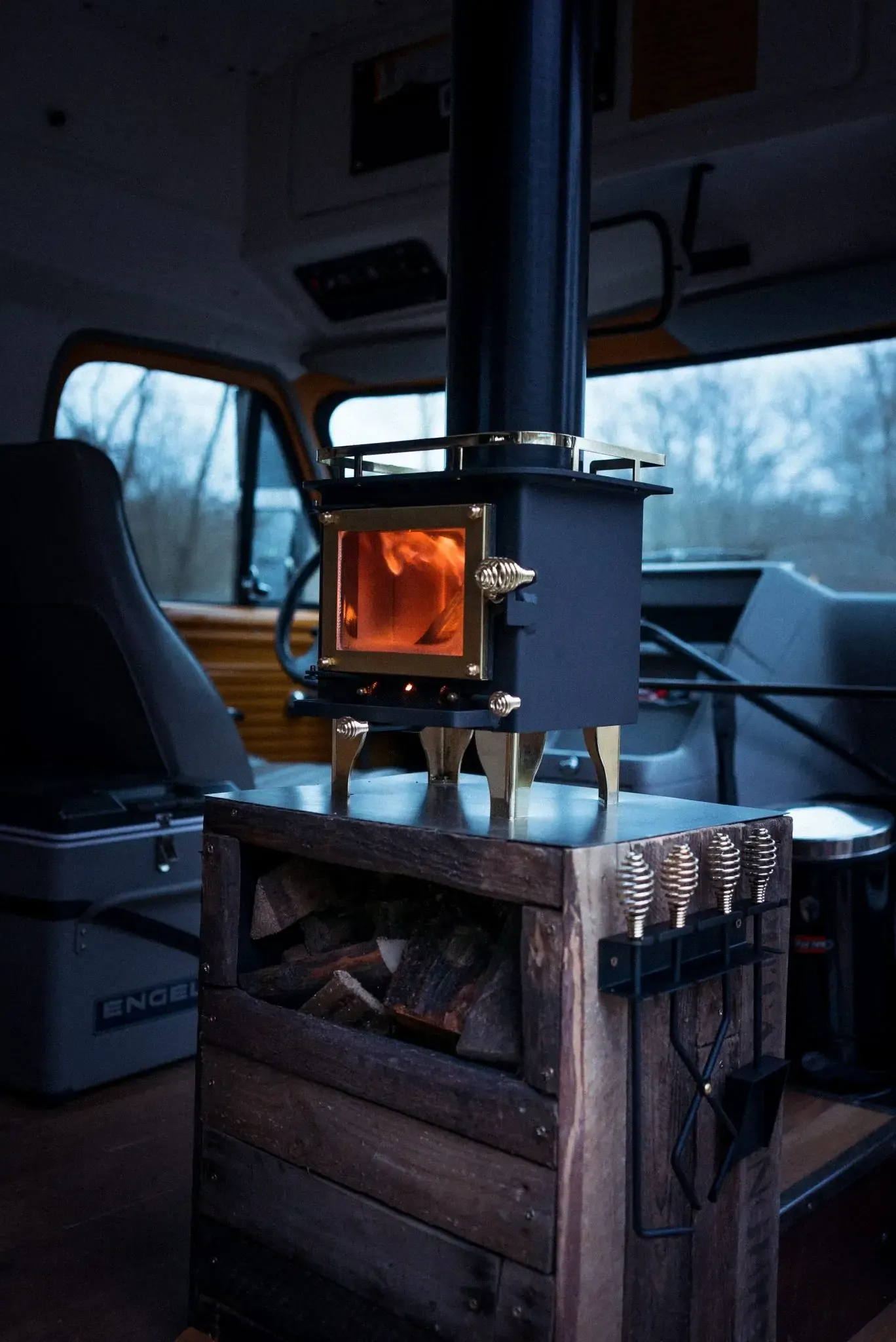
Cubic Mini offer great solid-fuel heaters that balance practicality with aesthetics.
Electric heaters
Electric heaters, like the ones you simply plug into a wall at home, offer an extremely affordable way to produce some serious BTUs of heat. They're also clean, using no fuel and creating no fumes or gasses that need expelling through vents and exhaust ports.
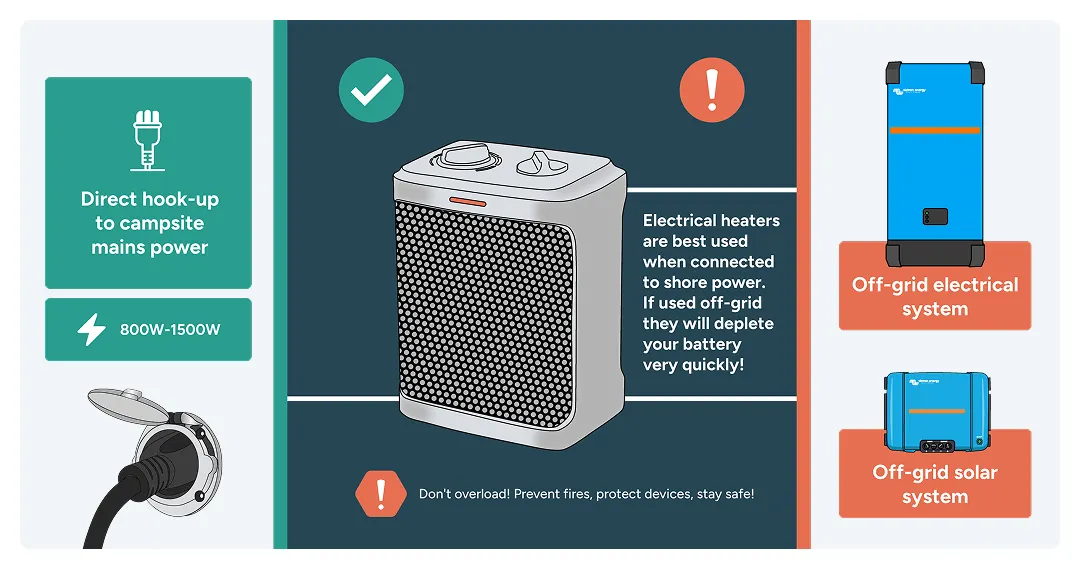
However, electric heaters draw a massive amount of power. In a house, this isn't the end of the world, but in a camper running from a 12v leisure battery bank, the draw is simply unsustainable.
If you're going to be connected to mains hook-up at campsites, electric heaters have a clear advantage, but for those going off-grid, an electric simply draws too much power to be optimal, even with large battery banks and solar set-ups.
If these drawbacks don't apply to your intended use, then options include ceramic space heaters, oil-filled radiator types, and infrared panel variants.
You can also use some of the smaller options as a supplementary heat source to your main heater in a pinch. Just make sure the power draw isn't going to leave your batteries dead; one of the benefits is instant heat without combustion fumes.
Hydronic heaters
Now we're getting fancy… Hydronic heaters like the Alde system burn widely available fuel like propane, but instead of fans to circulate hot air they use an efficient water-based heat exchange system.
Propane is burned in a small amount of electricity to ignite, and then heated glycol runs through pipes and radiators around the van to provide even heating throughout.
This also means the system can be bolstered by plumbing in additional add-ons such as underfloor heating by running pipes through the floor connected to the same system.
Not only does this offer a consistent and even distribution of warmth throughout the campervan, but it can also produce on-demand hot water.
Hydronic systems aren't nearly as power-hungry as simple plug-in electric heaters, instead specifically designed to work with modern 12v leisure battery banks without draining them excessively.
Some hydronic heating systems can even be integrated with a heat exchanger around the engine to allow waste heat from the vehicle's engine to heat the liquid in the system while driving.
As with conventional diesel or propane heaters, there are no fans. This means this all happens silently. Plus since the propane burning is fully contained hydronic heaters tend not to make the air more humid.
So, the all-singing-all-dancing future of clean campervan heating? Sort of. Hydronic heaters represent a genuine jump forward in off-grid heating technology, but as both a relatively new and complex solution, the cost is accordingly high.
Installation is also much more involved, requiring a network of tubing, a circulating pump, and separate expansion tanks to manage pressure. That means that on top of the initial upfront costs you might also need to pay for professional installation.
They do also require a modern electrical set-up to run, so are aimed at more premium builds with modern lithium-ion battery banks and solar set-ups. If your van has these and you simply want the most convenient set-up possible regardless of cost, give Hydronic options a serious look.
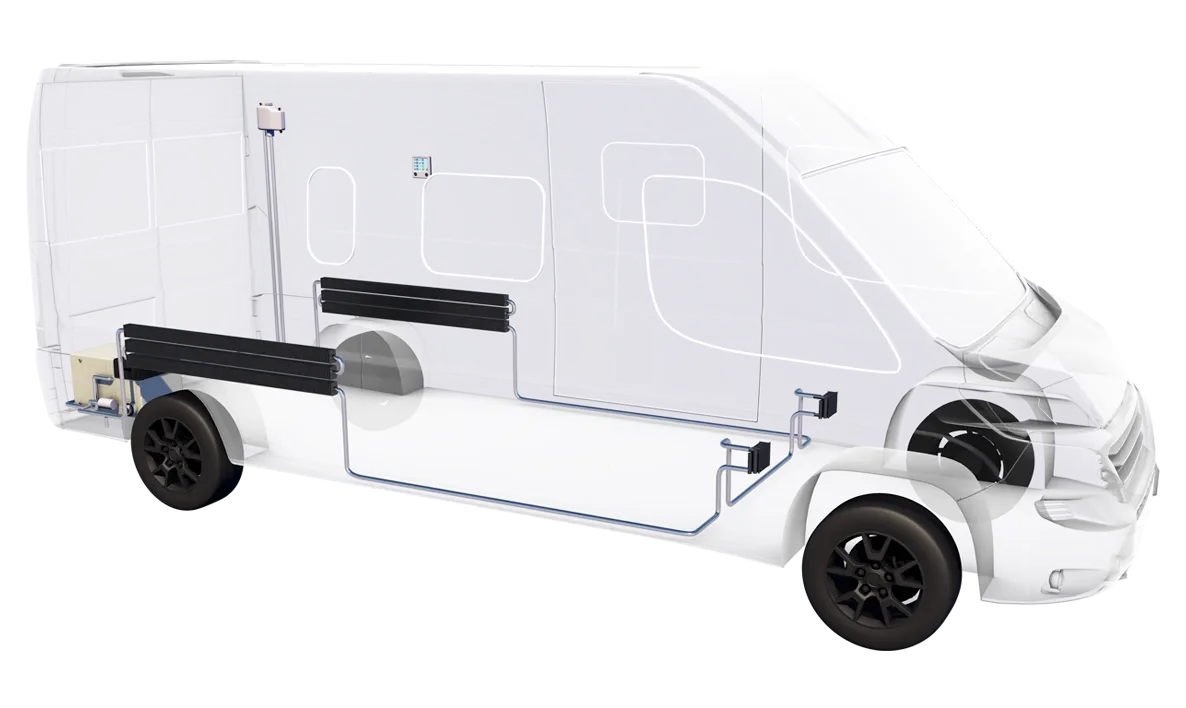
The Alde Hydronic System pumps heated liquid around the van for efficient heating with optional add-ons.
Heat pumps
Heat pumps have gained massive popularity within construction over recent years due to being an extremely energy-efficient way to electrically provide heating and cooling in one compact unit.
In camper vans, this is still very much an unestablished technology, though consistent development has seen some commercially available units designed specifically for campervans and the marine sector.
These systems use a refrigeration cycle to transfer even small amounts of outside heat from the outside air into the van. They can provide cool air through the same base system, meaning they function like a 12v air conditioner in cooling mode as well as a heat source.
However, since heat pumps simply move heat rather than traditionally generate it, they do come with limitations.
While this process is very efficient, if outside temperatures become extremely cold their effectiveness can diminish. In freezing temperatures, this effect worsens, meaning you would need secondary heat sources to keep things comfortable. Some high-end models offer built-in heating elements to counteract this, but these will draw more power.
Speaking of power, despite being efficient heat pumps do still need electricity, and they definitely use much more than a diesel or propane heater. For example, the Pioneer RV heat pump claims to offer a whopping 9000 BTU of heating, but it does draw 810W.
This means that although a large van could be effectively heated and the draw is less than a conventional plug-in heater, you would still need a modern battery bank and solar set-up if using the heat pump off-grid.
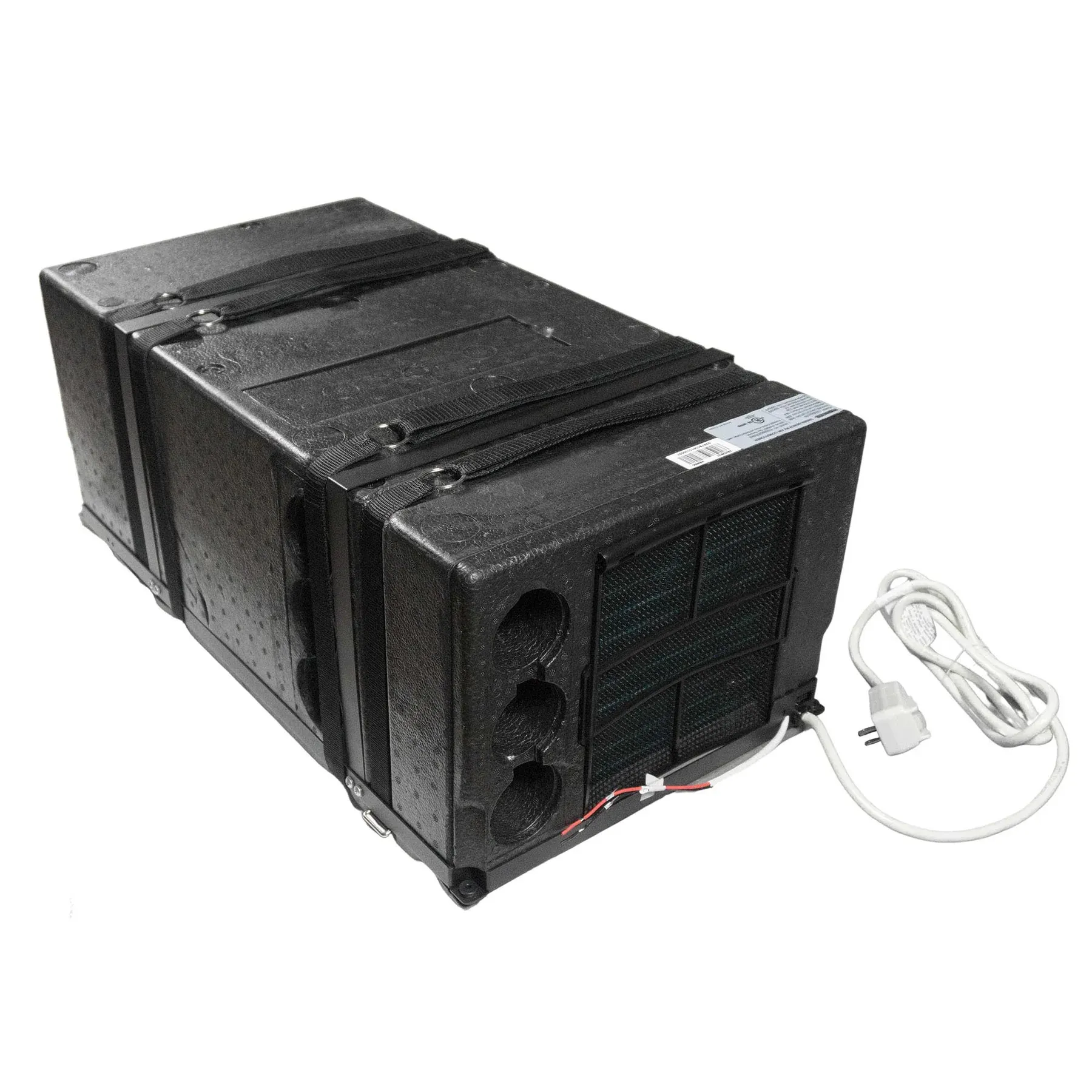
However, if you do have these and are planning to exclusively travel in mild climates, then a heat pump may be worth a look -especially since you're getting built-in AC functionality for convenient heating or cooling in one unit. They're also extremely quiet compared to diesel heaters and propane options.
We have to mention that in terms of camper van heat pumps, the technology is fairly new. That means you won't find as many resources or successful use examples as more established tech. Installation can also be very involved.
Overall, unless you're dedicated to experimentation it's probably best to stick to more conventional methods. However, if you want a fuel-free exclusively electric solution that is actually workable off-grid, then heat pumps might be worth a look.
While not as expensive as hydronic systems, they're still likely to be more expensive than proven diesel or solid fuel options. However, if you already have a good solar set-up then they're free to run and may eventually pay for themselves.
Just don't head into the Arctic without a plan B.
Which campervan heater should you choose?
So, lots of different technologies, each with very unique pros and cons, but which is actually right for you? That's going to depend entirely on how you travel, whether that's short trips or longer use, and the sort of campervan you have.
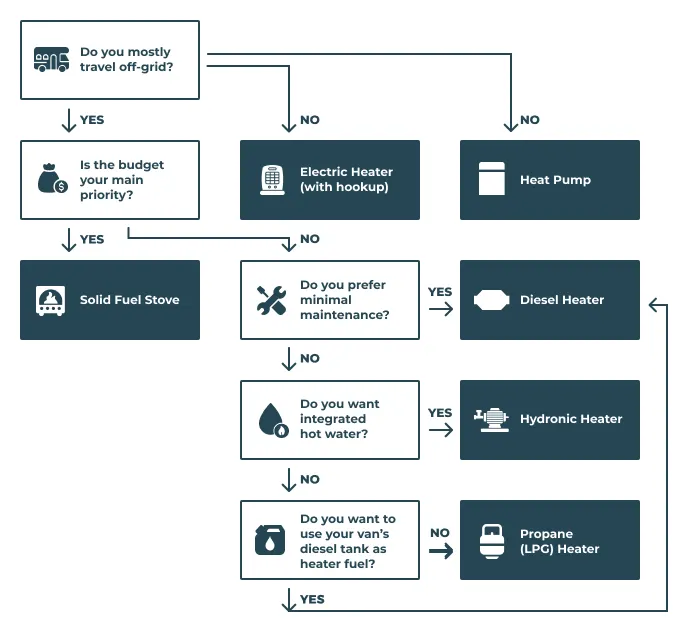
For 90% of people looking for a cost-effective way to keep their van warm in any climate, a diesel heater is probably the best way to go. They're easy to operate, reliable, and proven, so you'll find tonnes of resources online around specific models and installation tips.
They do produce some minor emissions, so those concerned with going fully green might want an all-electric or solid-fuel alternative, but in general diesel heaters are market leaders for a reason.
The heat they produce is instant, dry, and incredibly safe when properly installed.
If your van runs on diesel, even better. Simply plumb into the main fuel tank and you'll have great heating for relatively little effort since they sip next to nothing compared to an engine. They're also one of the best options for people who want to stay warm reliably.
Propane and LPG are also great for many of the same reasons; the main difference versus diesel is refuelling and fuel storage logistics, so make sure you can refill easily enough where you plan on travelling and be cautious for gas leaks during installation.
If you're planning on running hot water down the line but don't want to invest just yet, going with a propane or LPG heater is also a good way to lay the right infrastructure for these additions later as you can run them from the same tank.
For those who want a super simple rustic solution, don't ignore solid fuel campervan heaters. Just be aware that they do require a bit more effort to maintain and clean out, and you're likely to have some cold spots around the van as hot air isn't being fanned around.
If you can live with this and don't mind storing logs or pellets, you'll be rewarded with reliable, fuss-free heating that can also add some amazing ambience. Solid fuel can also be extremely cost-effective.
Save the electric heaters for exclusively on-camp excursions where you have access to shore power, and don't ignore heat pumps if you have a strong existing electrical system and want clean completely electric heating while retaining the ability to venture off-grid.
Finally, for the best solution that money can buy and integrated water heating, look into hydronic combination systems. Just be aware that you're probably also looking at expensive professional installation in addition to the upfront cost due to their complexity.
Apart from solid-fuel options, it's important to remember you'll need a solid electrical system to run any of these heaters, so it’s worth understanding the basics of campervan electrics before you commit to a setup.
If you're still stuck on that front, check out Vunked's electrical system builder. Put a complete kit together online in minutes and we'll send you the whole works ready to install. All instructions, all wiring diagrams, and every component big or small.
Budget and fuel
The up-front costs of a heating system can fluctuate massively depending on the type you're looking at.
Diesel air heaters tend to come in at around £500 to £1,500, while propane heaters can be slightly cheaper at £400 and £1,200. For solid fuel stoves, you can be looking at anywhere as little as £300 to £1,000 for premium options.
You'll also need to add a few hundred pounds for things like chimneys, vents, and other supporting items when weighing up the initial costs of all of these fuel-burning options.
Hydronic heaters can easily exceed £3,000 when factoring in professional install plus extra bells and whistles like underfloor heating.
Heat pumps are a bit more DIY friendly and come in cheaper at around £1,300, but you'll still need to factor in supporting materials like ducting and vents.
In addition to upfront costs, it's also important to remember running costs. Diesel heaters typically use about 0.2 to 0.4 litres per hour, though fuel consumption varies with heater size and how hard you run it, leading to a real-world cost of around £2 - £4 per day.
Propane heaters equate to a similar price range, though refilling LPG tanks can vary in cost depending on where you're based. Hydronic heaters are also similar in their running costs here since they also use LPG/propane.
As well as cost, consider the availability of the fuel you want to run and storage realities. Solid fuel stoves will require you to set up a dry area for log storage, while propane might be tougher to find than diesel in some destinations. The right fuel setup also depends on what equipment you already carry.
All electric options like electric heaters or heat pumps are hassle and cost-free from a fuel standpoint, but the energy needs to come from somewhere. Be aware of power restrictions at campsites and the capacity of your leisure battery system if heading off-grid.
Remember, your heating is only as effective as your insulation set-up allows it to be, so spending on good insulation is often just as important as the heater itself if you want to reduce heat loss.
You can also compliment your primary heating system with low-cost solutions like 12V electric blankets or bolster insulation with thick floor rugs, thermal curtains, and reflective window covers to make the most of the heat available.
Keep your van warm, cosy, and powered with thermal curtains
Choosing the right heating system will depend entirely on your needs, budget, and travel style.
The popular options are popular for a reason, and a diesel heater is probably your best bet. That said, there's no need to follow the crowd if you want to go with high-tech options like Hydronic systems or experiment with heat pumps.
Apart from solid-fuel stoves, the one thing that unites these options is they all need a solid electrical infrastructure to work properly, starting with a safe, well-planned 12V wiring layout.
Getting this right is one of the most complex parts of building a van, and many DIY heroes get lost reading endless threads, searching for wiring diagrams, and ordering endless individual electrical parts from 10 different suppliers, which is where a free campervan electrical consultation can really help.
That's why we created Vunked. Our handy online electrical system builder lets you put together a cohesive electrical system based on simple things, like what appliances you actually want to run and what you intend to do with your van, and you can dive deeper into the best campervan electrical systems for different lifestyles if you’re still deciding what you need.
Alternatively, you can check out our pre-designed full electrical system kits, with everything from budget weekend set-ups to kits designed for full-blown off-grid digital nomads, including options with correctly wired campervan inverters ready to go.
Whichever route you choose, we send your complete set-up in kit form ready to install out-of-the-box. You'll receive everything but the kitchen sink, including wiring diagrams, install instructions, and each tiny bit and piece needed to self-install in one go, and you can cross-reference it against a DIY campervan electrics checklist to make sure nothing’s missed!
FAQs
Are diesel campervan heaters noisy?
Diesel heaters do produce some noise, especially when they first fire up. However, it's not normally an issue, and high-end manufacturers are designed to run very quietly. Some users have the heater switched off at night if noise is a concern, while others use noise reduction kits, such as mufflers and insulated mounting, to help deaden any remaining operating sound.
Are campervan diesel heaters safe?
When they're installed correctly, the job must be done properly, with the unit safely vented and sealed where required, diesel heaters are extremely safe. Proper ventilation ensures the exhaust fumes produced are completely expelled outside the van, and you can also install carbon monoxide detectors for even more peace of mind if you're not confident doing the job yourself, professional installation is worth considering.