
From the dreary routine of washing dishes to the absolute bliss of a boiling hot shower after a long hike, having warm water in your campervan is a game-changer for hygiene and livability —especially if you're looking to join the full-time UK vanlife revolution.
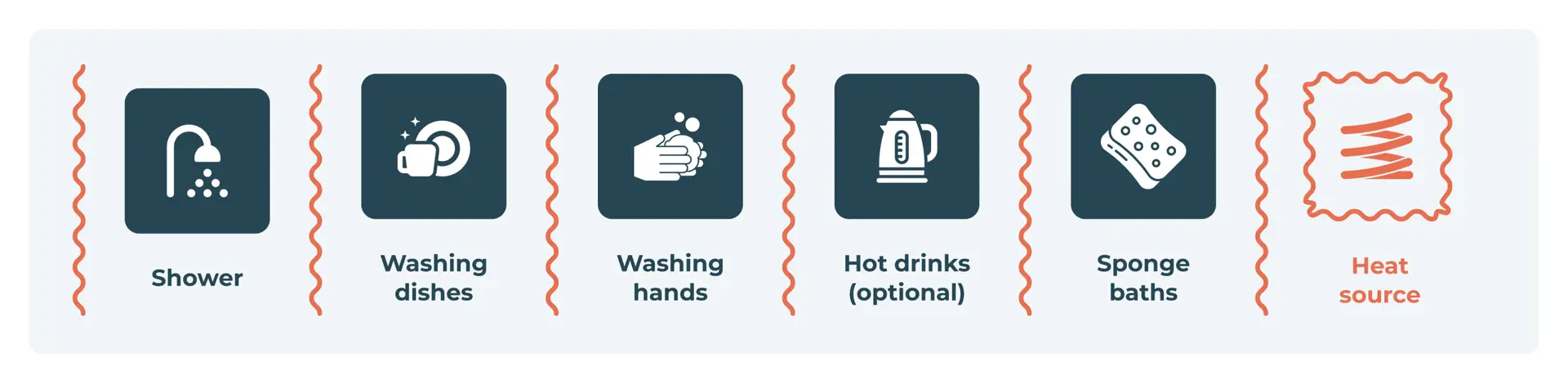
However, heating water on the road is a lot more complex than in your house. Energy use can be high, space is limited, and you'll need a system which is compatible with the way you want to travel.
In this guide, we'll take a comprehensive look at every technology available and discuss which is right for you. We'll cover tank vs tankless systems, electric vs combustion-based, and compare traditional technologies to emerging solutions like hydronic.
Then, we'll round things out and discuss which is right for you based on your budget and the sort of adventures you want to go on!
What to know when choosing a campervan water heater
Which type of system is right for you will depend on your unique use case, the power fuel demands which align with it, and whether you want storage or on-demand water.
Power and fuel demands
The best hot water solution for weekend getaways will differ greatly from the best option for long week-plus adventures. Where you stay will also play a role, dictating whether you'll have access to shore power or will need to rely on leisure batteries for electricity.
In general, there are three ways to heat water in a campervan. This is using fuel, electricity, or waste engine heat.
With fuel-powered water heaters, controlled combustion is used to heat up water, burning fuel and creating waste gasses that need to be extracted from the van through a small exhaust.
This works just like a gas boiler in your house and is one of the most common approaches as the fuel, usually propane, is both easy and cheap to buy, as well as long-lasting and simple to store aboard your campervan.
Other fuel types such as diesel are also available, and these work in much the same way, sipping a small amount of fuel to provide the heating you need.
Electrical options on the other hand leverage electrical resistance to heat up a body of water, similar to a large-scale version of how your kettle works. While this is convenient in theory, power draw becomes a factor when venturing off-grid.
Whereas a fuel-powered water heater will use a small amount of electricity for things like control panels and initial spark, electrical water heaters usually draw between 700W and 1500W, with some even needing up to 2000W.
While these can be run from a 12V leisure battery system in theory, you would need a powerful inverter like the 3000W Multiplus inverter/charger found in our Overland Explorer electrical kit and modern lithium batteries. Even in these cases, the draw is generally far too much power to be viable when travelling off-grid.
For example, even a large 200Ah battery can be drained in a couple of hours, and if you're relying on solar in the UK this can leave you unable to power other devices.
As we'll cover, there are newer electronic options, and these can be suitable for use off-grid, however, you can expect to pay more for emerging technologies and this needs to be factored in.
The final method is by tapping into the high amount of heat already present in your engine's coolant system. These technologies plumb into your van's coolant system, circulating water around the engine to heat it up while driving and then storing that hot water for use later.
For trips where you'll be driving frequently between stops, these can be excellent but can leave you without hot water for long stints of stationary use.
We'll cover each technology in depth shortly, but deciding which type of water heater is right for you will largely depend on how your planned use interacts with these fuel needs.
Decide early how you'll use your campervan, and if you aren't 100% sure yet, go for a more flexible solution that will be appropriate for multiple use cases.
There are also options which combine multiple technologies into a single package, allowing you greater flexibility by being able to heat water through two different methods.
Storage vs. on-demand
In addition to their fuel source(s), water heating systems can also be categorised by their approach to water storage.
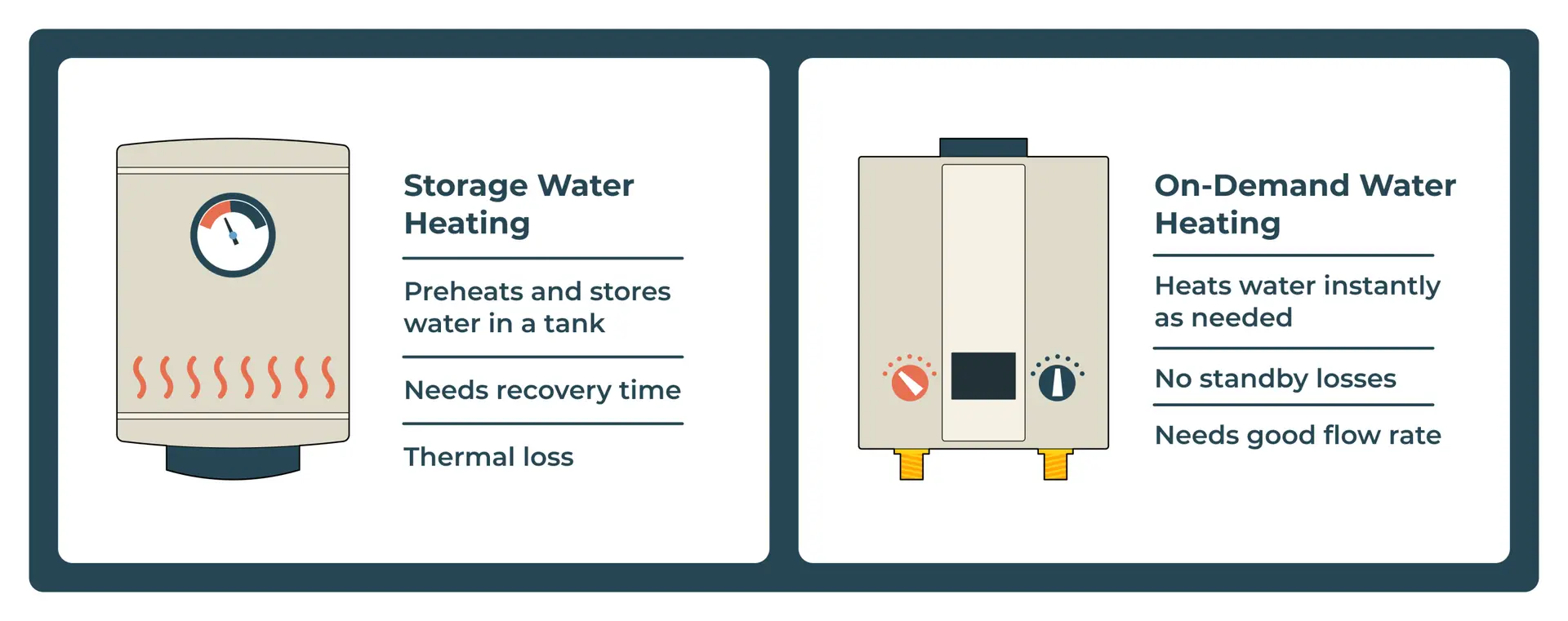
Storage water heaters use an insulated tank which holds a fixed quantity of water, usually between 10L and 30L. When you switch the heater on, the whole tank heats up and the hot water is available once up to temperature.
This can be set early in the day, providing ample time to heat up and a good amount of preheated hot water for things like showering and washing up.
However, once the hot water is used up, there is a recovery period while the tank reheats. This can be anywhere from 15 - 45 minutes depending on the size of the tank and the power of the heater.
Storage systems are also subject to thermal loss, meaning the water you've heated up will gradually cool down if it isn't used promptly, making it necessary to reheat it and use more electricity or fuel. This can be especially apparent when travelling in cold climates or with tanks that aren't properly insulated.
Tankless water heaters work differently, heating water up on the spot as it flows through the unit. You'll sometimes see these called on-demand water heaters, and they're extremely popular.
Due to the need for rapid heating, these units are nearly always LPG or diesel. They're also highly efficient since they don't require any fuel until the moment they're used. When they are turned on, hot water is produced within seconds of turning on the tap and continues as long as fuel, power, and water pressure are available.
However, these systems do need a decent pump to run since they're sensitive to changes in flow rate and water pressure. They can also be more complex to plumb in as some require a pressurized pump system.
Tankless water heaters also need to be installed a bit more carefully, often mounted externally or in sealed compartments with a dedicated flue system for safe exhaust gas extraction.
Types of campervan water heaters
We've covered the broad strokes, but let's look at the individual systems you'll see on the market today. We'll provide a comprehensive overview of each, along with some example models to give you an idea of what you can expect to pay.
LPG/Propane tankless water heaters
LPG is extremely similar (the same, in some cases) to the mains gas you have in your home. In fact, in many countries where mains gas isn't available, propane bottles are the de facto choice for domestic heating and cooking.
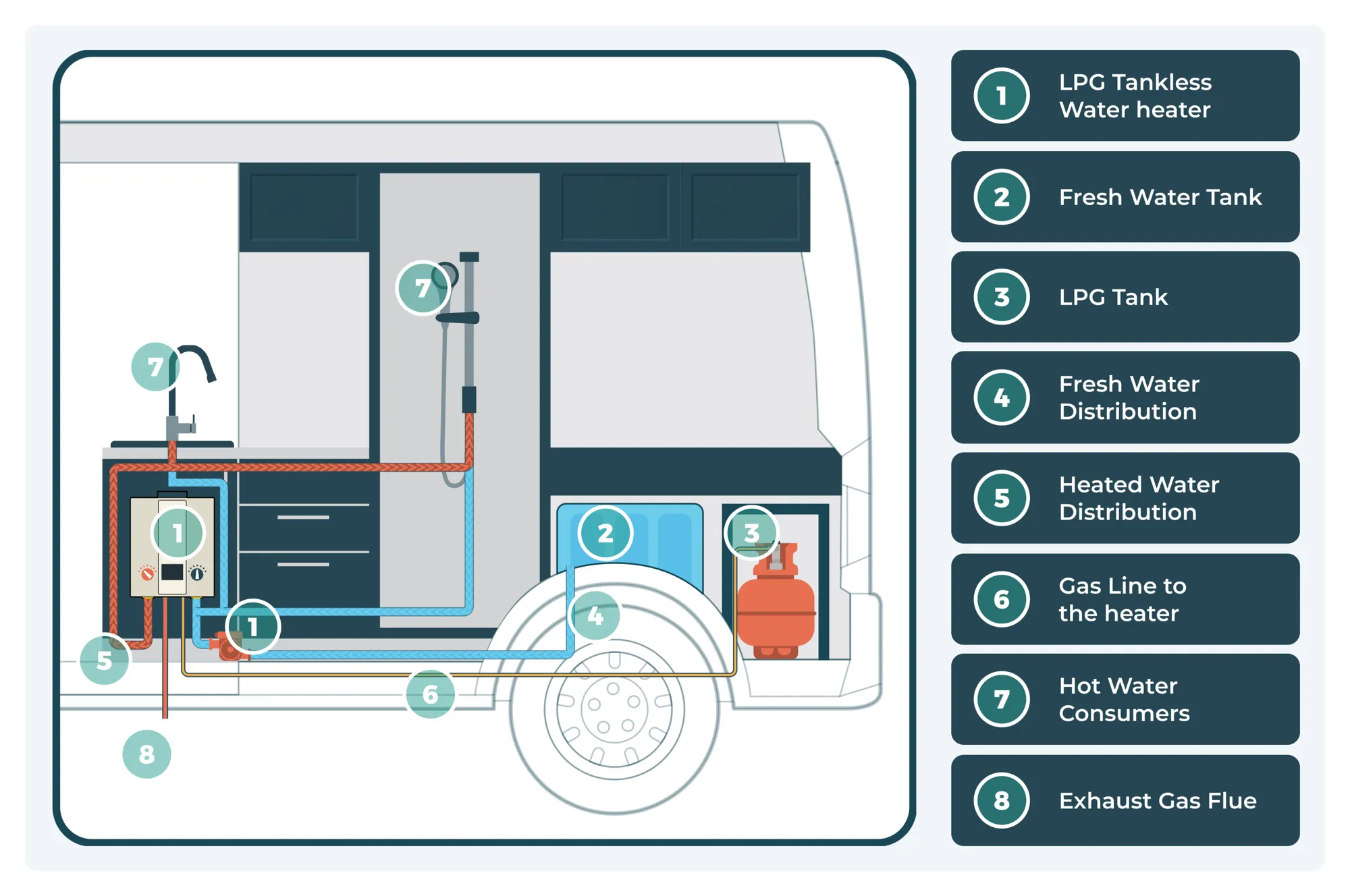
These systems are essentially scaled-down versions of those household propane water heaters, and you'll find the bottles to power them widely available in both the UK and beyond.
Usually, this involves buying a tank and then paying for subsequent refills. Cost-wise, this comes in at around £200 initially for a big 10L tank, with subsequent refills costing about £36 at places like B&Q.
In terms of what that gets you, a 10KG propane tank should be able to heat up enough water for around 20 10-minute showers.
This can be extended by lowering the temperature setting or taking shorter showers, and there's no reason you can't use a bigger 20L propane tank if need be.
This efficiency makes tankless propane heaters one of the most popular options available. There are also no standby losses since they only activate when water is flowing through them.
The result is functionally instant hot water with very low fuel and electrical requirements. This makes them highly efficient in terms of fuel economy and ideally suited to off-grid living.
Installation will differ from model to model, but some will require a high-pressure water pump as tankless water heaters rely on a consistent flow to work, shutting down when dipping below the needed threshold (usually around 1.5 0 2.5 litres per minute.
You'll also need to install a separate water tank, though this can give you more flexibility since you can choose a tank size based on your unique needs as opposed to being stuck with a few pre-determined options with built-in tank systems.
You'll find models designed for both inside the camper and outside. Outside models tend to be cheaper as they don't require the complex flue system of indoor models. Many people fit these inside of doors to be used with a fold-out shower curtain for a simple way to get instant hot water showers outdoors.
The Camplux Outdoor Shower series is popular for this, coming in between £170 - £300 and being tried and tested by many a minimalist vanlifer.
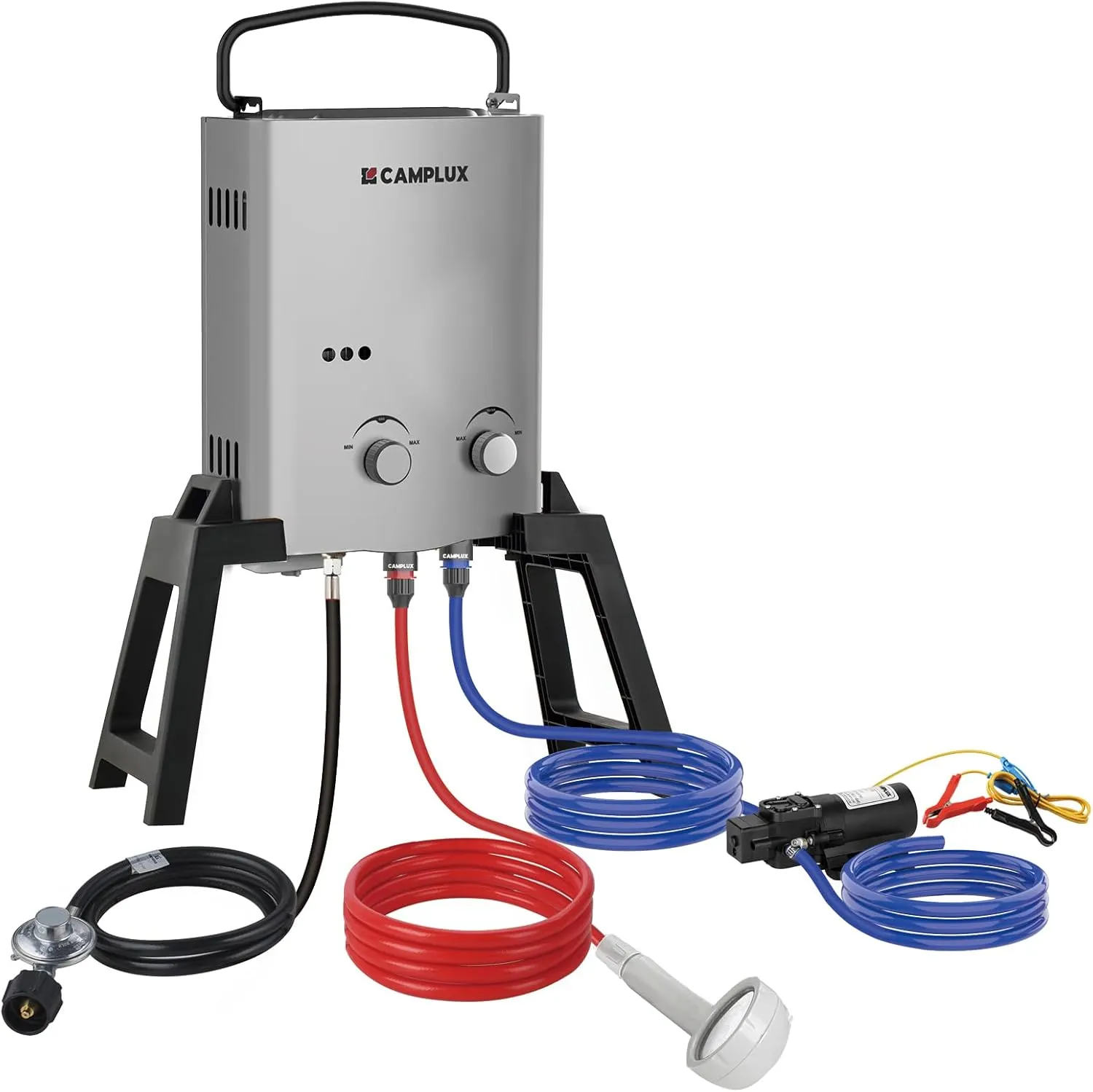
Other models like the Go Shower series from Gaslandchef don’t need a pump and are designed to run from any water source, coming in slightly more expensive at around £350. Some even include a built-in rechargeable battery for both electric and propane power!
For long-term comfort and all-season use, it's probably best to go for an indoor option if you have space for a shower booth inside your van. This can also make the van less conspicuous for stealth-builds.
There are also diesel-powered units that work in much the same way as the LPG/Propane models. However, they're less common and can be a bit more expensive than a propane equivalent.
Where this can be a benefit, however, is it means you can run the water heater from the same fuel tank as your van's engine. Given how little fuel the heaters consume, this offers a convenient and seemingly limitless supply of hot water for however long you plan to venture off-grid.
The same is also true of LPG options if you happen to have a vehicle which has been converted to run on LPG. Overall, tankless systems provide the closest experience to modern household hot water. They just need to be carefully installed for safety.
Unfortunately, tankless options don't tend to come in dual-fuel variants due to the insane amount of electricity they would need to use for such rapid heating. That means if for any reason you didn't have access to propane, there's no backup method to heat your water.
They can also be prone to damage from extremely hard water, needing descaling multiple times a year when frequently used with it.
It's also worth noting that you will probably need air heating for your campervan's interior too. If that's not something you already have covered, then our next option is probably a better pick: combi systems.
Dual-purpose air/water heaters (combi units)
Combi heaters are also massively popular and if you want hot water, this is most likely the best option for you. By integrating both hot water and warm air for the inside of your campervan into a single system they massively reduce complexity.
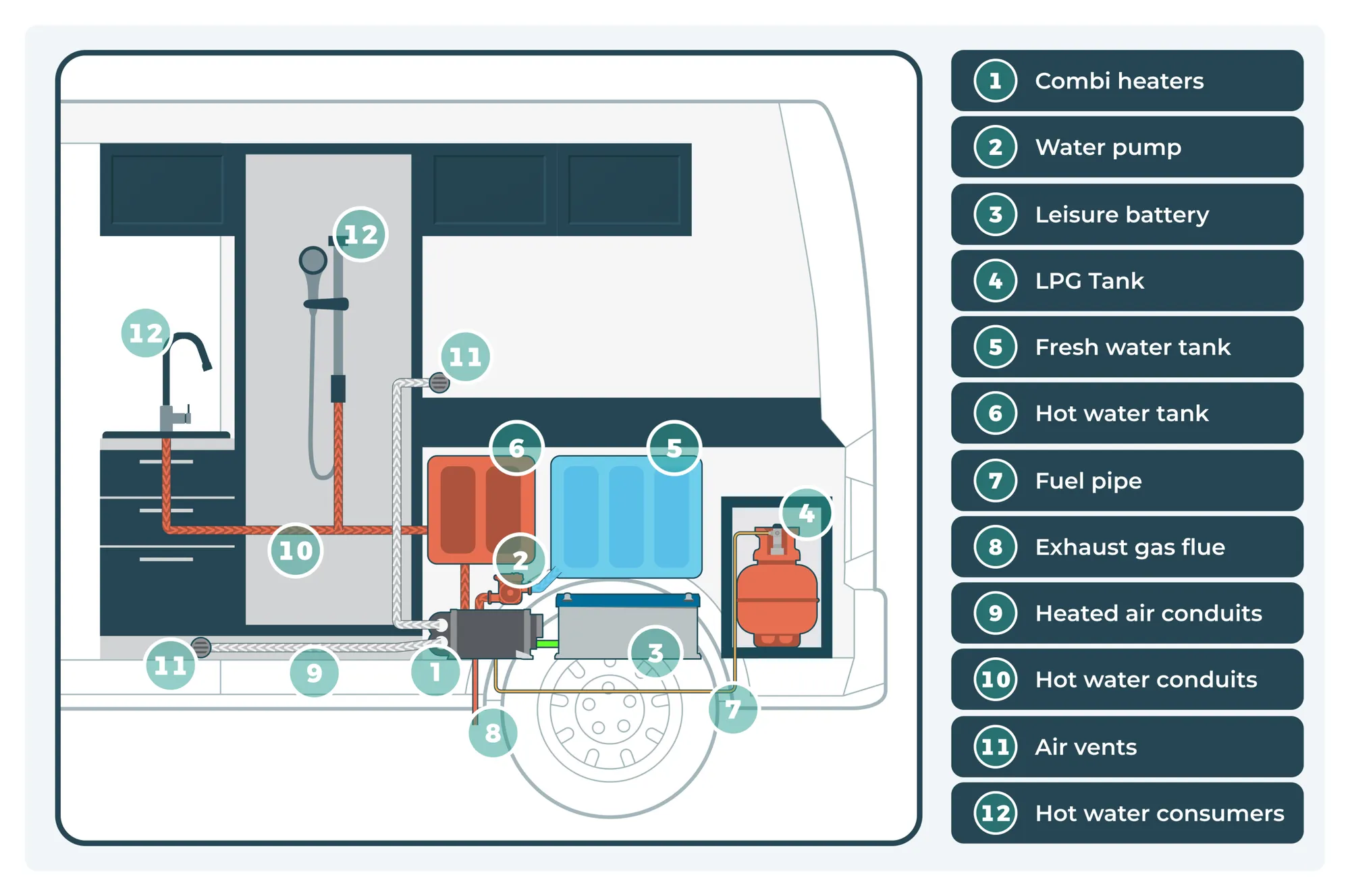
As well as combining two core systems, this also centralises climate control into a single panel, reducing complexity and installation space. They can also be much more flexible than tankless designs as some are designed to run on both LPG and Electricity.
The most popular range of these is the well-proven Truma Combi range, in which you'll find gas-only, diesel, and dual-fuel (gas + electric) variants.
In these dual-fuel systems, combustion or electric heating warms an integrated internal water tank (usually around 10 litres) while also feeding controllable warm air directly into the cabin for space heating.
Since the water tank is internal, these also don't need to be fed by a pressurized system, eliminating the need for complex plumbing and allowing for a simple gravity-fed set-up.
This makes dual-fuel systems like the Combi 6E ideal for mixed-use since you can hook up to mains electricity at a campsite and save your LPG, then switch over to gas when travelling off-grid.
It also means with a large enough battery bank and solar set up you can run the heater in hybrid mode using both propane and electricity to save fuel even when off grid. However, we still wouldn't recommend running one in electric-only mode without shore power due to the high draw.
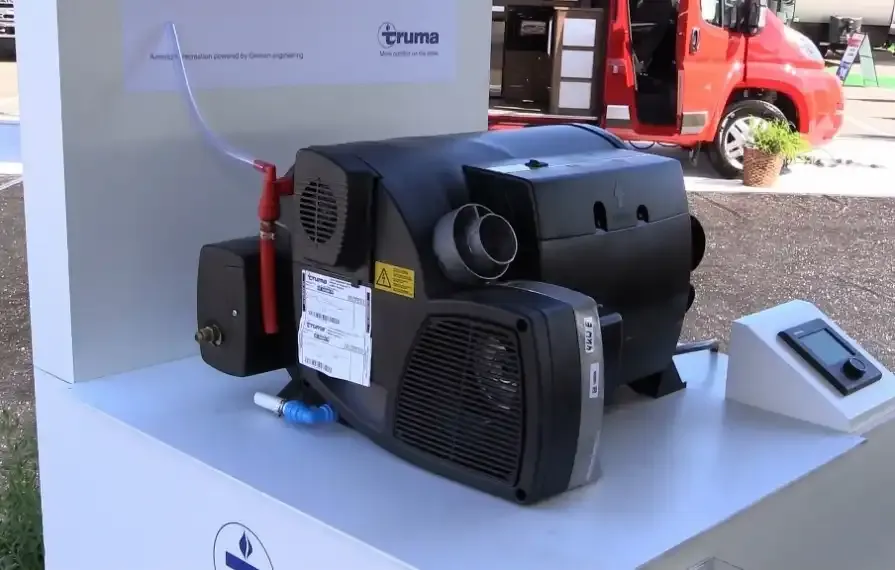
In terms of cost, systems such as the 6E come in at around £1000, with LPG usage coming in at around 200ML per hour or about 5L per day for constant round-the-clock water and 6000W of space heating.
The Vunked Bottom line: If you don't already have a space heater, we think something like this is probably the best option for most builds. Propane is easy to buy and store, and this sort of system gives you the most flexibility for off-grid travel.
There are also Diesel-powered options like the Webasto dual top if you don't want to carry LPG, and again these can be run straight from your main fuel tank for convenience.
Electric ‘tankless’ water heaters
These are the most simple type of built-in water heating system available, with popular units like the Bosch Tronic 2.5L or Camplux ME series containing a small internal reservoir of water that's heated using a resistive heating element.
Once it's hot, the water is then held at temperature until you use it. Since there's no fuel or combustion involved, there's no emissions or exhaust gas to manage. Combined with the lack of need for a separate external water tank this makes electric tank water heaters extremely easy to install.
Where they do fall down, however, is in power requirements. If you plan to stay exclusively at campsites with access to shore power, this drawback is negligible and an electric tank heater is probably your most hassle-free option.
For those looking to travel off-grid, the wattage of these units can be a killer. Many systems range between 700W and 1500W depending on size, requiring both a large inverter, massive battery bank, and huge solar array to even think about running.
For example, even a 6L heater such as the Camplux 6L will draw 1400W and take up to 30 minutes to fully heat, depending on ambient conditions.
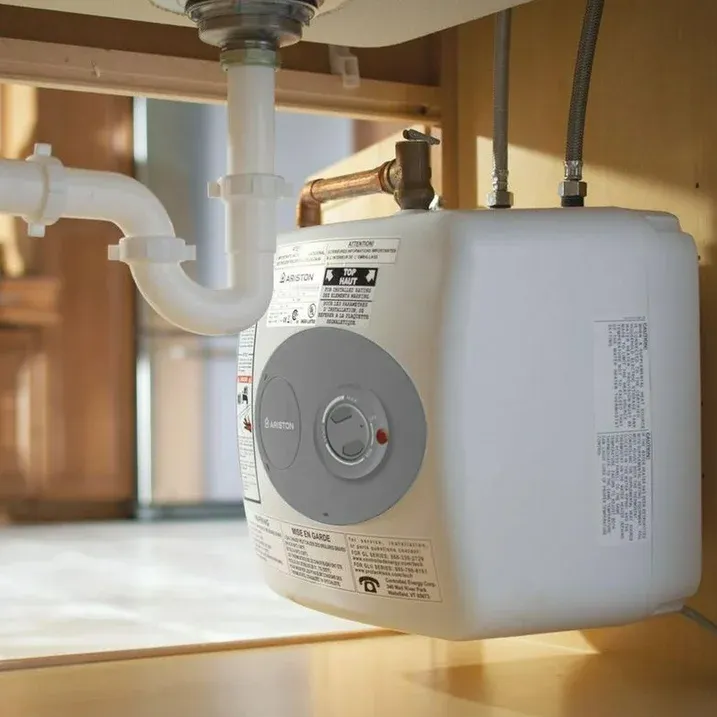
If this isn't an issue, then electric tank systems are both convenient and extremely reliable due to having virtually no moving parts outside of pumps. However, for full-time off-grid vanlifers, it's probably best to look elsewhere.
You'll also need to think about space heating. With a water-only electric heater, your options will be to either use an electric space heater, which also uses massive amounts of electricity, or use a fuel-fed LPG, diesel, or solid-fuel stove.
In cases of the latter, why not just go with a combi system to begin with, as premium dual-fuel options still let you use exclusively electric when at campsites.
Hydronic heating systems with water heating
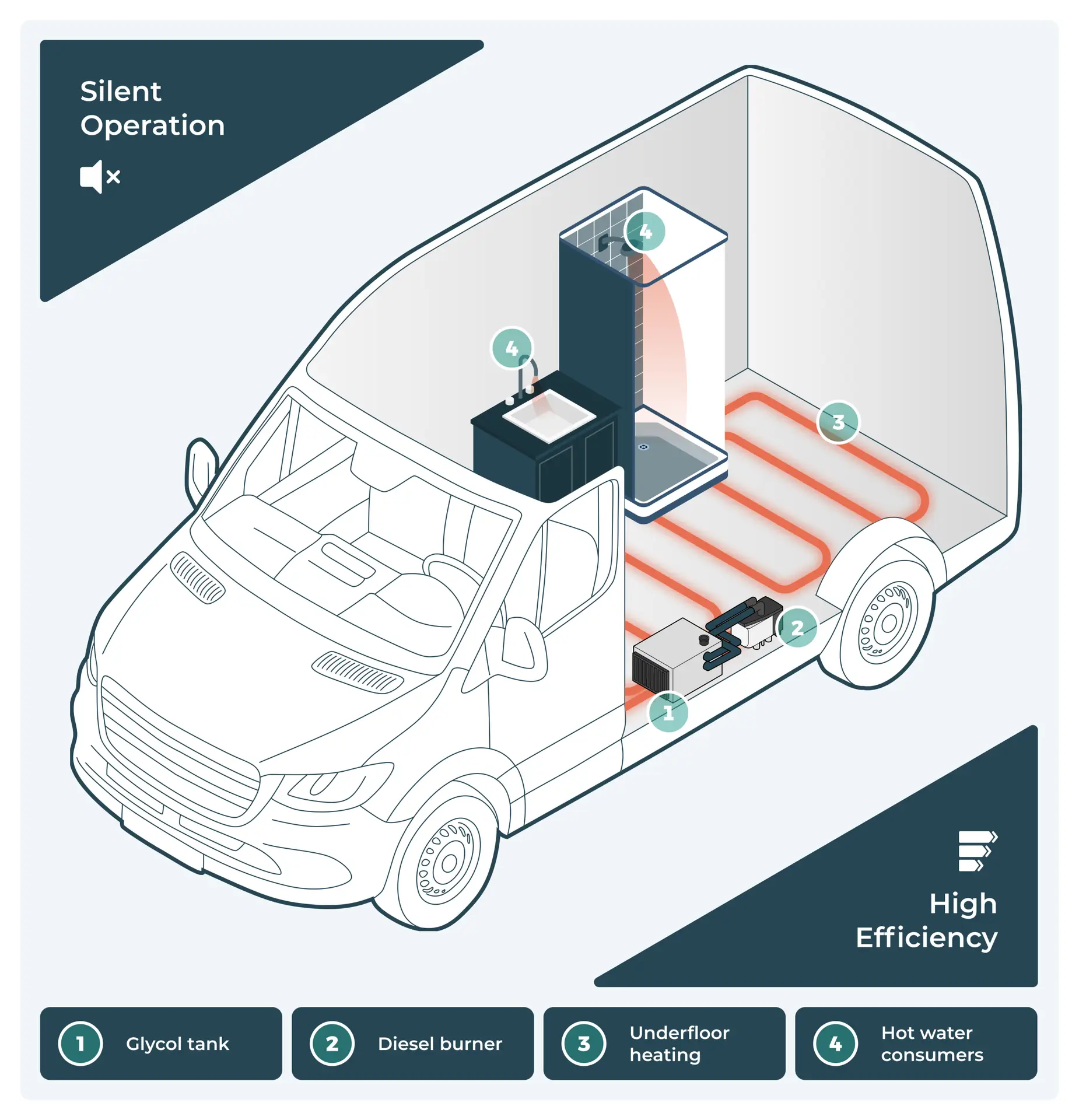
Hydronic systems are relatively new technology but combine elements of a tankless heater with powerful modern space heating by circulating heated antifreeze (glycol) through a closed loop of radiators to deliver both hot air and water.
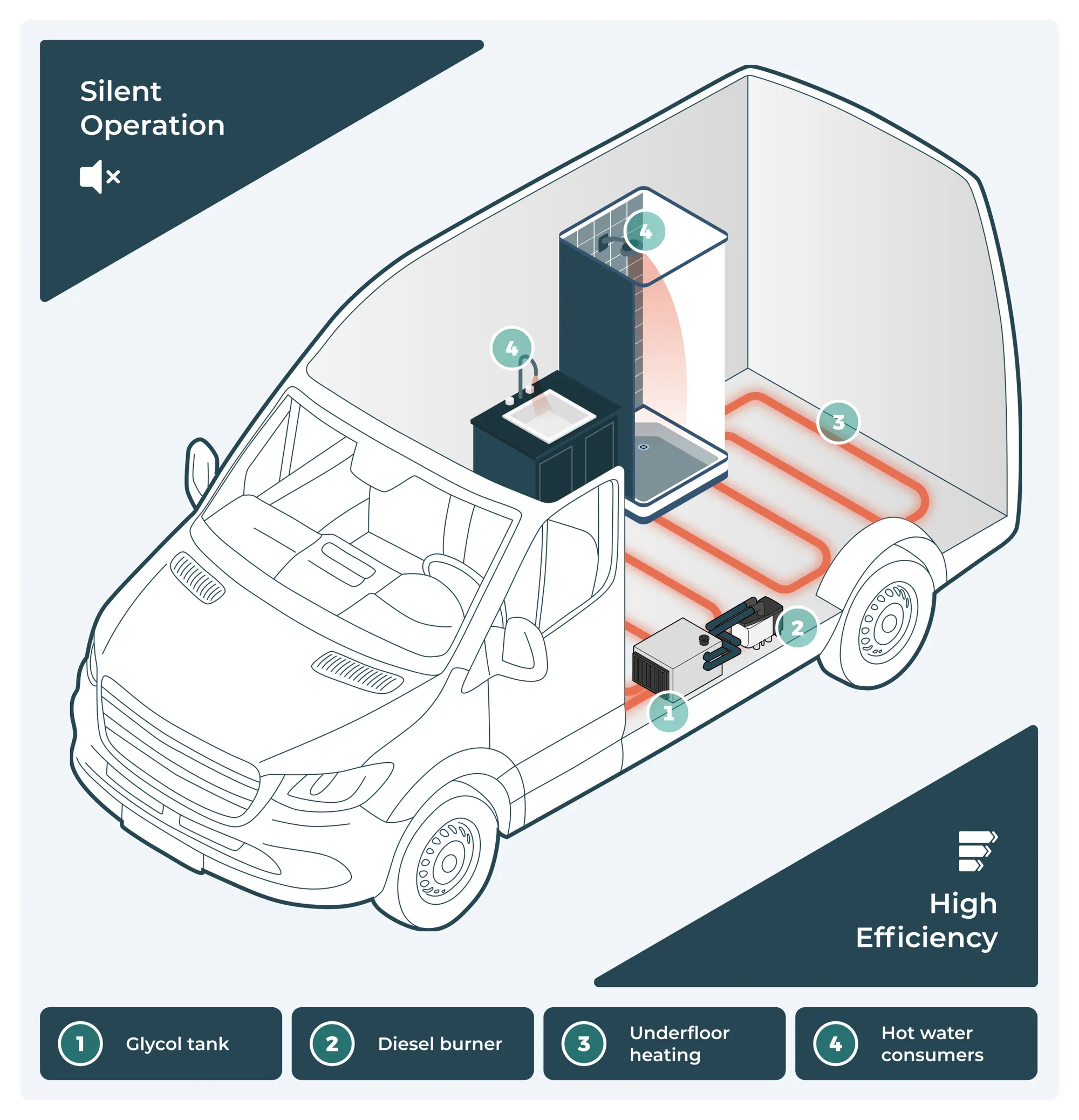
At the centre of these systems is a compact diesel burner which uses a trickle of diesel to heat the fluid in the system. This system then pushes the heated fluid through radiators and underfloor heating to produce toasty and even internal temperatures. A marine-style calorifier with an internal coil then takes care of water heating, allowing for tankless, on-demand generation of hot water.
This system is highly efficient, using just 1.8L of Diesel for a full 24 hours of hot water and interior space. The electrical load is similarly low, requiring just 30-70 Watts of DC power from your leisure batteries.
What's the catch then? Well, the price. Popular systems like the Alde system come in at around £3000, and that's before bolt-ons like underfloor heating and the associated installation costs. There's also the Van Life Tech luxury hydronic systems, coming in at around £6000 and available in LPG, Diesel, and Petrol variants.
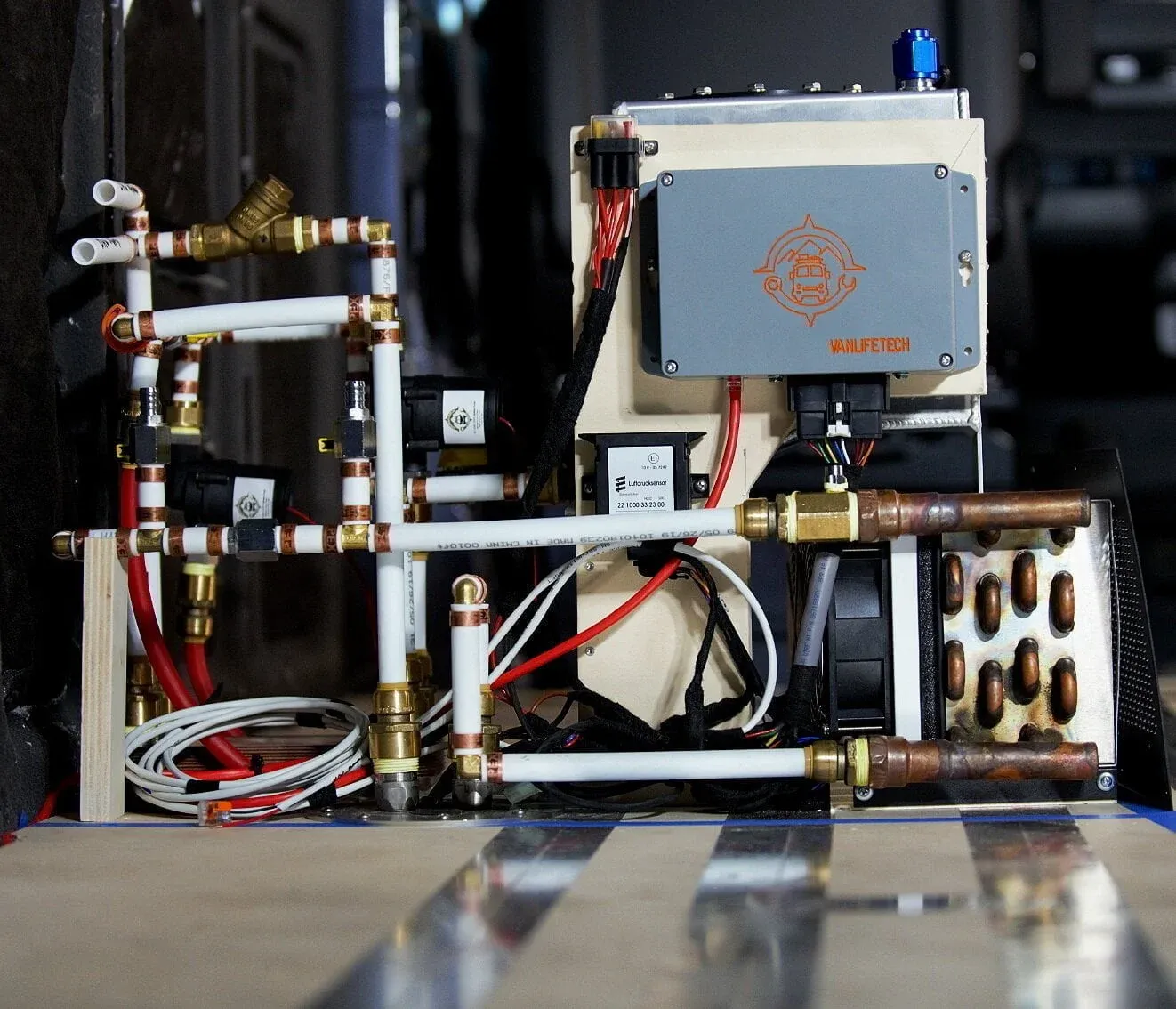
Cost notwithstanding, these are a solid option if you're looking for great cold-weather performance and excellent thermal efficiency. They do require some extremely involved installation, however, needing expansion tanks, temperature sensors, and a circulation pump to function. If you're not an extremely experienced DIY-er we would probably recommend professional installation.
They are, however, completely silent, making Hydronic a great option for stealth builds. Options like the Alde also allow you to harvest even more 'free' heat by plumbing the system into your van's coolant loop to further heat up the system.
This brings us nicely to our final option: engine heat exchange systems.
Immersion and engine heat exchange systems
One of the most efficient ways to generate hot water in a campervan is by leveraging the waste heat from your vehicle's engine. Van engines usually operate at about 100 degrees Celsius during driving, and normally this heat is lost to the surrounding atmosphere.
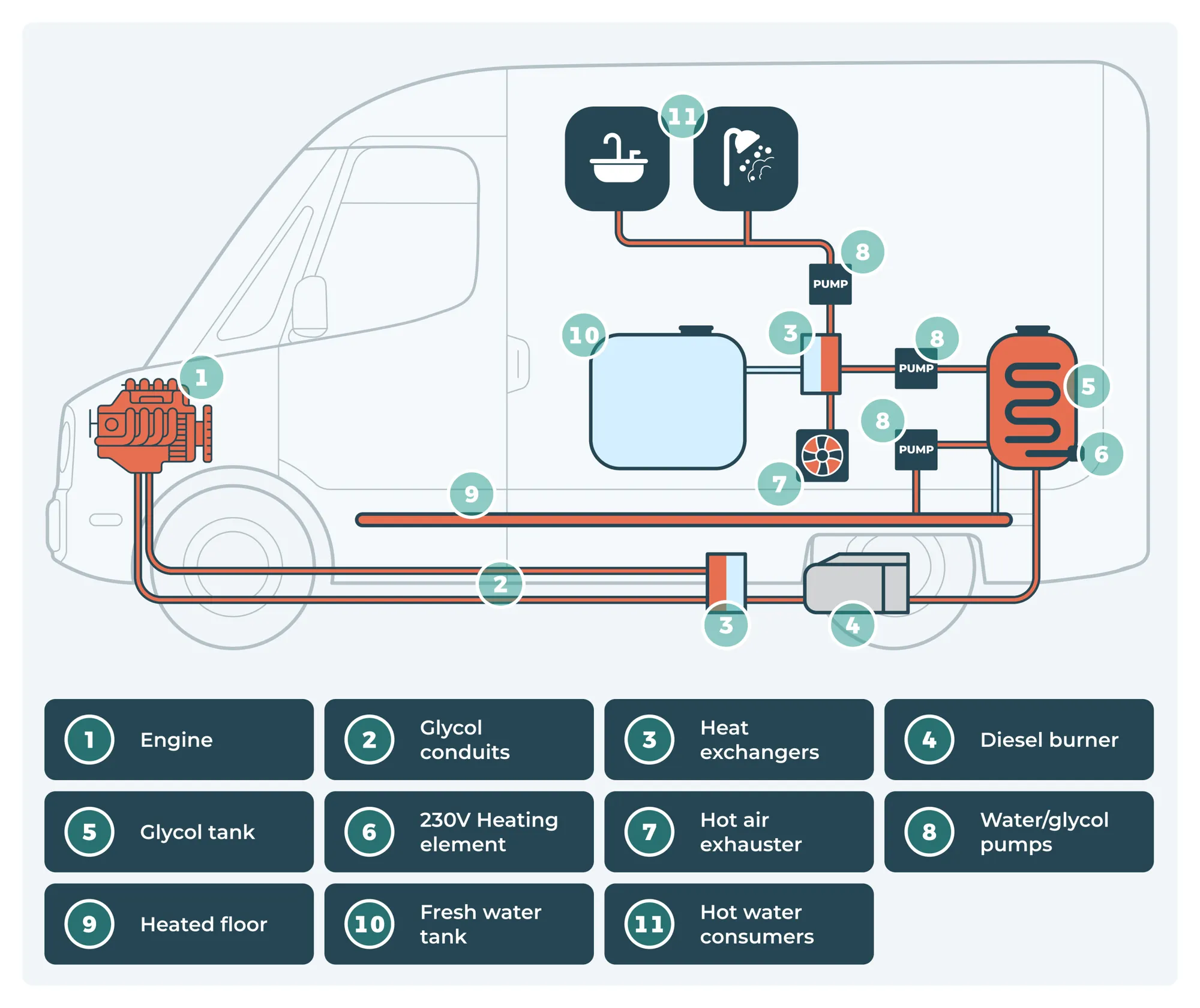
Immersion and engine heat systems like the Isotemp Spa tap into this heat, plumbing into the vehicle's coolant loop to passively raise the temperature of a body of water while driving.
The water is held in a tank which has an internal coil, sometimes called a coolant jacket, that runs through the middle of it. The hot water from your engine runs then through this coil, heating up the freshwater that you'll use for showers and washing up without coming into contact with it. (imagine leaving a cold glass of water on a hot radiator).
The longer you drive, the more heat is transferred. In real-world use, people regularly report water temperatures reaching 50°C after just 15–20 minutes of driving, and up to 75°C after longer drives of 30 minutes or more.
This water can then stay hot for 12-18 hours with proper tank insulation, fluctuating depending on external factors like ambient temperature. That means you can park up after a drive and have a boiling hot shower in the morning for absolutely zero fuel, electricity, or manual intervention. Neat.
Similarly to combi units, you'll see these types of systems listed by how much hot water they hold, common sizes from Isotemp include 10L and 15L. Cost-wise, models like the Slim Square 15L come in at around £1000, but you'll probably be closer to £1500 factoring in all the lines and coolant plumbing requirements. You'll also probably want a professional installation due to cutting into coolant lines.
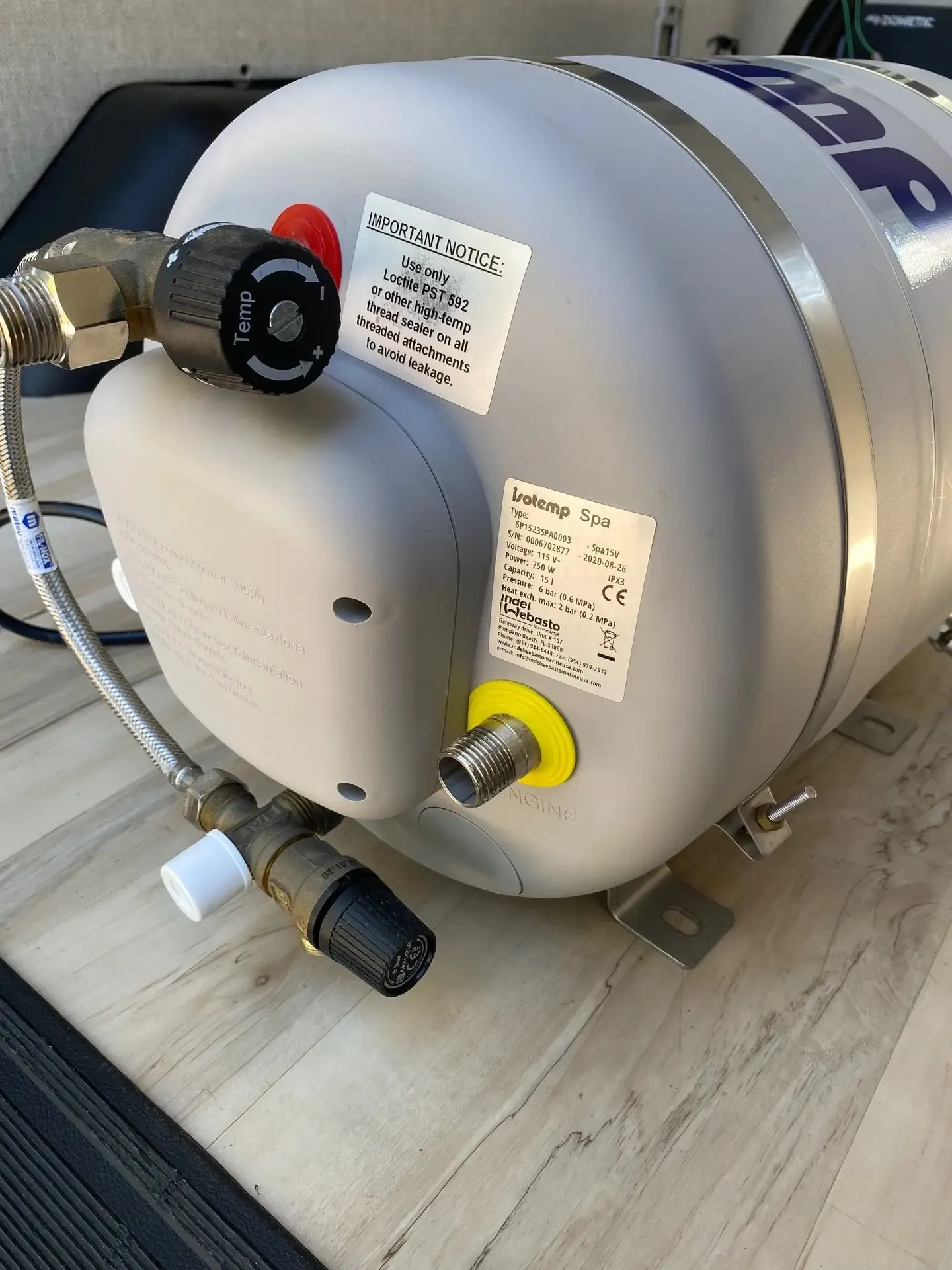
You'll also see some of these models offering a 230V electric immersion element. Similar to the dual-fuel combi boilers this means you can heat the same tank using shore power when parked up at a campsite. (Or indeed using electricity from an inverter and leisure battery, though again, the draw would be massive).
Some even contain reverse thermal contribution, where the hot water in the tank helps to pre-warm the engine coolant for easier starting in sub-zero conditions. Very clever stuff indeed.
The Vunked bottom line: Immersion and engine heat systems offer a highly efficient way to heat water for virtually zero operational cost. This is game-changing. However, where they are completely impractical is when you plan to park off-grid for significant periods of time since you'll need to drive around to get reliable heating.
Alternative water heating options
Not everybody needs an all-singing-all-dancing mega set-up for off-grid adventures. If you just use a smaller van for the odd overnight stay, there are plenty of cheaper ways to get hot water. These include:
- 12V immersion heaters. These basic plug-in devices insert into a cup or small container to heat water slowly. Most are around 120–150W and take 15–20 minutes to warm a mug's worth of water. They're inefficient for large volumes but handy for a quick tea or sponge bath if you want to cosplay as a Victorian.
- JetBoil and gas kettles. Ideal for minimalists, these compact gas stoves boil water rapidly and are useful for dishwashing, cooking, or basic hygiene tasks. While not integrated into plumbing, they're simple and fast.
- Battery-integrated shower units. Devices like the Geyser Systems heated shower combine a rechargeable battery, pump, and built-in heater in one unit. They're handy for vanlifers who occasionally want hot water without a full build or plumbing setup but still come in at a not insignificant £300.
- Solar hot water showers. Portable shower bags or roof-mounted tubes can both be viable for sunny trips, but they rely completely on warm conditions to work. However, there's no denying they're cheap, silent, and maintenance-free.
- Wood stove boiler coil setups. A copper coil wrapped around a wood stove can heat water off-grid by transferring heat to a tank of water. This is a DIY solution in the greatest sense and you'll sometimes see it used in remote cabins or stationary van setups. We 10/10 would not recommend when on the move.
In general, these options serve as backups and novelties, but for a truly comfortable vanlife experience, you'll want to choose one of the primary options listed above. But which one is right?
The best option for you
As you can probably tell, there's no unequivocal 'best ' option for a water heater. You'll need to think about the kind of trips you want to do, how much you're willing to spend, and what fuel type or types are best for your travel style.
Type | Pros | Cons | Average cost | Best for |
Propane tankless water heater | On-demand hot water, Low fuel use, Widely available fuel, No standby heat loss, Lightweight and simple | Requires proper ventilation, Needs pressurized water, No backup if gas runs out, Hard water can damage internals | £130–£250 | Full-time or off-grid travellers needing reliable showers without battery drain |
Diesel tankless water heater | Can use van’s main fuel tank, On-demand hot water, Efficient in cold climates | Higher upfront cost, Louder than propane, Less common in UK retail | £300–£600 | Diesel-based builds or users avoiding LPG |
Dual-purpose combi | Water + air heating in one, Dual-fuel: gas + electric, Efficient and compact, Excellent for winter | High power draw in electric-only, Higher upfront cost, Heavy and more complex to install | £1100–£1700 | Best all-rounder for multi-season travellers, shore/off-grid hybrid users |
Electric tank water heater | Simple to install, No combustion or gas, Clean and safe, Silent operation | High power draw, Not viable off-grid, Slow recovery time | £100–£250 | Campsite-focused users with 230V shore power access |
Hydronic systems | Unmatched heating performance, Low fuel use, Silent and efficient, Optional underfloor heating | Very high cost, Complex install | £3000+ | Luxury conversions, extreme cold travel, full-time off-grid living |
Immersion + engine coolant loop | Free hot water while driving, Holds heat for hours, Low ongoing cost, Optional 230V backup element | Requires coolant plumbing, Not suitable for static stays, Complex install, long hose runs | £1000–£1500 (with install) | People who drive between stops regularly, long-distance travellers |
If you don't have any heating (space or water) yet and need a reliable, proven, all-in-one solution, then a combi unit like the Truma combi is probably a good starting point. If you can, grab a model with a 230V in it for fully electric campsite use for ultimate flexibility.
If you don't need or already have space heating sorted, then a simple propane tankless water heater is also a solid bet. They're affordable, proven, easy to operate, and provide instant hot water as long as you have fuel.
If budget permits and you want more quiet and efficient space heating, then modern hydronic systems are also well worth a look. Again, look for a system with a 230V element so you can run on electricity when needed, but these systems use very little fuel regardless. They're also excellent in extreme cold, and the option to integrate underfloor heating or engine heat exchange systems is awesome for luxury builds and full-time living.
Speaking of engine heat-exchange systems, if you plan on usually driving before an overnight stay, these should also be a go-to solution. Once installed running costs are virtually zero, and again some options allow for electric heating when at campsites.
Leave the electric-only heaters out unless you exclusively want to stay connected to shore power on your travels, and feel free to look into the alternative methods described if you need a budget solution in a pinch!
Keep your hot water system powered and ready
Whether you go with electric, combustion-based, or hydronic, one thing that unites all of these hot water systems is that they will all require electricity in one-way-or-another to power things like sensors, temperature controls, and ignition.
To do that you'll need an electrical system that's up to the task. Check out Vunked's complete electrical system kits, our line of expert-designed ready-to-install packages that use industry-leading Victron components to keep you powered up off-grid.
Our set-ups range from mild to wild, with everything from the humble Weekend Wanderer kit to the full-time off-grid Overland Explorer kit with 370W of solar and a powerful 3000W Victron Multiplus Inverter/charger.
You'll receive everything you need to self-install, including every bit, piece, odd, end, wiring diagram and instruction required for a safe and reliable electrical system.
You can also use our online system builder tool to put together your own custom package, based on the exact features you want and appliances you plan to use!
FAQs
What is the best way to heat water in a campervan?
The best way to heat water in a campervan depends entirely on your setup and use case. For off-grid use, propane or diesel-based systems are probably your best bet. If you're staying exclusively on campsites then it might be easier to look at electric-only options. For cold weather or luxury builds, hydronic systems offer great performance and efficiency.
How do I get hot water in my camper?
You can heat water using electric tank heaters, tankless gas systems, diesel hydronic units, or engine heat exchange systems. The best method for you will depend on your fuel and power availability, as well as your plumbing system and planned use case.
Can you put an instant hot water heater in a camper?
Yes. Tankless "instant" hot water systems like the LPG-powered Camplux AY132 or diesel units like the Webasto Dual Top are becoming increasingly popular. Be aware that some models require venting and water pressure regulation for safe operation.
What is the best boiler for a campervan?
For most full-time vanlifers, something like a Truma Combi 6E is probably the best all-around choice for a boiler, combining hot water and cabin heat into one compact system.
Do I need a pump with a tankless water heater?
Yes. Tankless systems like the propane-powered instant units will need a steady, pressurized water supply to function properly. Without this, they might not activate at all or shut off intermittently during use.
Can I use a house boiler in my van conversion?
No. Household boilers need mains gas and water pressure since they're designed exclusively for static use. Always use a proper system designed specifically for campervan or marine use (Many companies that supply campervan water heaters supply similar systems to the boat crowd).