
12 min read
A battery and solar panel kit is essential for powering your campervan or off-grid setup. By combining solar panels with the right battery, you can store energy and use it whenever you need it, day or night. In this guide, we'll explain how these kits work, the different options available, and what to consider when choosing the best setup for your off-grid adventures.
How Solar Panels and Batteries Work Together
Solar panels capture sunlight and convert it into electricity, but often, you don't use it immediately. Batteries store the electricity your solar panels generate, giving you power later when the sun isn't shining.
The more solar energy you collect and store during the day, the more you'll have to draw from when you need it. Without a battery, you'd only have power when the sun is out, which isn't practical for most off-grid living.
Why You Need a Battery with Solar Panels for a Campervan

A camper van solar panel system would be unreliable and limited without a battery. The battery makes the system practical, allowing you to store energy and use it whenever and wherever you need it.
- Continuous power: The sun doesn't always shine, and you'll need power when it's not. Batteries store excess energy so you can use your devices anytime, day or night. Without a battery, your solar setup would only work when the sun is up, leaving you without power during the evening or early morning.
- Flexibility: A battery allows you to park in shaded or cloudy regions without losing power, which is especially important if you're on the move or staying in places where sunlight isn't guaranteed. Batteries ensure you're not solely reliant on perfect weather conditions.
- Efficiency: Batteries help manage and stabilise the energy flow from your solar panels, helping the battery and controller operate smoothly as energy production changes. They store surplus energy during peak sunlight hours and release it when needed. Providing consistent power not only maximises the efficiency of your solar setup but also extends the life of your appliances.
- Independence: Combining solar panels and batteries gives you true energy independence. You're no longer tied to campsites or external power sources, allowing you to travel and stay off-grid longer.
Types of Batteries for Campervan Solar Panels
Choosing a suitable battery for your campervan solar panels is crucial for any camper setup, whether you choose a leisure battery or another battery type. Different batteries have pros and cons, so understanding them will help you make the best choice for your setup. Let's look at the three most common types: lead-acid, AGM, and lithium-ion.
Lead-Acid Batteries for Solar Panel Kits
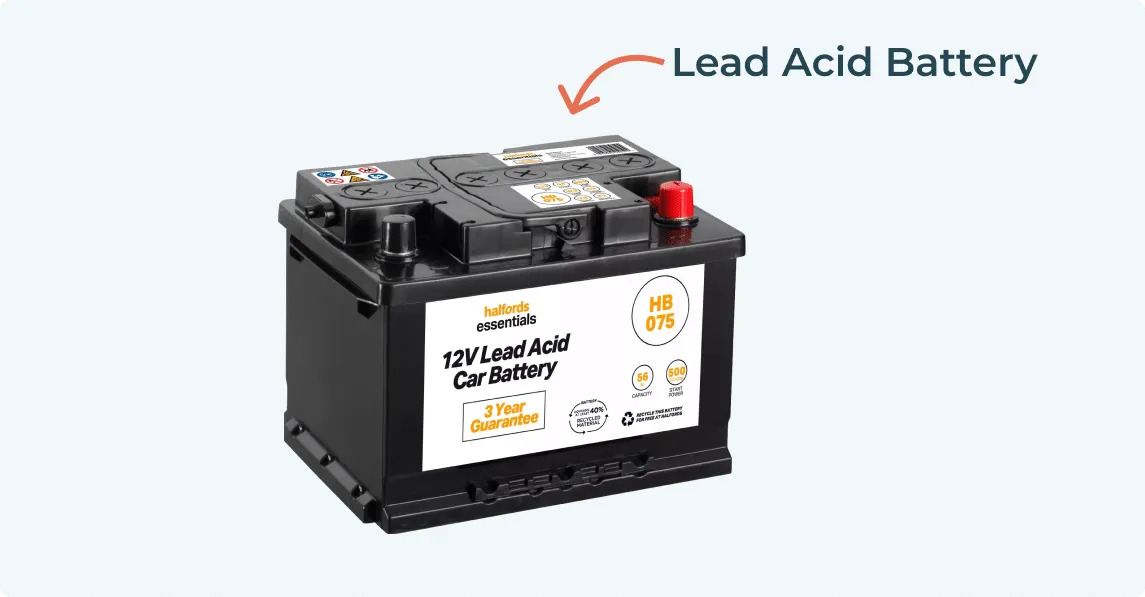
At a glance: Lead-acid batteries are inexpensive but heavy, require maintenance, and don't last as long. For these reasons, most modern battery and solar panel kits no longer use lead acid.
Lead-acid batteries are the oldest type, traditionally used in cars. They're cheap and widely available, making them the preferred choice for budget setups. However, they're also heavy, bulky, and require regular maintenance.
Lead-acid batteries don't last as long as other types, and you can't discharge them fully without shortening their lifespan—meaning you get less usable power from a lead-acid battery than other options.
Deep Cycle AGM (Absorbent Glass Mat) Batteries for Solar Panel Kits
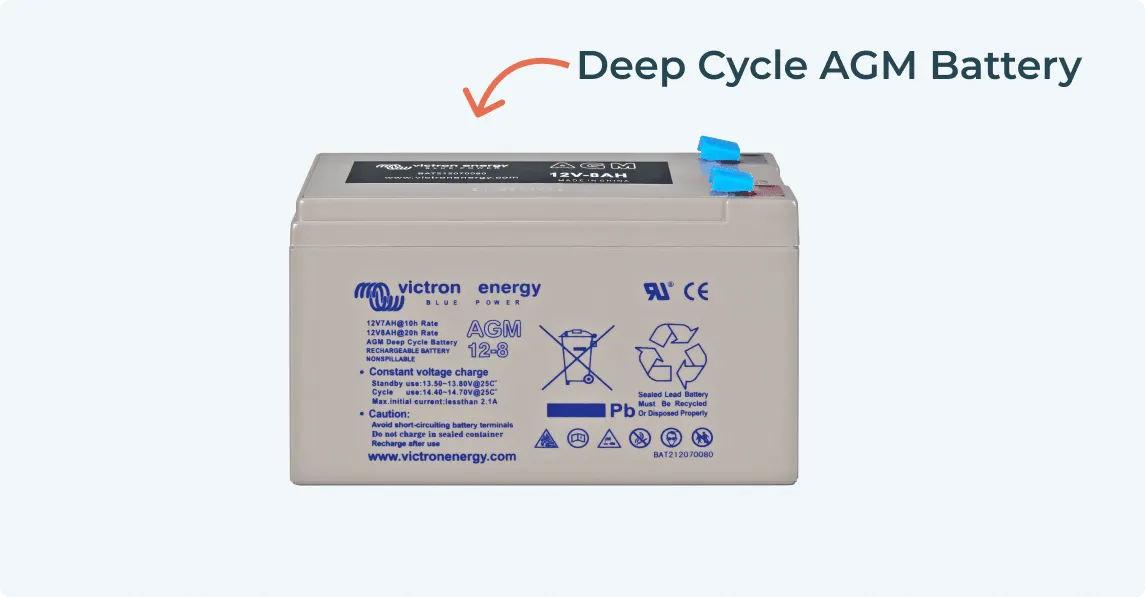
At a glance: Deep Cycle AGM batteries are a more reliable and maintenance-free upgrade over lead-acid, but still relatively heavy. They can be discharged to 80% instead of 50% achieved by Lead Acid.
Deep Cycle AGM batteries are a more modern version of traditional lead-acid batteries. They're still technically a lead-acid battery, but they're sealed and maintenance-free, making them more convenient and safer to use in a campervan.
Deep Cycle AGM batteries also perform better than traditional lead-acid ones, offering more usable power and a longer lifespan. However, they're still heavier and bulkier than lithium-ion batteries.
Lithium-Ion Batteries for Campervan Solar Panel Kits
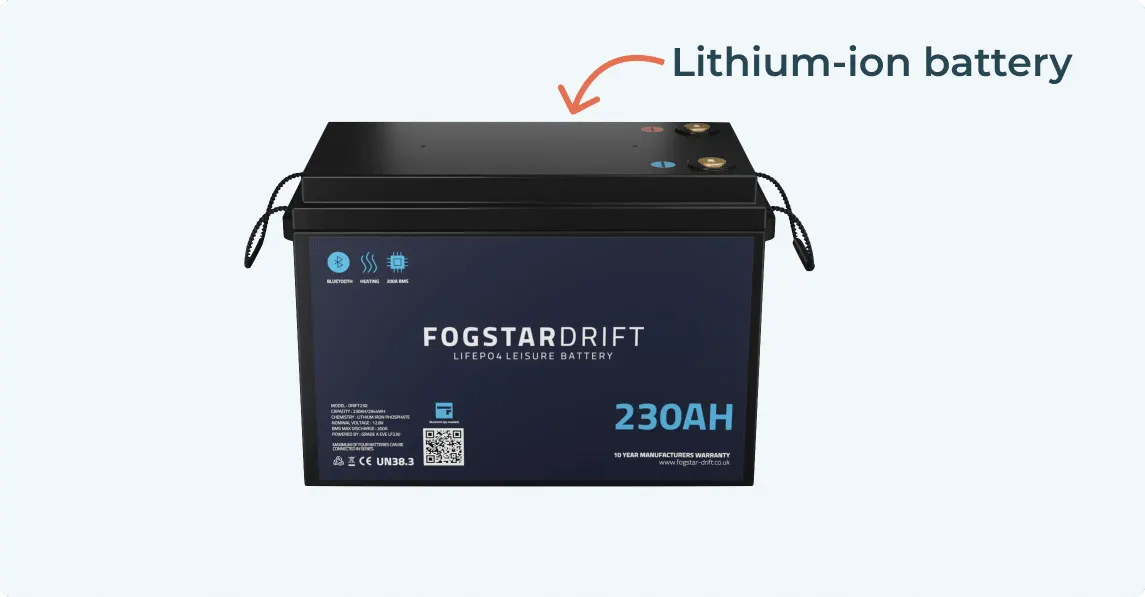
At a glance: Lithium-ion batteries are lightweight, long-lasting, and offer the most usable power, but they come with a higher price tag.
Lithium-ion batteries are the preferred choice for most campervan setups. They're lightweight and compact and can be discharged almost fully without damaging the battery—meaning you get more usable power for the same capacity.
Lithium-ion batteries are better for the environment. They last longer, reducing the batteries needed over time, and they're more energy-efficient, meaning less waste overall. These batteries are also easier to recycle because they don't contain the toxic lead and sulfuric acid in lead-acid batteries.
Lithium-ion batteries offer the longest lifespan, so you won't need to replace them as often, and a comparison of how long AGM and lithium leisure batteries last can help you weigh real-world lifetimes and costs. The only downside compared to other battery types is the cost—lithium-ion batteries are more expensive upfront, but they offer better performance and durability in the long run.
How to Determine the Right Battery Size for Your Solar Panel Setup
Calculate Your Daily Energy Use
Start by listing all the devices and appliances you plan to power. Think about your lights, fridge, phone chargers, and any other gadgets you'll use; a structured DIY campervan electrical system checklist can make this planning easier.
Each item has a power rating in watts, and you'll need to estimate how many hours a day you'll use each device or appliance. Multiply the watts by the hours to get each device's watt-hours (Wh) needed daily. Add these up to find your total daily energy consumption in watt-hours.
Consider Your Energy Storage Needs
Once you know your daily energy use, consider how much energy you want to store. A good rule of thumb is to have enough battery capacity to cover at least one to two days of usage, which is especially useful in a motorhome or caravan during cloudy spells. Consider expected cloudy days or if you want to stay off-grid for longer periods without relying on sunlight.
Match Battery Capacity to Your Solar Panels
Your battery size should complement the power your solar panels can generate. If your panels produce more energy than your battery can store, you're wasting potential power. Conversely, if your battery is too large, you may not generate enough solar energy to fully charge it, leaving you short on power; an MPPT controller also helps panels work at maximum efficiency, unlike pwm charge controllers.
For example, if your daily energy use is 1,200Wh, and you want two days of backup, you'll need a battery with at least 2,400Wh (or 2.4kWh) capacity. If your solar panels can generate 600W of power per day in ideal conditions, you'll need around four hours of sunlight to completely recharge your battery daily, though actual output depends on real sunlight and temperature conditions.
Consider Future Expansion
Think about whether your energy needs might grow. Solar panels are challenging to upgrade in the future. It's not as simple as increasing your panels to get more power, so we strongly recommend installing a solar system to meet future needs. Batteries are relatively easy to swap out later, so rather spend the money on solar panels now and invest in a larger battery when you eventually need it.
Understand Battery Specifications
Batteries are rated in amp-hours (Ah) and volts (V). To calculate watt-hours, multiply the amp-hours by the voltage. For example, a 100Ah battery at 12V provides 1,200Wh of energy. Based on this calculation, ensure your battery size meets or exceeds your daily energy use.
Choose the Right Battery Type
Different battery types (lead-acid, AGM, lithium-ion) offer different capacities and efficiency levels. A dedicated guide on how to choose a campervan leisure battery explains these differences in more depth. Lithium-ion batteries, for example, can be discharged more deeply, allowing you to use more of their stored energy than lead-acid batteries, which require more conservative usage.
We always recommend lithium-ion batteries for vanlifers who want to live off-grid. They offer the best performance, weigh less, and take up less space, especially when paired with a well-sized campervan solar panel kit for longer off-grid living.
Where to Store Batteries in a Campervan
Storing batteries in a camper van requires careful planning. The right spot keeps your setup safe, efficient, and accessible. Here are a few best practices for different van sizes, configurations, and use cases.
Key Considerations for Campervan Battery Storage
- Ventilation: Batteries need airflow to prevent overheating. Ensure your chosen spot has enough ventilation, especially for lead-acid and AGM batteries.
- Accessibility: You'll need to access the batteries for maintenance, so avoid hard-to-reach spots.
- Security: Secure the batteries to prevent them from moving while driving. Use straps or a dedicated box.
- Temperature: Batteries perform best in moderate temperatures. Avoid areas that get too hot or cold.
- Proximity to electrics: Store batteries close to the rest of the electrics to minimise cable lengths, especially if you have large 230V appliances (greater than 1600W), as shorter cables reduce energy loss and improve efficiency.
Storing Campervan Batteries Under the Seat
Best for: Compact vans and setups with limited space.
For smaller campervans, storing batteries under the seat is a popular choice. This space is usually unused, making it a practical option. It keeps the batteries out of sight but still accessible for maintenance. Ensure enough ventilation to prevent overheating, especially if you use lead-acid or AGM batteries, which can get warm during use.
Storing Campervan Batteries In a Rear Storage Compartment
Best for: Medium to large campervans with more storage space.
If you have more room, consider a rear storage compartment. This area often has extra space, especially in larger campervans. It's a good option if you use multiple batteries or a larger lithium-ion battery, which might not fit under a seat. Ensure the compartment is well-ventilated and secured so the batteries don't shift while driving.
Storing Campervan Batteries Under the Floor
Best for: Custom builds and larger bus conversions where space is a premium.
Installing batteries under the floor can be a smart solution for those doing custom builds. This setup keeps the batteries out of the living area, freeing up valuable space. It's also ideal for larger, heavier batteries, as you distribute the weight evenly across the van. Ensure you protect the batteries from road debris and water and that the space is accessible for maintenance.
Storing Campervan Batteries Inside a Dedicated Battery Box
Best for: Complex setups or when using different battery types.
A dedicated battery box inside the van or exterior compartment offers protection and organisation. The box keeps everything secure and makes it easier to manage cables and connections. Look for a box with built-in ventilation to avoid overheating.
Storing Campervan Batteries Under the Bed
Best for: Campervans with fixed beds and ample under-bed storage.
If your campervan has a fixed bed underneath, it can be an excellent spot for battery storage. This area usually has plenty of room and is easy to access when needed. Ensure there is ventilation and the batteries are secured to prevent movement. This option works well for larger batteries or when using multiple units.
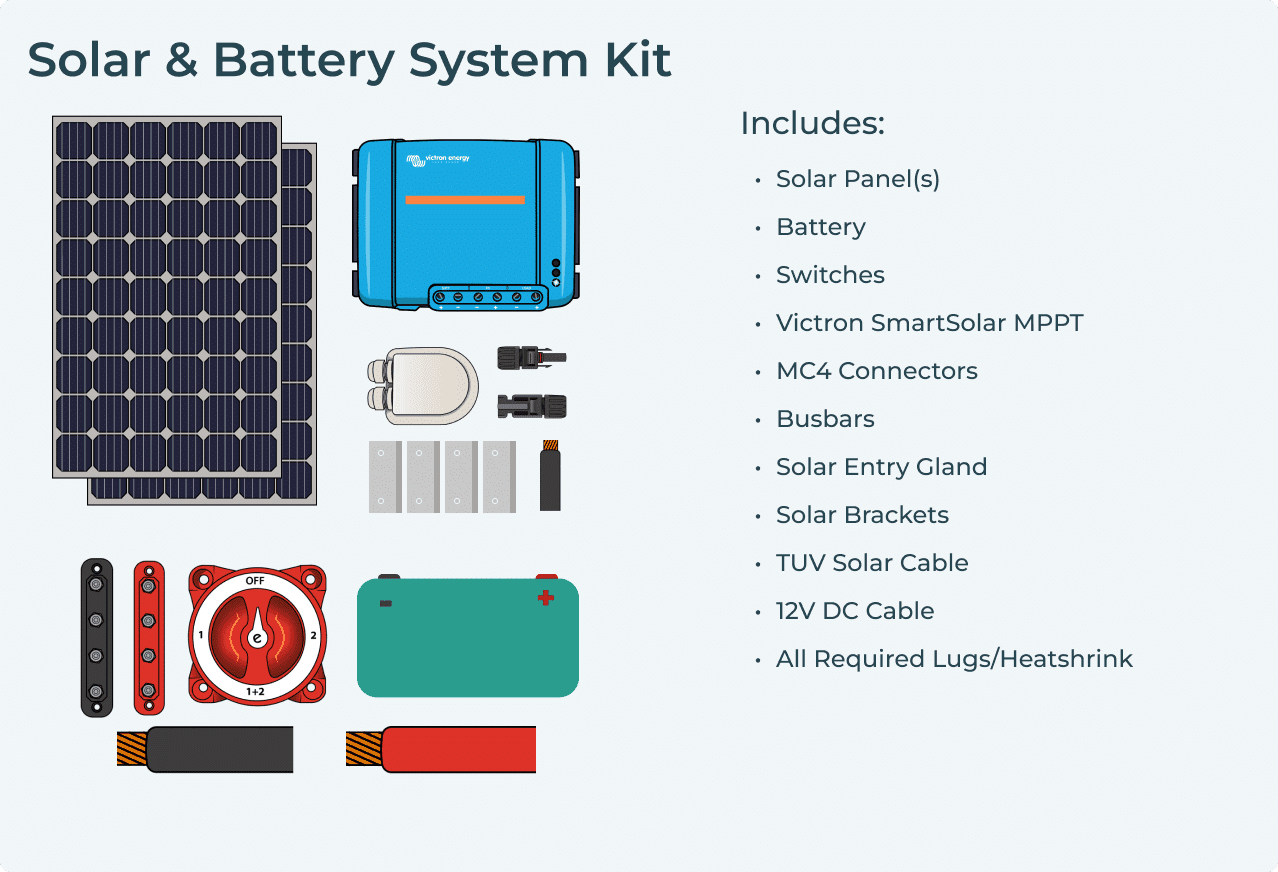
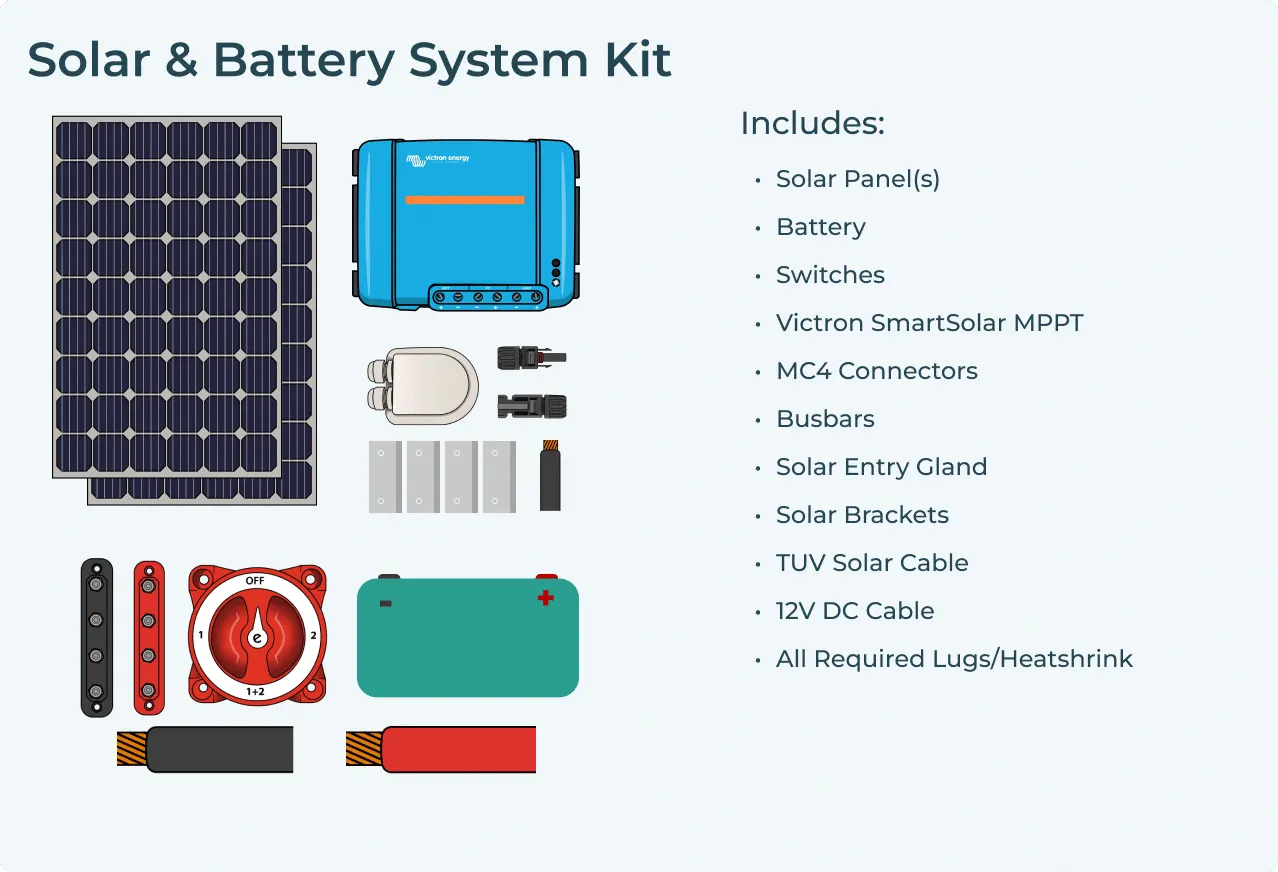
What is Included in a Battery and Solar Panel Kit?
A battery and solar panel kit provides everything you need to set up a solar power system in your campervan, and similar components are also used on another vehicle such as a boat. While some solar kits include batteries, many companies sell battery kits separately due to the many options and variations.
We recommend using our free campervan electrical system builder to design a custom battery and solar panel kit, or exploring a tool for building a customised campervan electrical system. This custom kit will give you precisely what you need, saving you money on redundant parts and accessories.
- Solar panels convert sunlight into electricity. Solar panel kits typically include panels ranging from 100W to 400W or more. The number and size of panels in the kit determine how much energy you can generate and store, and kits may use flexible panels or rigid panels depending on your roof mounting needs.
- Solar charge controller manages the voltage and current from the solar panels to prevent overcharging your battery, and some models let you monitor charging performance from your phone via Bluetooth.
- Batteries are often sold separately to match your specific requirements. The most commonly used is a 12V battery ranging from 50Ah to 200Ah.
- Mounting brackets secure the solar panels to your van's roof, fitting various panel types and surfaces, so high durability matters for parts fixed outside.
- Cables and connectors link the solar panels to your system's charge controller and batteries.
- Inverter: (Optional) Converts DC power from the battery to AC power for standard appliances.
- Fuses and safety disconnects protect your system from electrical issues and ensure safe operation.
- User manual and installation guide provide step-by-step instructions for setting up your system.
Best Battery and Solar Panel Kits for Campervans
Choosing the suitable solar panel kit depends on how you plan to use your campervan. Whether you're off for a weekend getaway or living off-grid full-time, there's a kit that suits your needs. Let's explore a few common scenarios and what to expect from each setup.
Battery and Solar Panel Kits for Weekend Trips with Minimal Appliances
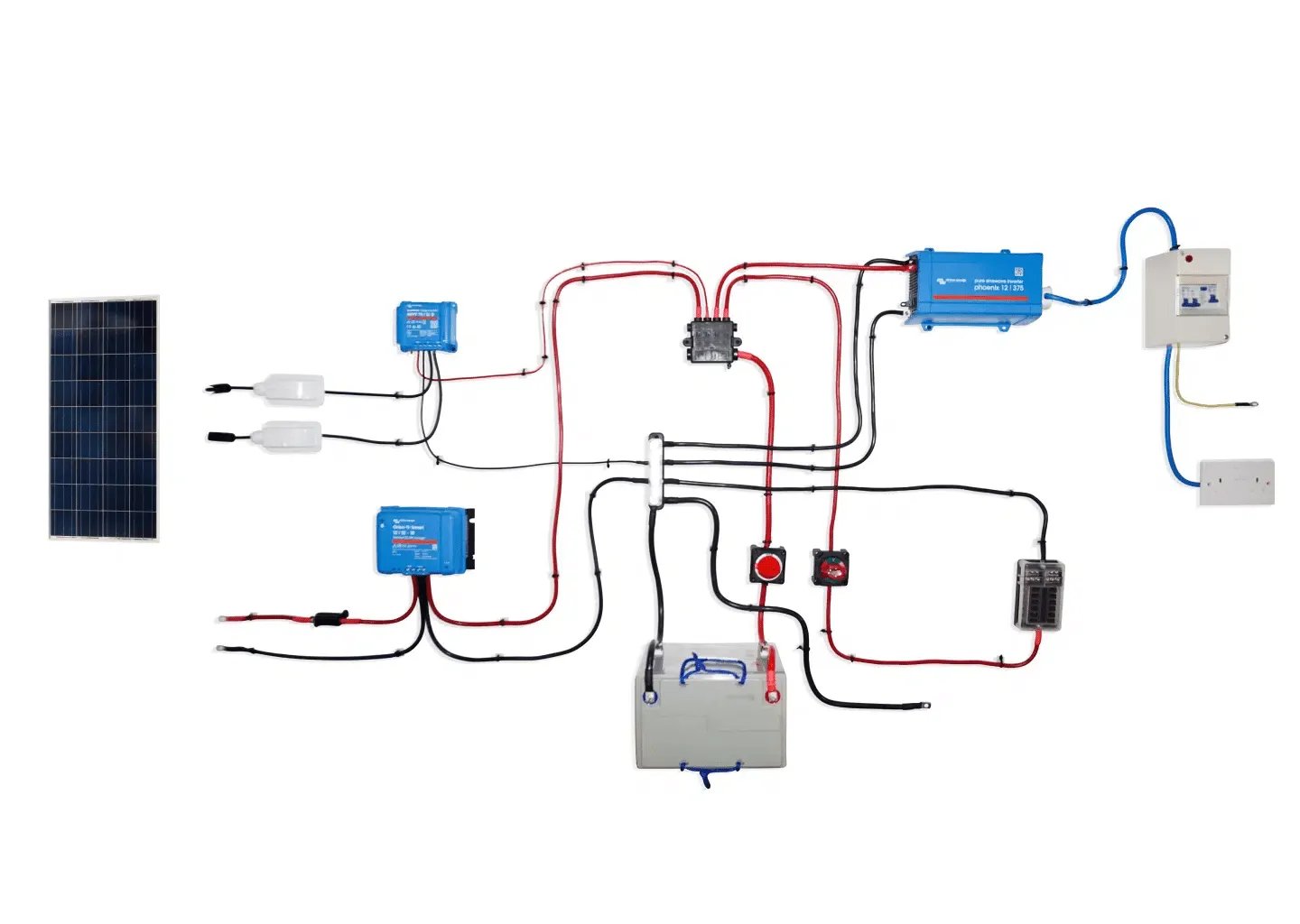
Use case: You're heading out for a quick weekend escape. You only need to power essentials like lights, phone chargers, and maybe a small fan.
Recommended setup:
- Solar panels: A small setup with one or two 100W panels should be enough. These panels will generate enough power during daylight hours to keep your devices running.
- Battery: A 100Ah 12V battery is ideal for storing the energy you collect. It provides enough capacity to keep your essentials powered through the night.
- Charge controller: A simple MPPT (Maximum Power Point Tracking) charge controller will regulate the power from the panels to the battery.
- Inverter: Not always necessary for this setup unless you need to power AC appliances. A small 300W inverter can handle light loads, or you can opt for an integrated campsite hook up campervan electrical system if you mainly stay on serviced pitches.
Expectations: This setup is compact and cost-effective, perfect for short trips with low power demands.
Battery and Solar Panel Kit for Full-Time Off-Grid Living
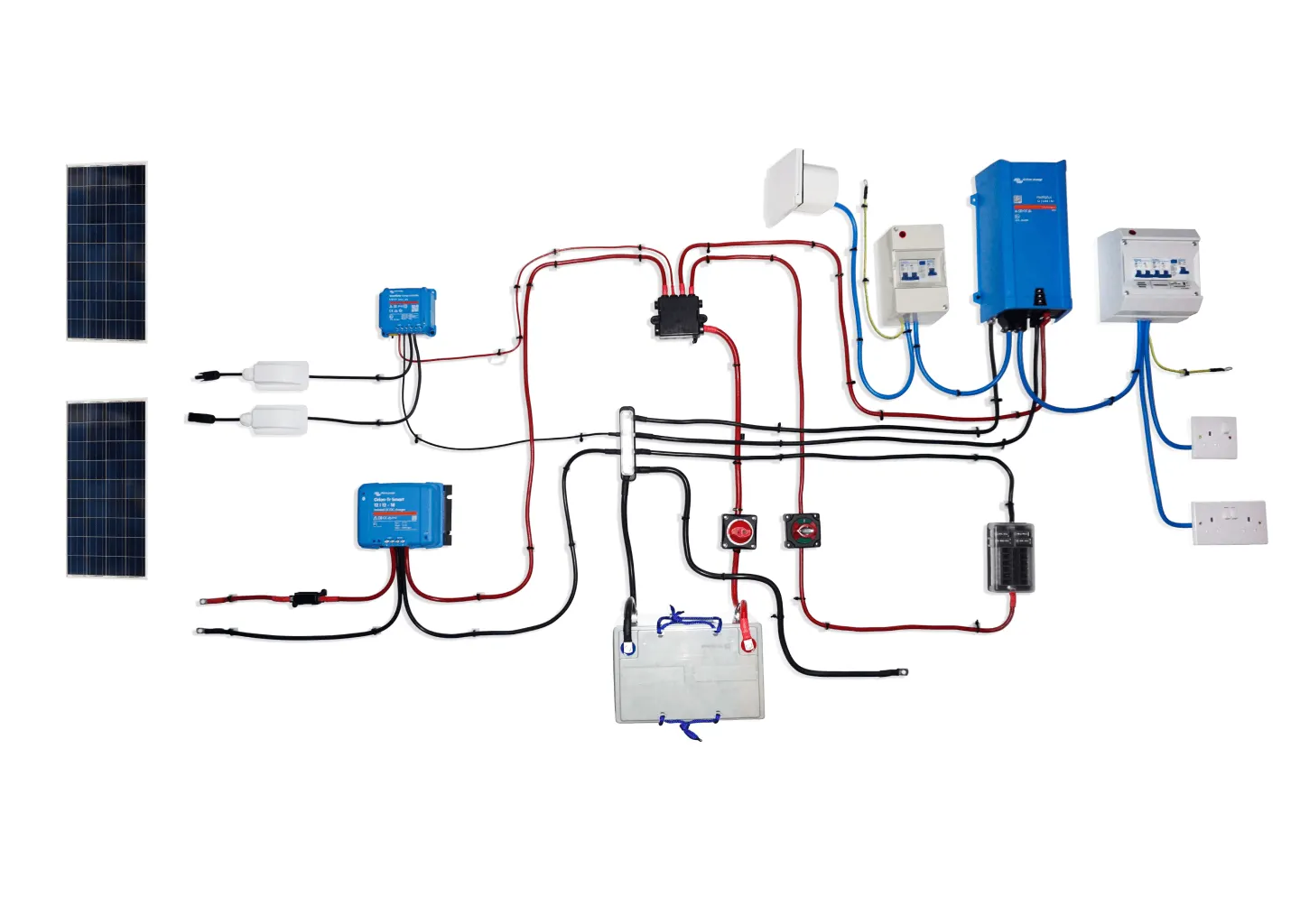
Use case: You live in your campervan full-time and rely solely on solar power for all your energy needs, including a fridge, lights, laptop, and perhaps a water pump.
Recommended Setup:
- Solar panels: Go for a larger system with 400W to 600W solar array. This setup ensures you generate enough power even on cloudy days.
- Battery: A larger 200Ah to 400Ah lithium-ion battery system is essential and will store enough energy to last through the night and cloudy days.
- Charge controller: An MPPT (Maximum Power Point Tracking) charge controller is crucial here. It's more efficient than a PWM controller, especially when dealing with larger panels and varying sunlight conditions.
- Inverter: If running several AC appliances, you need a robust 1,000W to 2,000W inverter to ensure power-hungry devices work smoothly without draining the system.
Expectations: This setup is more complex and expensive, but it provides the reliability and capacity needed for a full-time, off-grid lifestyle.
Battery and Solar Panel Kit for Minimalist Setup for Occasional Use
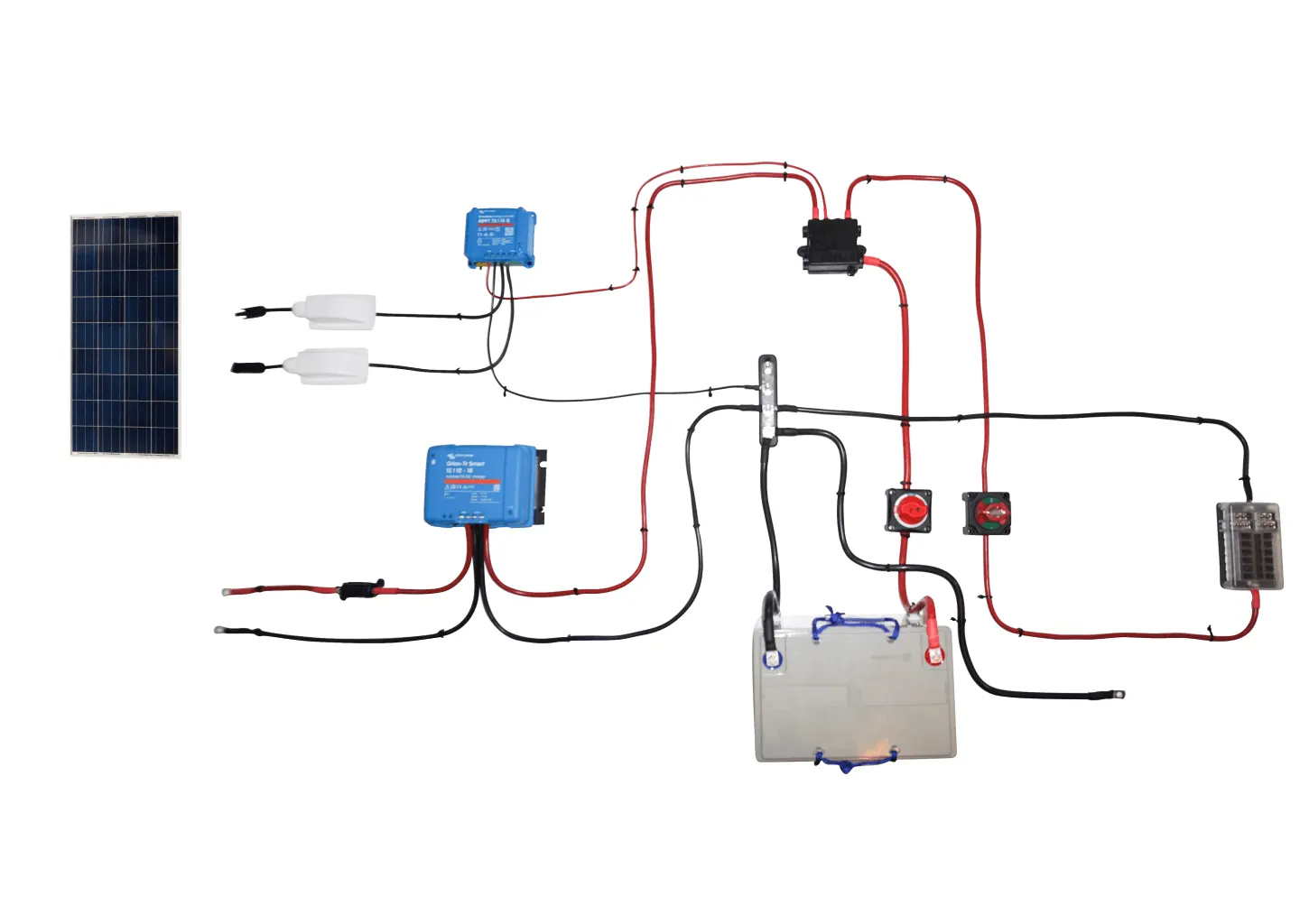
Use case: You use your campervan occasionally, and your energy needs are minimal—just some lights, a phone charger, and maybe a portable fridge.
Recommended Setup:
- Solar panels: A single 100W to 200W panel is usually sufficient. It's small, easy to install, and generates enough power for light usage.
- Battery: A 100Ah AGM battery works well here. It's affordable, requires no maintenance, and provides enough power for your limited needs.
- Charge controller: A basic MPPT charge controller will manage the energy flow effectively without adding unnecessary costs.
- Inverter: You probably won't need one, but a small 300W inverter is suitable for occasional AC use.
Expectations: This setup is simple, budget-friendly, and perfect for those who don't need much power.
A Power-Hungry Battery and Solar Panel Kit for Multiple Appliances
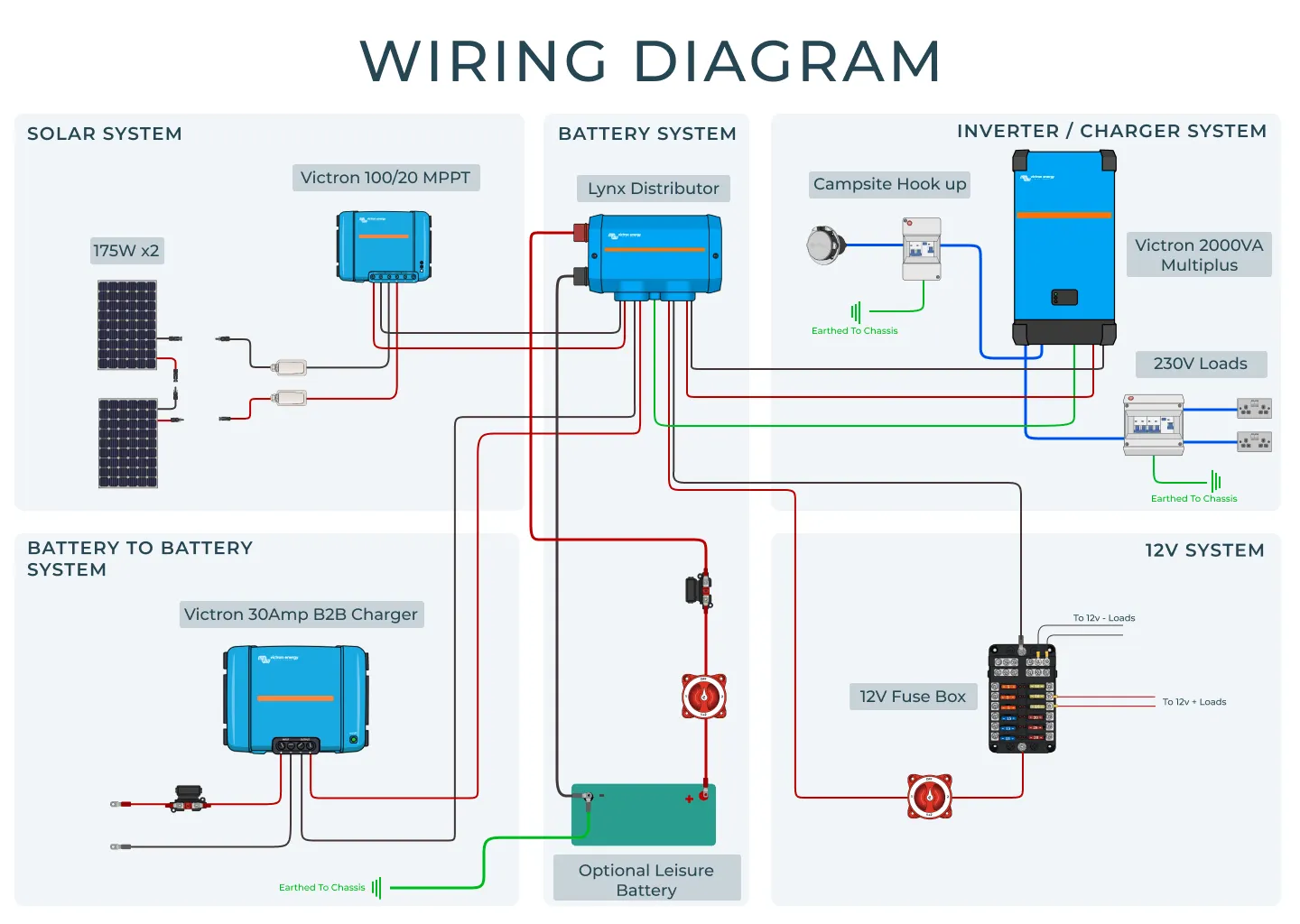
Use case: You have several appliances, like a fridge, microwave, TV, and maybe even an electric heater. Your energy demands are high, and you need a reliable system to keep everything running.
Recommended Setup:
- Solar panels: A large array, typically 600W to 800W or more, will generate the substantial power needed to run multiple devices.
- Battery: A large 400Ah to 600Ah lithium-ion battery system is essential to store enough energy to cover high usage, especially overnight.
- Charge controller: An MPPT charge controller is a must. It maximises the efficiency of your large solar array, ensuring you get the most out of your setup.
- Inverter: A heavy-duty 2,000W to 3,000W inverter will handle you using multiple high-demand appliances simultaneously, similar to the robust inverters supplied in Victron campervan electrical systems.
Expectations: This setup gives you all the comforts of home while on the road. It's the most expensive but delivers complete energy independence.
FAQs
How Much Do Solar Panels and Batteries Cost?
The cost of solar panels and batteries varies based on size and quality. Solar panels can range from £100 to £500 each, while batteries, especially lithium-ion, can cost between £400 and £1,000 or more. A complete kit, including panels, a charge controller, and necessary wiring, typically starts around £800 and can increase depending on capacity.
Are Solar Panel and Battery Kits Worth It?
Yes, solar panel and battery kits are worth it if you spend time off-grid. They provide reliable, renewable energy, reducing your dependence on campsites or external power sources. While the upfront cost can be high, the long-term savings and freedom to travel anywhere make these kits a solid investment.
Can You Use Any Battery for Solar Panels?
No, you can't use just any battery with solar panels. You need a deep-cycle battery, like an AGM, lead-acid, or lithium-ion, designed to provide consistent power over a long period. Car batteries, for example, aren't suitable because they're designed for short bursts of energy, not steady discharges.
What Kind of Battery Is Needed for Solar Panels?
You need a lithium-ion, deep-cycle AGM, or lead-acid battery. Lithium-ion is the best choice due to its efficiency, longer lifespan, and ability to handle deep discharges, though it comes with a higher price tag. Deep-cycle AGM batteries are more affordable but have a much shorter life span. Lead acid is rarely a good choice as it can only discharge 50%.