
Choosing the best van for a camper conversion depends on how you plan to use it: for many full-time vanlife builds, the top vans for camper conversion include the Fiat Ducato and Mercedes-Benz Sprinter. and plenty of other vans make more sense depending on your size, budget, and travel style.
Choosing the perfect van for your camper conversion is one of the most crucial decisions you'll make when entering the wild and wonderful world of vanlife, especially if you're a UK or EU DIY builder who also needs the right off-grid electrical setup to match your layout, power use, and time off-grid.
However, when researching this what you'll often find is bland lists of vehicles with little more than some specs and the usual copy-paste fluff straight from the manufacturer's marketing materials.
You'll also see sweeping surface-level statements around reliability and brand choice which hold little weight when held up to scrutiny and don't actually help when trying to choose the right model.
In this comprehensive guide, we'll walk you through what you actually need to know when choosing the best van for a campervan. We'll cover size categories, fuel types, reliability, running costs, maintenance, 4x4 and electric van options, and the individual models to look out for based on the kind of adventures you want to have, plus how your choice affects comfort, interior layout, and the off-grid electrical system you'll need for practical campervan travel.
Key considerations when choosing a van for a camper conversion
There's no one-size-fits-all answer to choosing the best van for a camper conversion, and, in truth, there are probably multiple options that you would be more than happy with.
Modern commercial vehicles are generally very reliable, and making the right choice will usually come down to the sort of travelling you'll be doing, your budget, and which individual features flick your switch. Buying the van is one thing you need to budget for, but in some cases the conversion itself can cost just as much, if not more than the van itself. It really depends if you are looking for a new model van, or a van which has been used for work covering over 10,000 miles a year for the last decade. Remember, no decision is right and no decision is wrong, you just have to try and make the right decision for you and your circumstances.
Before we cover each individual model, let's start with the most basic question you need to ask yourself:
How will you use your campervan?
This will be the most important factor in your decision-making process. The best van for full-time living will differ greatly from the best van for occasional weekend trips, so be honest with yourself early on. Before deciding on a particular model, it can be helpful to first understand the sort of general size of van you should be looking at.
The longer you plan to stay in the van, the bigger you'll want it to be so you have enough space for longer stays. You'll have more headroom, more storage space, and more flexibility in how you create the interior layout.
As well as the length of your trips, it's also important to think about where you'll actually be going when deciding on size. If you'll be predominantly staying at campsites there might be no need to factor in much more than a mains hook-up kit, a simple campsite-focused campervan electrical system, and some 230V plug sockets.
Conversely, for roaming off-grid, you'll need to think about water tanks, a full electrical system, and solar panels for a comfortable experience and reliable recharging, and it helps to understand the basics of campervan electrical systems before you start designing your layout. These components all take up valuable space and a larger van will accommodate them while maintaining extra space for sleeping and living.
When it does come time to buy these items, check out Vunked for complete ready-to-install electrical kits and our campervan electrical system design service. We supply everything you need to self-install, including industry-leading components by Victron plus full instructions and wiring diagrams.
The best size van for a campervan
In general, campervan base vehicles can be broken down into four size categories: small, medium, large, and extra large. Let's look at which is right for you based on the sort of travelling you'll be doing.
Small vans for a camper conversion
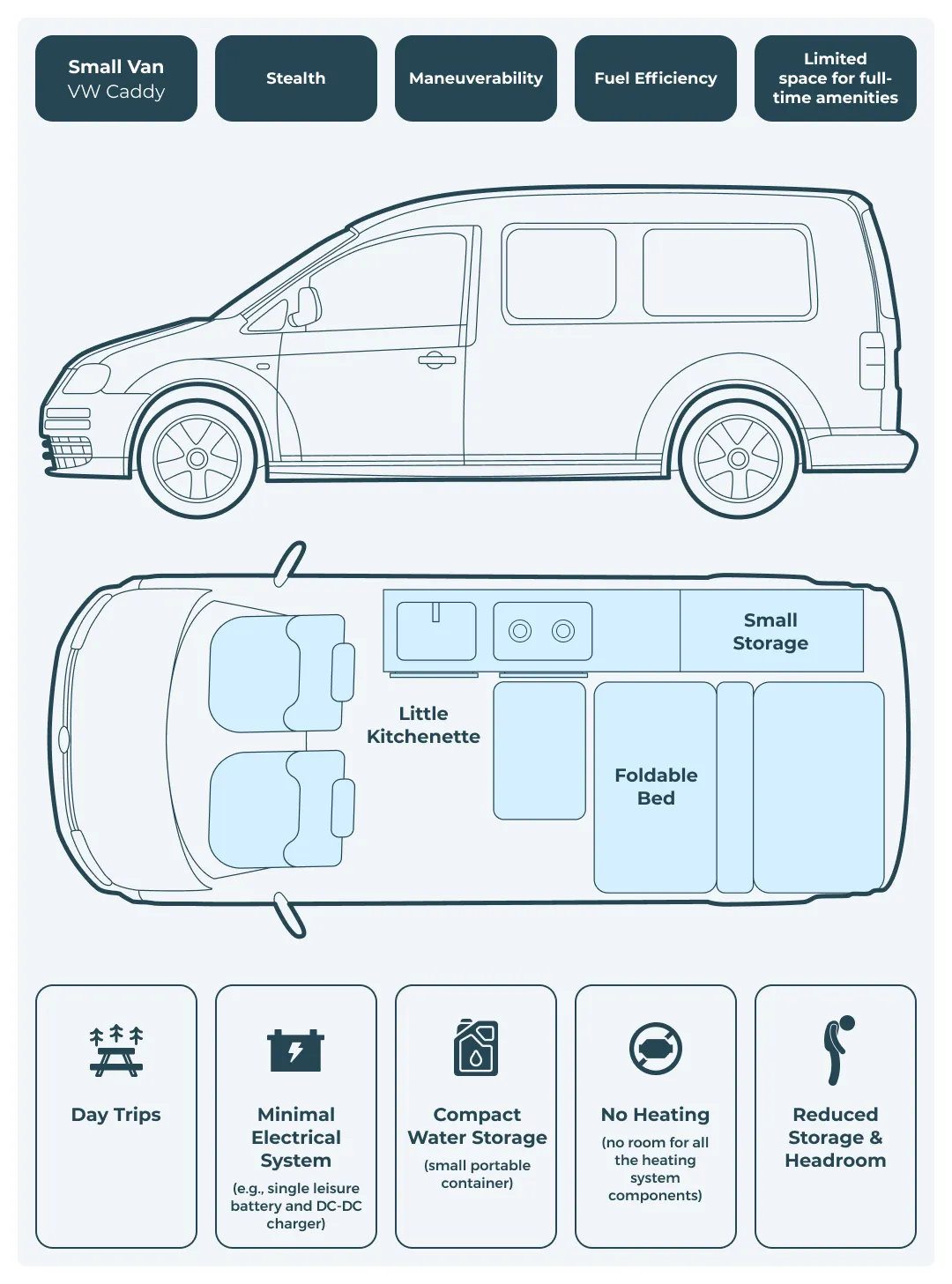
Small vans like the VW Caddy or Transit Connect are ideal if you're a solo traveller or a couple who prioritises stealth, manoeuvrability, and fuel efficiency. They're perfect for a weekend getaway when you just want to head down to the coast with some paddle boards or mountain bikes and need a comfy bed for the evening.
They're easy to park in cities, fit inside a normal parking space, and use less fuel compared to the bigger options. However, you will be sacrificing standing headroom which can make longer-term trips uncomfortable, and you'll need to get creative with storage ideas and living space.
Some people maximise this with solutions like pop-top roofs for sleeping areas or outdoor kitchens to maximise space, but if you're planning on longer trips, carting more gear, or just want to be genuinely comfortable it's probably best to start with a bigger van from the get go.
Medium vans for a camper conversion
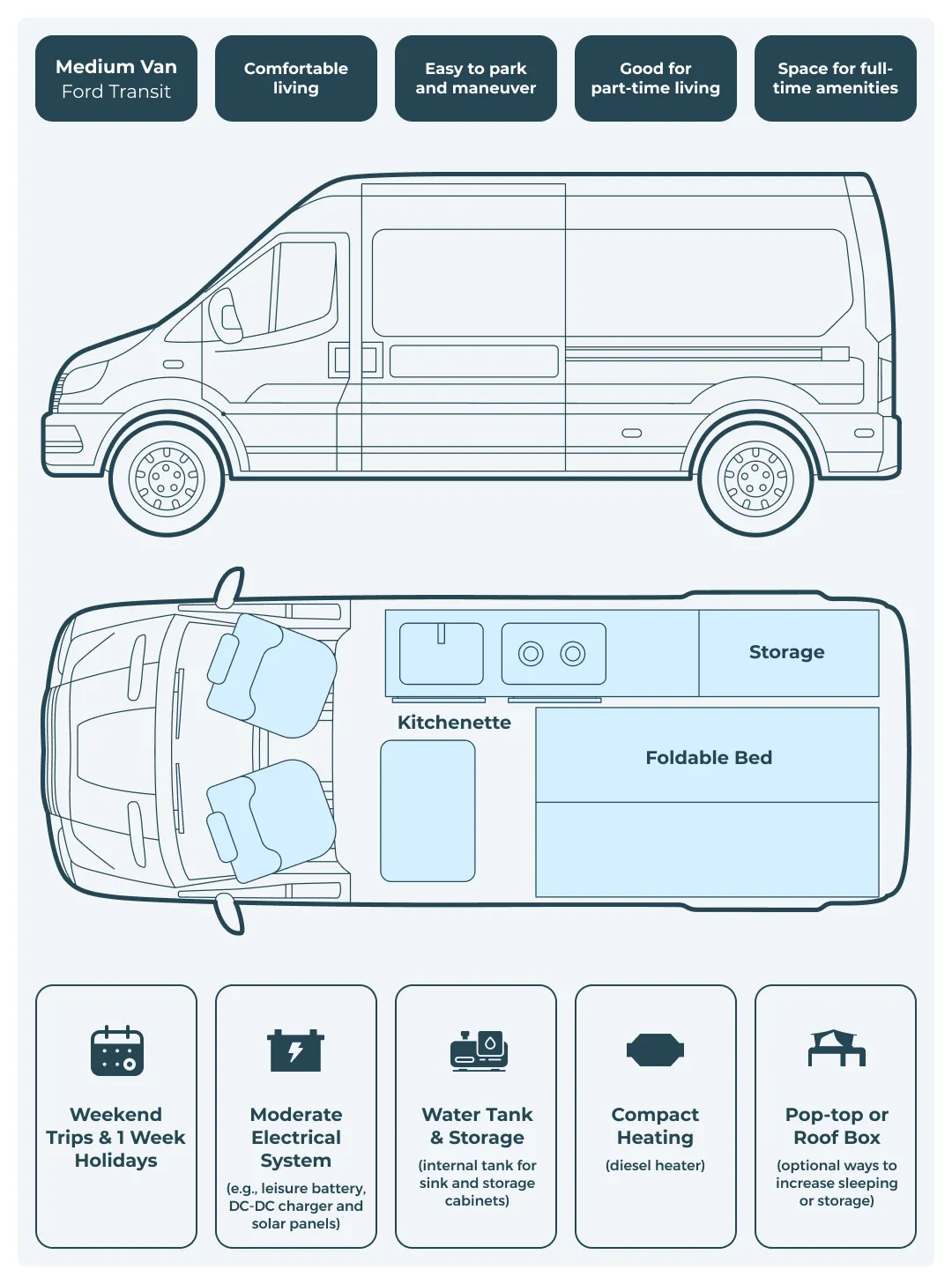
Medium vans such as the Ford Transit or Volkswagen Transporter offer a better balance between interior space and drivability, and can still work well as an everyday vehicle. They're easier to manoeuvre around tight roads or cities than large vans while still offering ample room for most uses outside of full-time living.
If you aren't particularly tall these options are also usually large enough to offer standing headroom. Plus at this size, you'll have plenty of space for things like electrical systems, a kitchenette, a foldable full-size bed and internal storage.
If you're looking for the most compact vehicle that you can still be comfortable in for more than week-long getaways then this is what you should be looking at. This size often offers plenty of room for longer getaways without stepping up to a large van. They're neither massive nor a pain to park and you can create a space which is plush and livable for longer trips as well as short stints of full-time living.
We'll get into individual models later but there are loads of options in this category, too, so you'll have plenty of choice when shopping around.
Large vans for a camper conversion
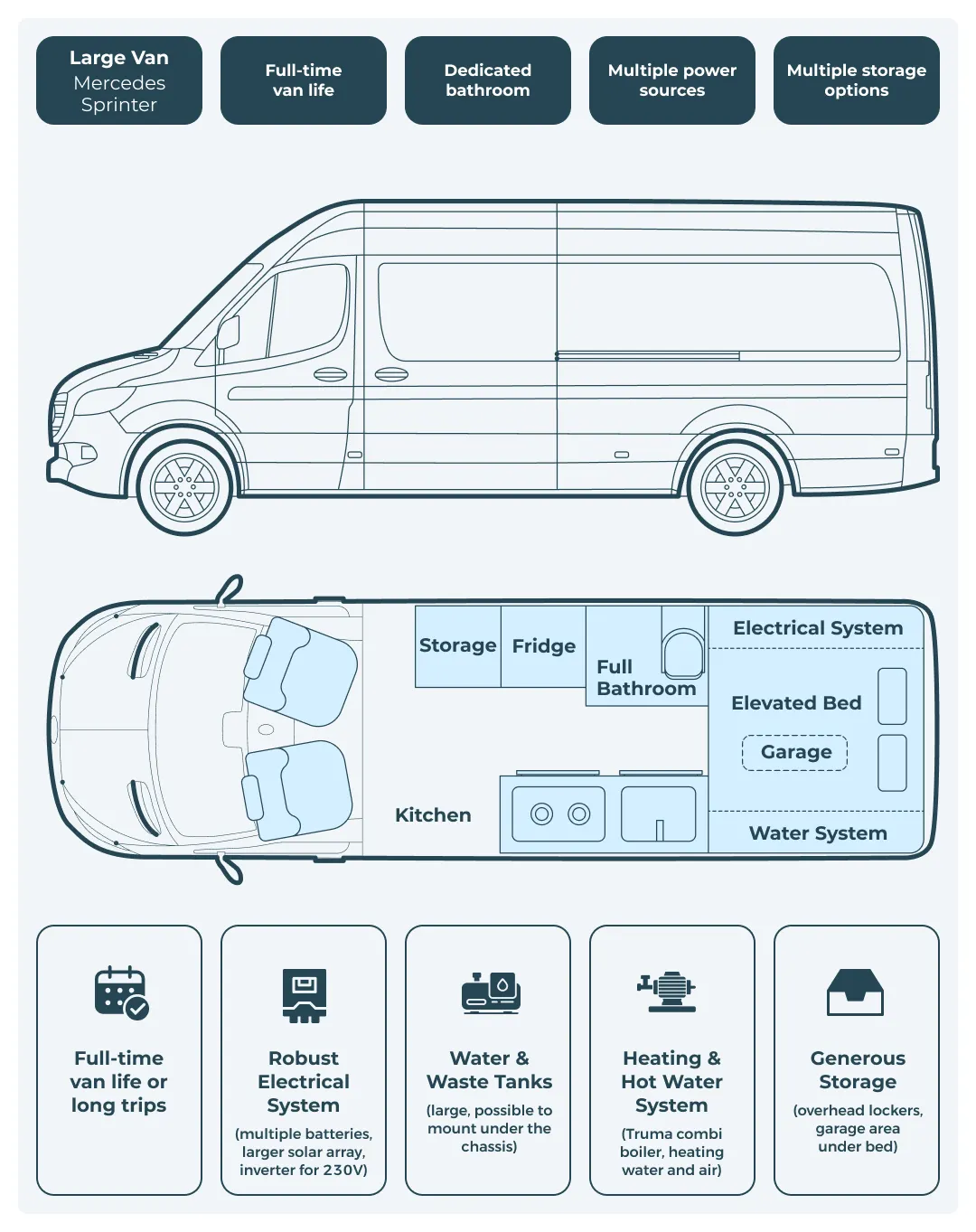
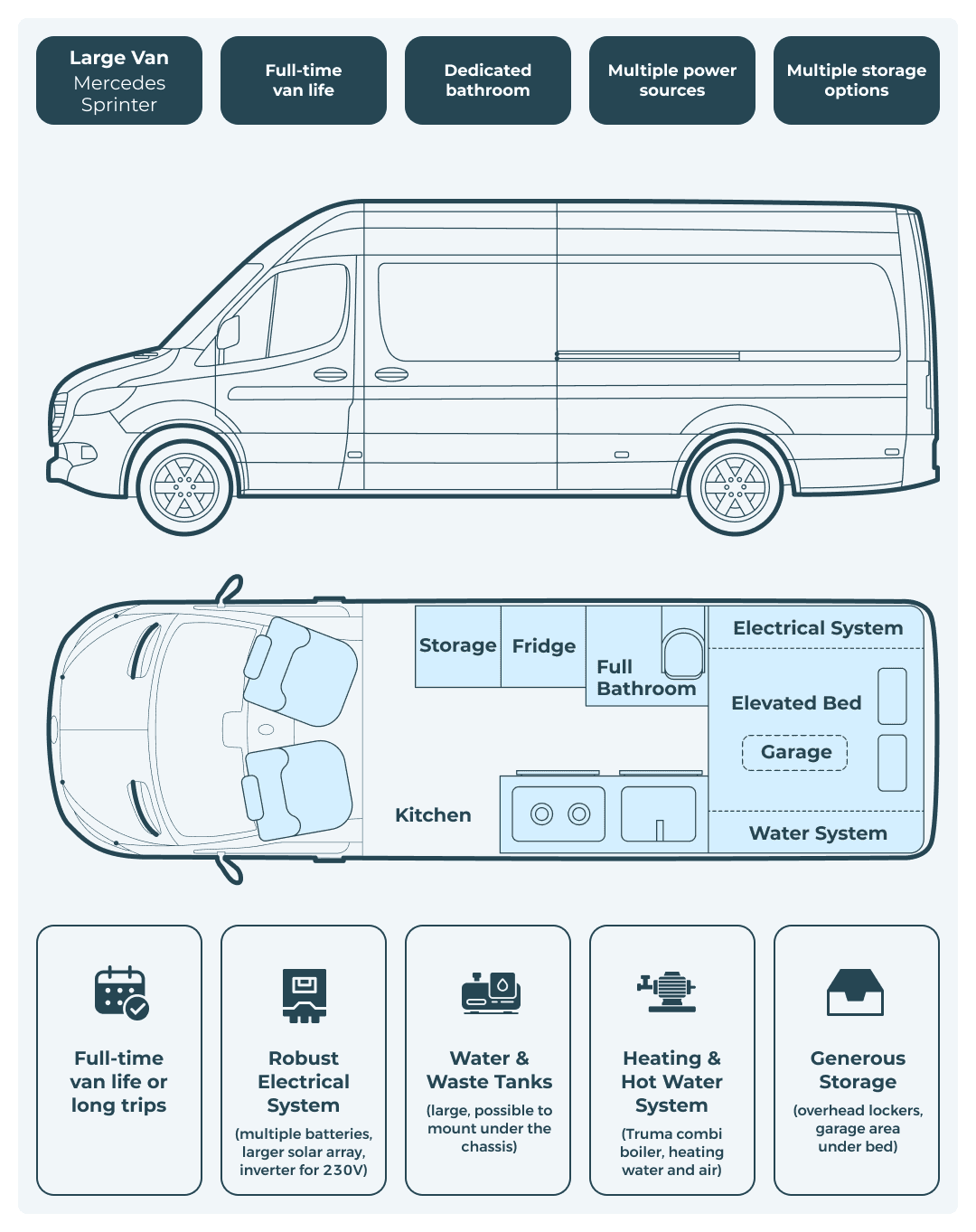
Large vans like the Mercedes Sprinter, Citroen Relay, or Iveco Daily are the go-to if you're planning on being a full-time van dweller and need more space for a dedicated bathroom, full kitchen, and tons of storage for long-term travel.
These vans offer the most flexibility for interior layouts, and high roof configurations are a major advantage if you want to stand comfortably and have more freedom with the layout. You'll be able to fit in everything you need for trips of any length and there's also plenty of space if your needs change over time. The most popular van types for conversion are large vans ideal for full-time living and smaller vans for weekend trips, but it really depends on your circumstances.
It's worth mentioning that they can be more challenging to park in cities, and they're also quite removed from the driving experience of a car if you aren't used to larger vehicles. However, this is a negligible issue with some practice.
Being bigger and usually heavier they're also likely to use more fuel than smaller options. Some like the Mercedes Sprinter also come at a premium due to the larger size and extra features associated with being a flagship model.
Extra large vans for a camper conversion
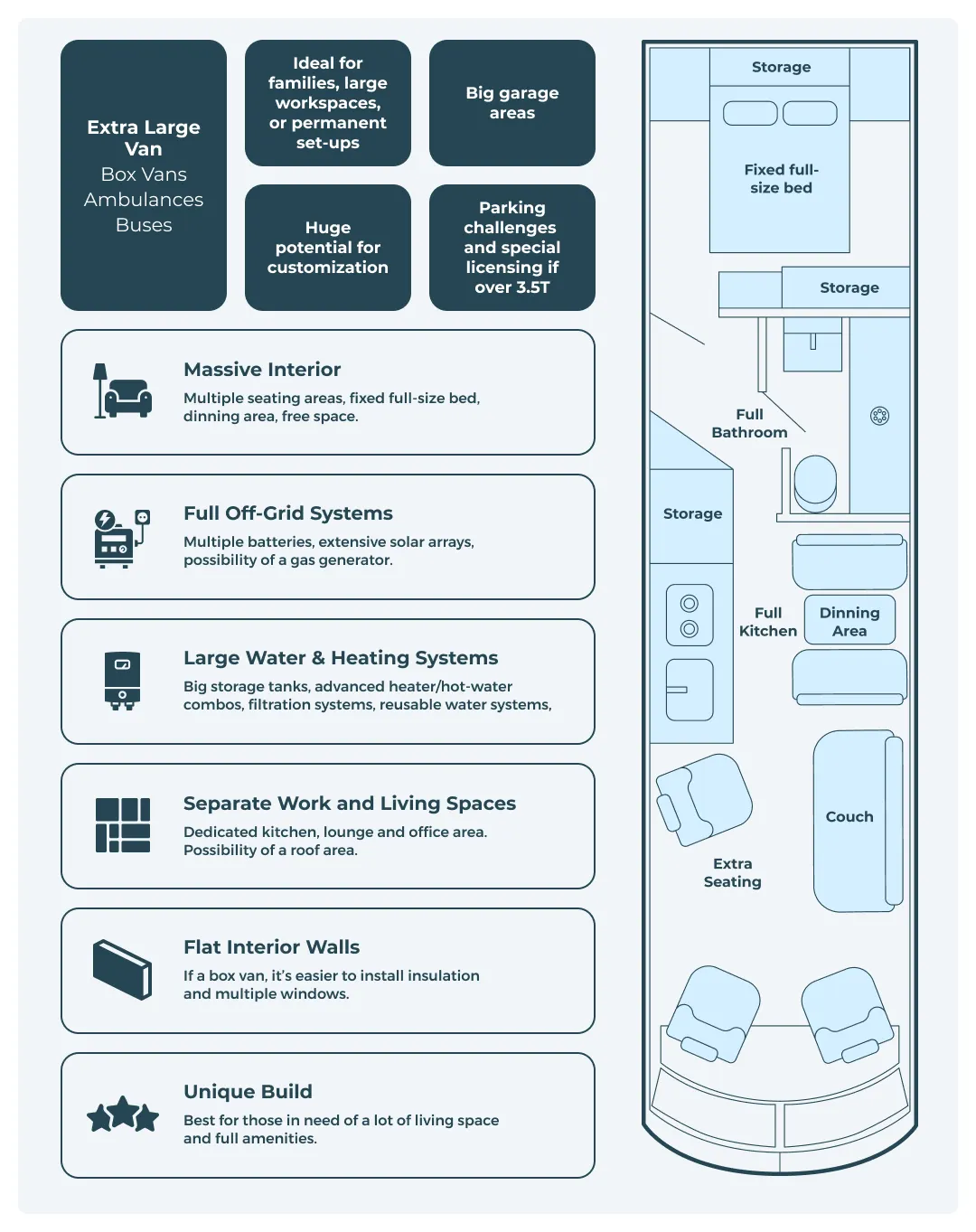
Extra large or specialist options like box vans, ambulances or converted buses are also an option for those who need the absolute maximum amount of space.
Larger options like this are ideal for families or couples looking to incorporate larger workspaces, extensive storage, and fixed full-size beds. However, be aware they can be difficult to navigate around urban areas and you won't get them in a normal parking space.
These vehicles can come with some surprising quirks and benefits, too. For example, box van panels are usually perfectly flat due to the squared shape, so there's also no need to navigate around the awkwardly curved metal panels of many smaller vans during the build.
This can be a godsend when designing an interior living space and windows can be easier to build and install as well due to the perfectly flat nature of the walls.
There are also options like ex-military vehicles or ambulances which can come pre-equipped with useful features like four-wheel-drive or large boxy interior spaces.
These can all be converted into truly impressive campervans. However, be aware the specialist nature of these vehicles means it can be tougher to find off-the-shelf conversion parts. You might need to do some deep online research to look into build threads and advice from other individuals who've gone down this route.
If you are up for a challenge and want something a bit quirky, there can be some great second-hand deals on these less popular models. However, for most people, it's probably best to stick to the tried-and-true options as you'll be following a similar path to thousands of other successful builds.
Depending on the weight, it's important to note you might also need a special license for vehicles like these. A normal UK license will let you drive anything up to 3.5 tonnes total weight. For anything more, you'll need a separate C1 license. Go over 7.5 tonnes, and you'll need a full HGV license.
Where will you travel to?
In addition to general size, it's also important to consider the geographical logistics of where you'll be travelling. If you're planning a long trip across multiple countries it will be important to consider things like parts availability or servicing in different regions.
If the van you choose is less common or was never domestically sold in the regions you're travelling to, you may find it more difficult to find parts or authorised service centres.
This is where going with popular brands such as Ford, Citroen, or Mercedes has its advantages as you'll find similar models all across Europe and beyond. A widely sold van model is usually easier to service abroad. You'll also find reliable supply chains and dealer networks for replacement parts or consumables.
It's important to be aware that brands often rebadge the same base vehicle in different regions with different names. For example, in Europe, Vauxhall is called Opel, so Opel parts will fit fine onto your Vauxhall van.
Some vans also have parts commonality with other models from different brands entirely due to joint-ventures. For instance, a pre-2017 Volkswagen Crafter is essentially a rebadged Mercedes Sprinter. This means while trim and aesthetic parts differ, a water pump from one will bolt right onto the other. This is also true of the Citroen Relay and Peugeot Boxer.
Whichever model you choose, look into where you'll be travelling and plan a camper van conversion around the needs of a longer trip, taking servicing parts or components to repair potential known issues with you to avoid delays through waiting for replacements, much like you would methodically plan a DIY campervan electrical checklist before starting your build.
Drivability and parking
It's also worth considering drivability when looking at which van to buy. If you'll be travelling in urban areas often then a large van might be cumbersome and difficult to find adequate parking. A long wheelbase van offers more living space but is harder to park, it's important to consider these factors. Some buyers prefer a van that still helps them suit tighter roads and parking for mixed use.
This can turn into a real hassle when you're wasting time driving around to find a space frequently. You could also face issues like height restrictions on bridges or car parks if you're going for the very largest vans. high roof options can improve comfort inside, but they can make those restrictions more relevant.
What's more, it's more difficult to drive a large front-wheel-drive van through some rural areas with uneven terrain or narrow winding roads. This can, however, be somewhat mitigated with practice and a decent set of all-road tyres. There's also 4x4 versions of many popular models, which often pair well with a robust campervan inverter setup for running 230V gear off-grid in remote spots.
Finally, many people note that large vans may be less subtle if you're planning to stealth camp in busier areas. However, it's debatable how much this really matters if you'll be adding things like solar panels and air conditioning vents anyway. A high-roof van can eliminate the need for a pop-top and allows standing inside.
Fuel types and running costs
Fuel efficiency and long-term running costs also play a factor when choosing the best van for a camper conversion.
Diesel engines
Diesel engines are generally the most common as they are efficient and can rack up massive miles without issues. You'll also find diesel anywhere in the world meaning there's no chance of worries around sourcing fuel. However, there are some downsides. Some cities are starting to impose restrictions on older engines that don't meet Euro 6 requirements, and diesel engines have proven to be less environmentally friendly than once thought, though they can still make sense for heavier camper builds where towing capacity matters.
Petrol engines
Petrol engines are less common in larger vans and more common in smaller vans. Petrol engines generally have lower torque than diesel options while sometimes not returning the same MPG. However, they're better in areas with diesel restrictions and are arguably just as reliable as diesel engines due to less mechanical stress from the more traditional combustion method (relying on spark plugs instead of glow plugs).
If you're open to options outside of petrol and diesel, you'll also find some vans which run on (or have been converted to run on) LPG (Liquefied Petroleum Gas).
LPG engines
LPG engines can offer lower fuel costs compared to petrol or diesel, though it can be more difficult to find in certain regions since not all fuel stations carry it. This is changing over time, however, and more stations are starting to carry LPG.
LPG also offers a unique benefit in that campervan heating and hot water systems which run off LPG can be connected to the same fuel tank for an easy single fuel source for both driving and living, and if you’re unsure how to integrate this into your build it’s worth booking a free campervan electrics consultation to plan things properly.
Electric engines
Electric vans like the Ford E-Transit and Renault Master ZE are also growing in popularity, with low emission zones making them more relevant, but be aware it can be more difficult to find charging infrastructure in less developed countries.
Their range can also be a concern since you can't extend it by loading up a few Jerry cans like you can with conventionally fuelled vehicles. Despite the limited range of some models, where electric does help is that you can use the vehicle's electric lithium battery as a large leisure battery.
With the right set-up, you can use an electric vans battery to power devices or recharge via solar just like with a dedicated leisure battery bank. While some sustainability-conscious vanlifers are doing this, it does require a significant investment to achieve. There's also no plan B if you need to drive away on a cloudy day but you've drained the battery with an induction hob.
However, with the advent of affordable solar, dedicated Victron-based campervan electrical systems, and low-draw electric heating through new technologies such as hydronic heating and heat pumps, emissions-free and convenient vanlife is starting to become a reality.
The truth about reliability and maintenance
Reliability can be a difficult-to-quantify measure that's often misrepresented in online discussions.
You'll see many sources state how expensive options like Mercedes Sprinters are more reliable but more expensive. Cheaper options like Citroen Relays are implied to be the opposite, costing less upfront but not offering the same guarantee of hassle-free ownership.
It's also worth noting that parts cost is a factor, with premium manufacturers like Mercedes often charging more for comparable service parts versus Ford or Citroen. Different models also have different common issues that go beyond consumables and wear items like filters and cam belts.
These factors make it difficult to objectively quantify reliability. For example, recent data from Warranty Solutions Group looked at hundreds of warranty claims to evaluate the reliability of the most popular large commercial vans. The study combined both claim rates and claim value to assess overall reliability and ownership experience.
The findings? The Renault Master took the top spot for claims, with a claim rate of just 4.55%. The Mercedes Sprinter? Third place, with a claim rate of 11.20%.
However, the average claim value for the Renault Master was the highest, coming in at £1,121.60, The Sprinter on the other hand had an average claim value of £636.48, almost half.
So, the Renault Master needs fixing less, but when it does need fixing it's likely to be a more important/expensive part that needs replacing. Does that make it more or less reliable?
Maybe since so few Renault Masters needed repairs, one or two extremely uncommon large failures have skewed the average claim value.
Other manufacturers might have had just as many of these large failures in addition to many more small and medium-sized faults, lowering the average.
We're being purposefully obtuse here, but you get the point. Here's a look at the full findings of the data courtesy of AM Online:
Position | Make | Model | Claim rate | Average claim value |
|---|---|---|---|---|
1 | Renault | Master | 4.55% | £1,121.60 |
2 | Vauxhall | Combo | 10.86% | £719.84 |
3 | Mercedes | Sprinter | 11.20% | £636.48 |
4 | Vauxhall | Movano | 12.50% | £783.64 |
5 | Peugeot | Partner | 14.25% | £685.41 |
6 | Citroen | Berlingo | 15.15% | £544.37 |
7 | Volkswagen | Transporter | 15.82% | £675.89 |
8 | Ford | Transit | 15.82% | £584.21 |
9 | Peugeot | Boxer | 16.59% | £655.05 |
10 | Vauxhall | Vivaro | 17.33% | £782.82 |
This is just a sample from one company, and far from the final word on van reliability. You'll also find plenty of other studies from different sources that claim the Mercedes Sprinter as the most reliable van on the market, with numbers to seemingly back it up. |
The point here is that reliability isn't always black and white, and you should be sceptical of blanket claims of one manufacturer being objectively more reliable than another, especially solely because it's a premium brand.
Moreover, some vans will be expected to last more miles than others. Based on general user feedback, the table below illustrates how many miles you can expect from each van. Take this with a gallon of salt as maintenance and use case will be the main deciding factors in how long an individual van lasts.
Make & model | Estimated mileage lifespan |
|---|---|
Renault Master | 200,000–250,000 miles |
Vauxhall Combo | 200,000–250,000 miles |
Mercedes Sprinter | 250,000–300,000 miles |
Vauxhall Movano | 200,000–250,000 miles |
Peugeot Partner | 150,000–200,000 miles |
Citroën Berlingo | 150,000–200,000 miles |
Volkswagen Transporter | 200,000–250,000 miles |
Ford Transit | 200,000–250,000 miles |
Peugeot Boxer | 200,000–250,000 miles |
Vauxhall Vivaro | 200,000–250,000 miles |
As we can see, there isn't a great deal of variation. These figures also highlight why a higher mileage van can still be a solid base for a campervan conversion if it's been looked after properly. |
The reality is that most modern vehicles are incredibly reliable. All of the major motor manufacturers have stringent quality control baked into their commercial vehicle manufacturing processes.
So, buy the van that will fit your needs based on its size and cost. They all need servicing and while some manufacturers are likely to charge a bit more for the parts, it probably won't be by a massive margin.
You can't fully control when something will go wrong, and the price of a fix will depend more on the nature of the issue than the brand of the van.
Rust is a significant concern for older vans and can be expensive to repair. One van know for this is the Ford Transit, however the Ford Transit has improved rust protection in recent models. Careful inspection of a used van's service history and rust condition is essential before purchase.
What you can control is how well the van has been looked after. If you're buying a new van, follow the service schedule. If you're buying a used van, make sure the vehicle in question has a solid service history and that each door, along with its locks, works properly.
Vans are made to cover a lot of miles, so there's no issue with buying one that's done 80,000 miles if it's been properly serviced. One tip here is to buy a van that's been part of a commercial fleet.
Commercial fleets of vans will have a solid servicing schedule that's carried out across the whole fleet, as well as regular checks for wear and safety. Sites like Merthyr Motor Auctions and First4vans can be ideal for grabbing one of these to convert to a campervan.
You'll have added peace of mind that it's not been run into the ground by a sole trader and patched up just good enough to sell to an unsuspecting customer (you).
The best vans for a camper conversion
So, which van should you actually buy? Usually, you should go for the newest, lowest mileage van which is the size you need and fits within your budget.
Let's break down the most popular vans in each category to give you a good foundation when shopping around. We'll also include alternative names for each model where applicable due to rebadging.
For a full rundown of the expense involved with building a campervan, you also can check out our dedicated article on campervan conversion costs.
Best small vans for a camper conversion
Volkswagen Caddy
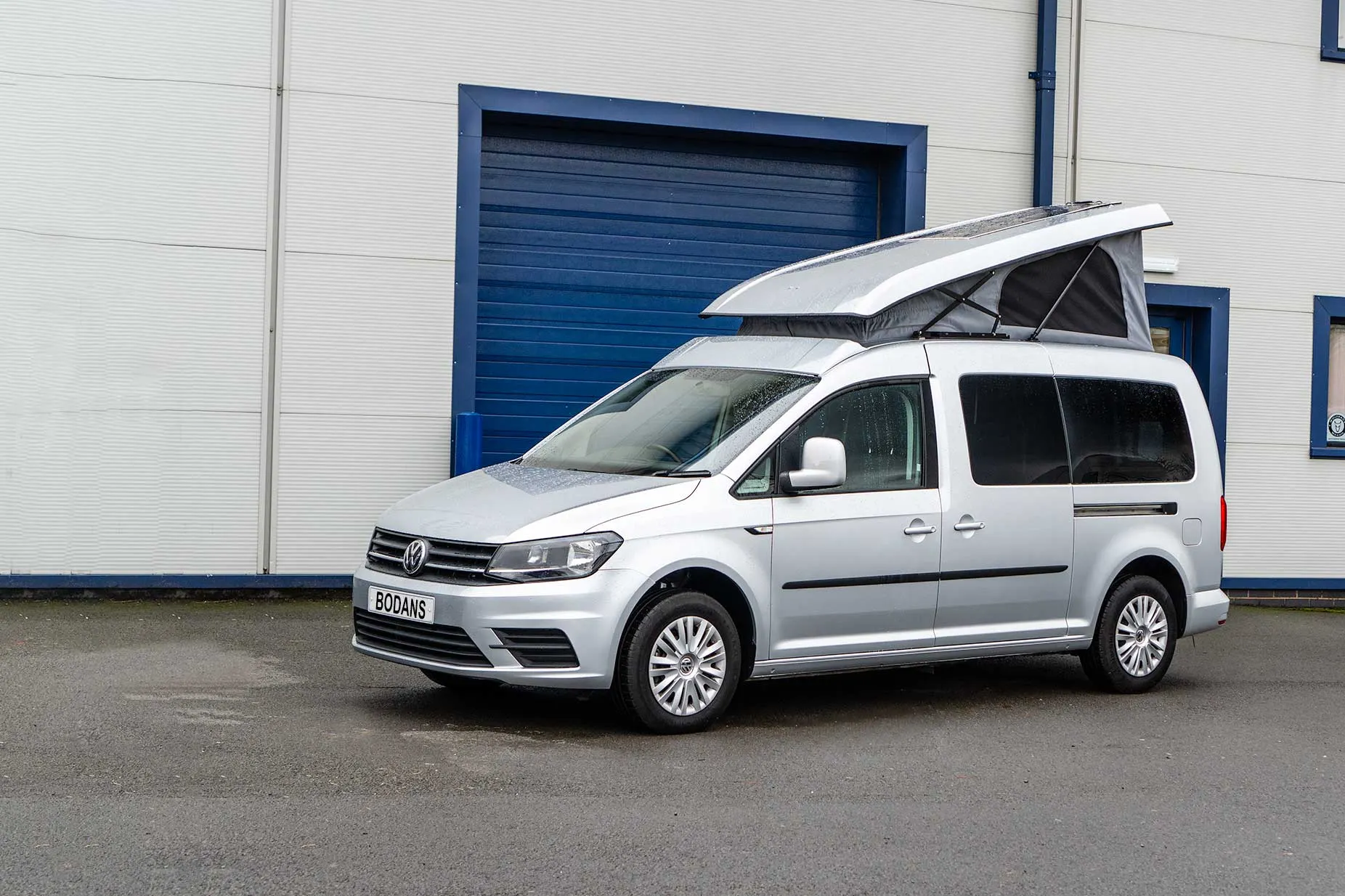
The Volkswagen Caddy is compact, reliable, and decently spacious for a micro camper conversion. It's ideal for solo travellers or those who prefer a more stealthy vehicle, and both diesel and petrol options offer good fuel economy. Standing headroom isn't possible without a pop-top, but there's enough internal space for a fold-out bed, an outside kitchenette, and storage areas with a clever layout. It also feels just like driving a car.
Also called:
- Volkswagen Rabbit (pickup variant)
- SEAT Inca (1996–2004)
- Ford Transit Connect (2021–present)
- Ford Tourneo Connect (2021–present)
Citroën Berlingo
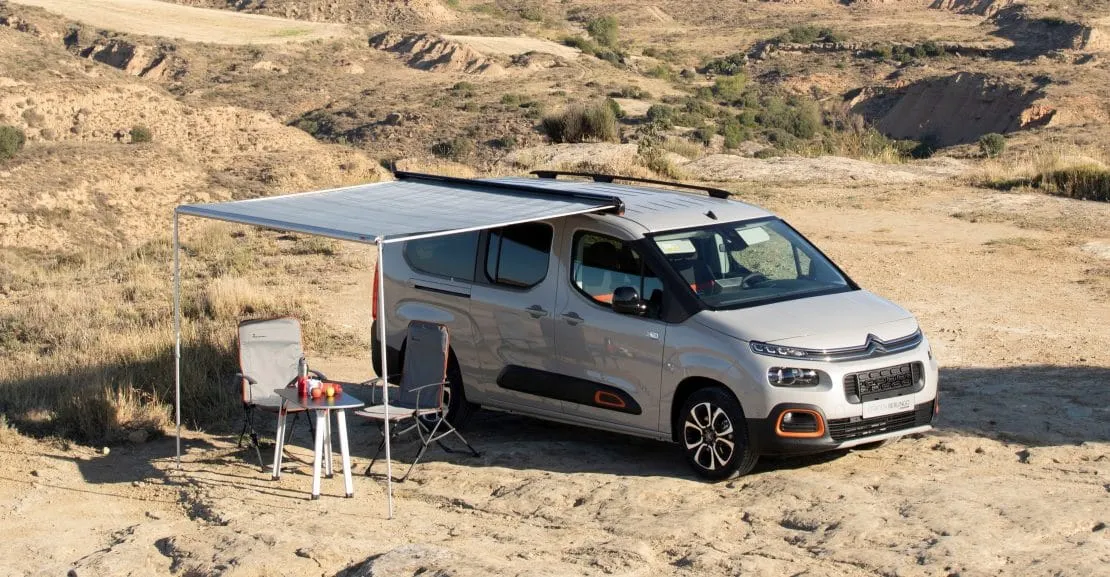
The Citroën Berlingo is an affordable, compact van known for its practicality. They've got more cargo space than the Caddy while costing less, making them an excellent choice if you're on a budget. Many DIY heroes opt for a slide-out kitchen or roof-mounted storage to maximize space, and their widespread availability ensures easy access to parts and servicing.
Also called:
- Peugeot Partner
- Peugeot Grand Raid
- Peugeot Ranch
- Doninvest Orion M
Ford Transit Connect
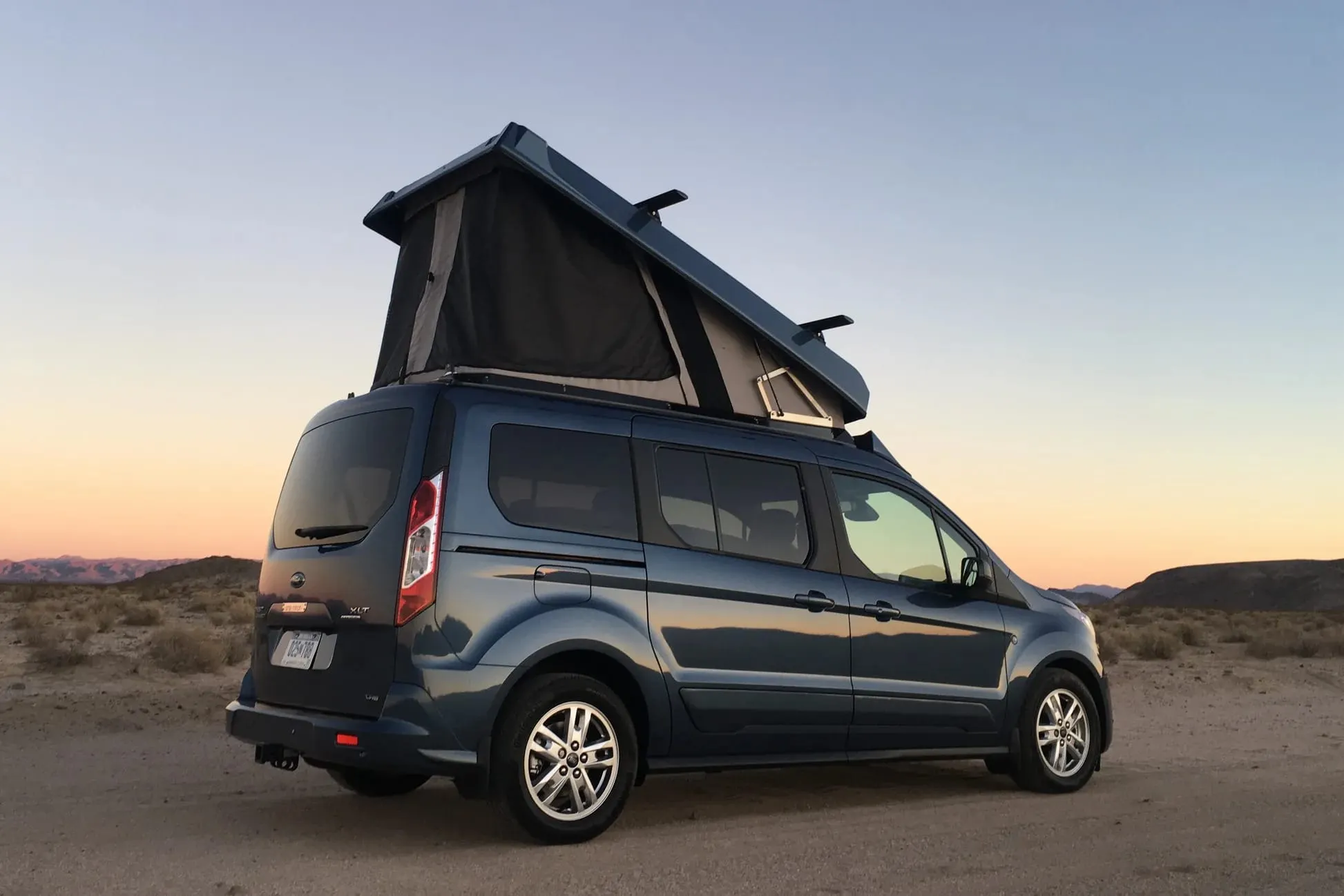
The Ford Transit Connect balances efficiency with cargo space, with a boxier design that allows for more creative camper layouts. There's space for fold-out modular sleeping and cooking areas, and it's also one of the most affordable small vans on the market. Parts are readily available across both the UK and Europe, and you'll find off-the-shelf options for pop-tops aplenty.
Also called:
- Ford Tourneo Connect
- Volkswagen Caddy (Exclusively 2021–present models)
Best medium vans for a camper conversion
Volkswagen Transporter (T5, T6, T6.1)
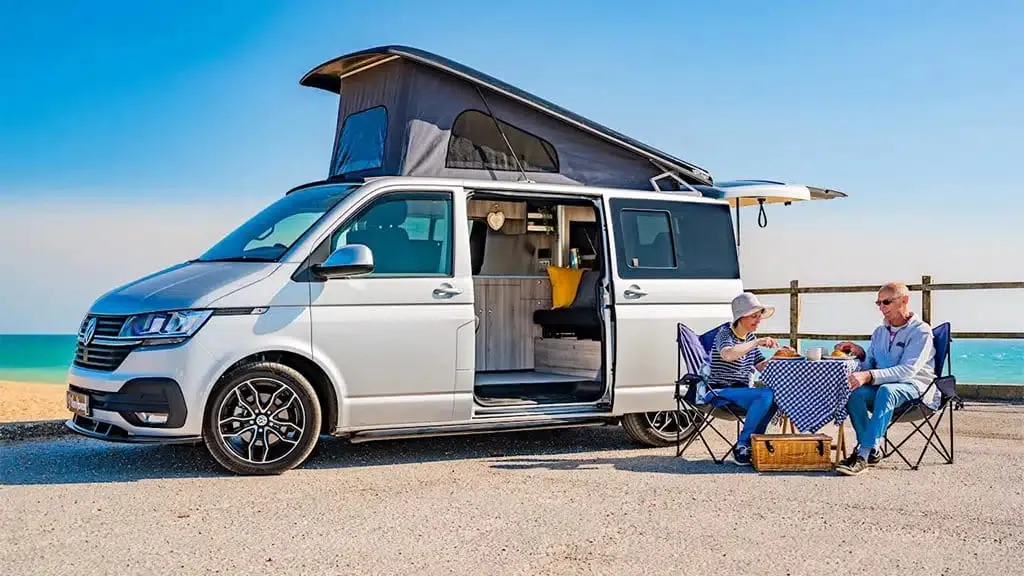
The evolution of the classic VW camper that started it all. Transporters are a legendary camper base with decades of history in vanlife culture. The compact dimensions make it city-friendly, but there's still enough interior width for a decent kitchenette and convertible bed. VW charges a premium price but for the cost of entry, you'll get high reliability and performance. There's also a bustling aftermarket community making custom parts and conversion kits widely available. It remains a great choice for buyers who want heritage and aftermarket support.
Also called:
- Volkswagen Type 2 (until 2002)
- Kombi
- Ford Transit Custom (Exclusively new models)
Ford Transit Custom
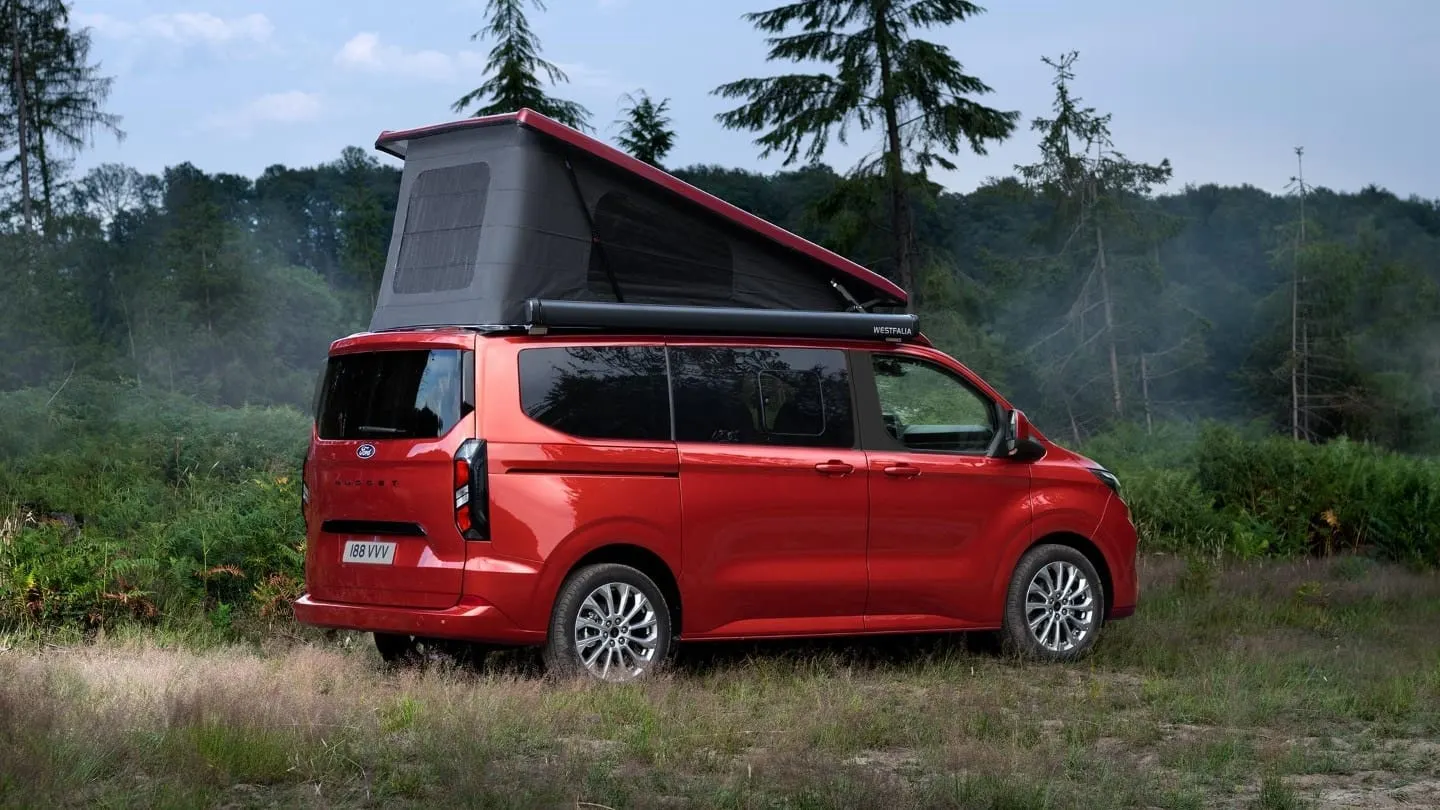
The Ford Transit Custom is a popular van in the UK camper scene and offers many of the same features and benefits as the Transporter since new models are essentially the same vehicle under the skin. It also features excellent cargo space, reliability, and aftermarket support. Plus it comes in multiple lengths and roof heights, with parts widely available due to Ford's expansive dealer network. That also makes it especially popular with UK converters because parts and kit options are easy to source.
Also called:
- Ford Tourneo Custom
- Volkswagen Transporter (Exclusively new models)
- Ford New Transit
- Ford Tourneo
Renault Trafic
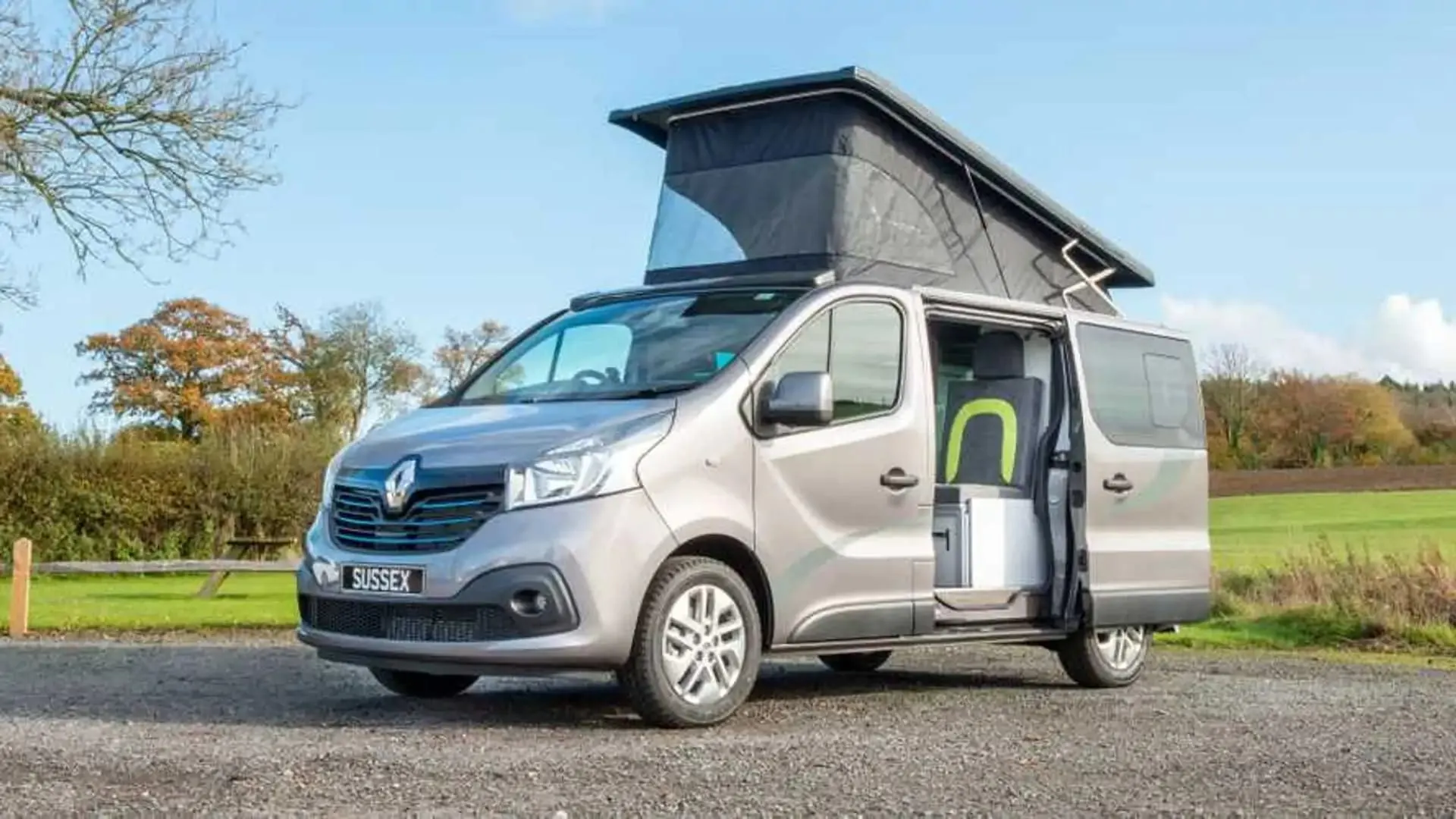
The Renault Trafic offers an excellent budget-friendly alternative to the Transporter, boasting a spacious cargo area and solid fuel economy. Their lower purchase price makes them attractive for first-time van builders, hitting the sweet spot for buyers who want decent space without Transporter pricing, and the money you save can be thrown into other areas of the build. All versions have a good reputation for reliability when well-maintained, and parts should be easy and affordable to source, so they can represent strong value when bought at the right price.
Also called:
- Vauxhall Vivaro
- Nissan NV300
Best large vans for a camper conversion
Mercedes Sprinter
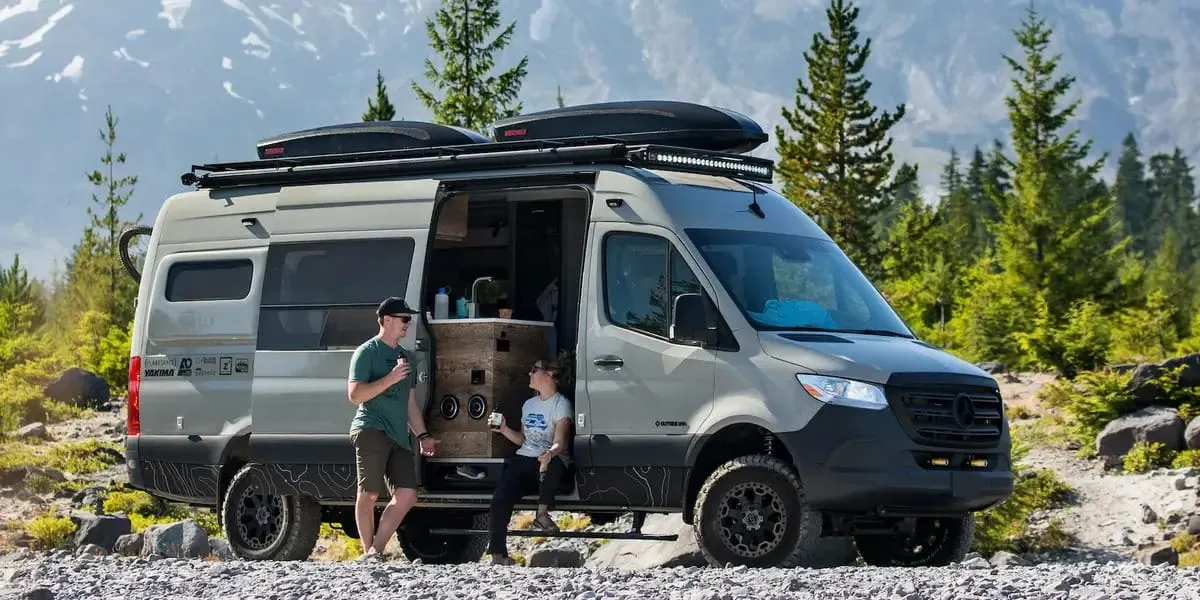
The ultimate premium large van option, the Mercedes Sprinter is one of the leading choices as a base van for premium camper builds. Top reliability, high build quality, and spacious interior, with an interior height of 2243 mm and internal load volume of 15.5 m³, plus rear-wheel drive as a big draw for many heavier builds, make the Sprinter the de facto choice for those looking for the best large van available. Newer models also add advanced features in the cab.
There are various wheelbases and roof heights available, with long wheelbase versions especially popular when extra layout flexibility and extra headroom are the priority. Cargo length reaches 4410 mm in the right configuration, which is useful when planning larger fixed layouts. Some users do point out the slightly higher maintenance costs, but if you're in a position to drop £50,000 on a top-spec model, how much do you care?
Also called:
- Freightliner Sprinter (2001–2021)
- Dodge Sprinter (2003–2009)
- Volkswagen Crafter (2006–2017)
Fiat Ducato
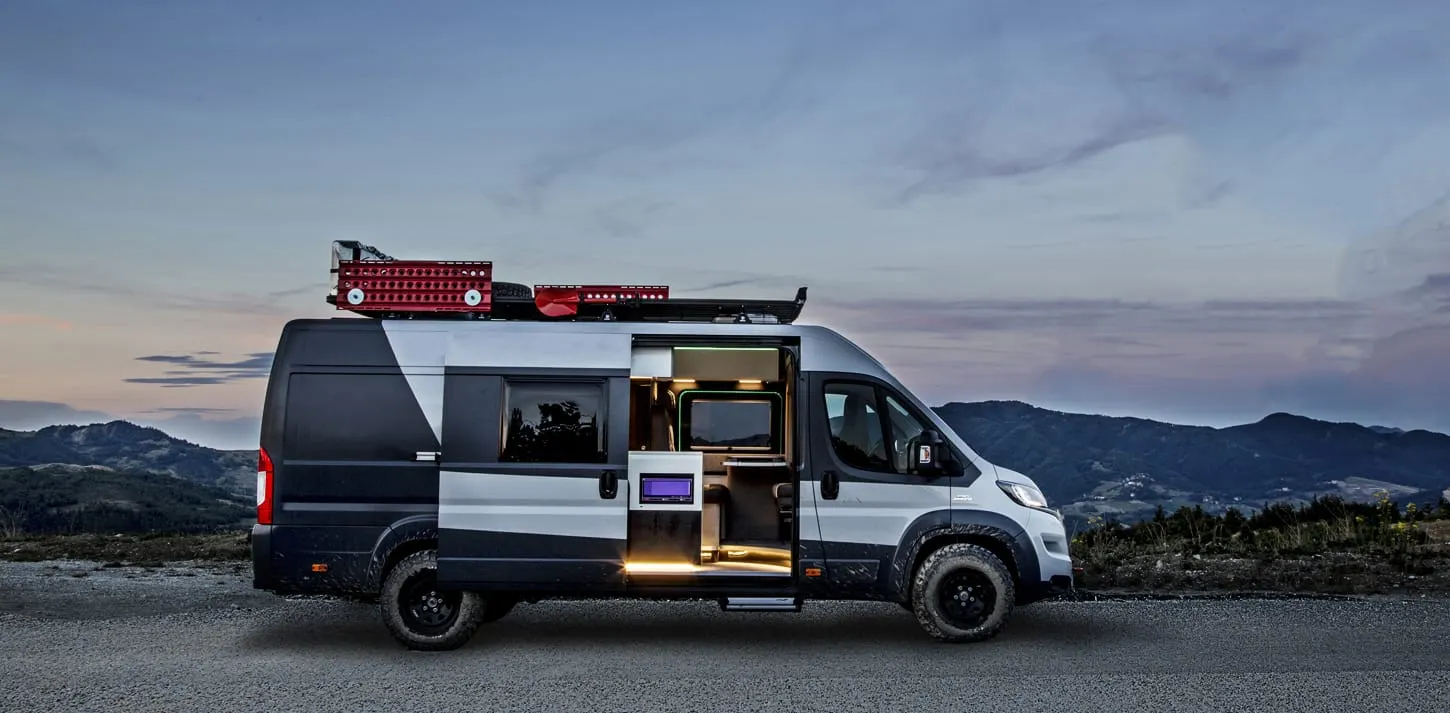
The Ducato goes by a few names and all are an excellent base for affordable large conversions. If you're looking for the space of a Sprinter at a lower price, the wide cargo area of the Ducato gives you useful room between the wheel arches for easier layout planning, and that generous width makes a sideways bed much easier to achieve alongside plenty of storage space. They're allegedly cheaper to maintain than the Sprinter due to parts cost, and good fuel efficiency for the size makes them one of the most used platforms for professional campervan conversions.
Also called:
- Peugeot Boxer
- Citroën Relay
- Ram Promaster
- Citroen Jumper
- Opel Movano
- Vauxhall Movano
- Toyota Proace Max
Volkswagen Crafter
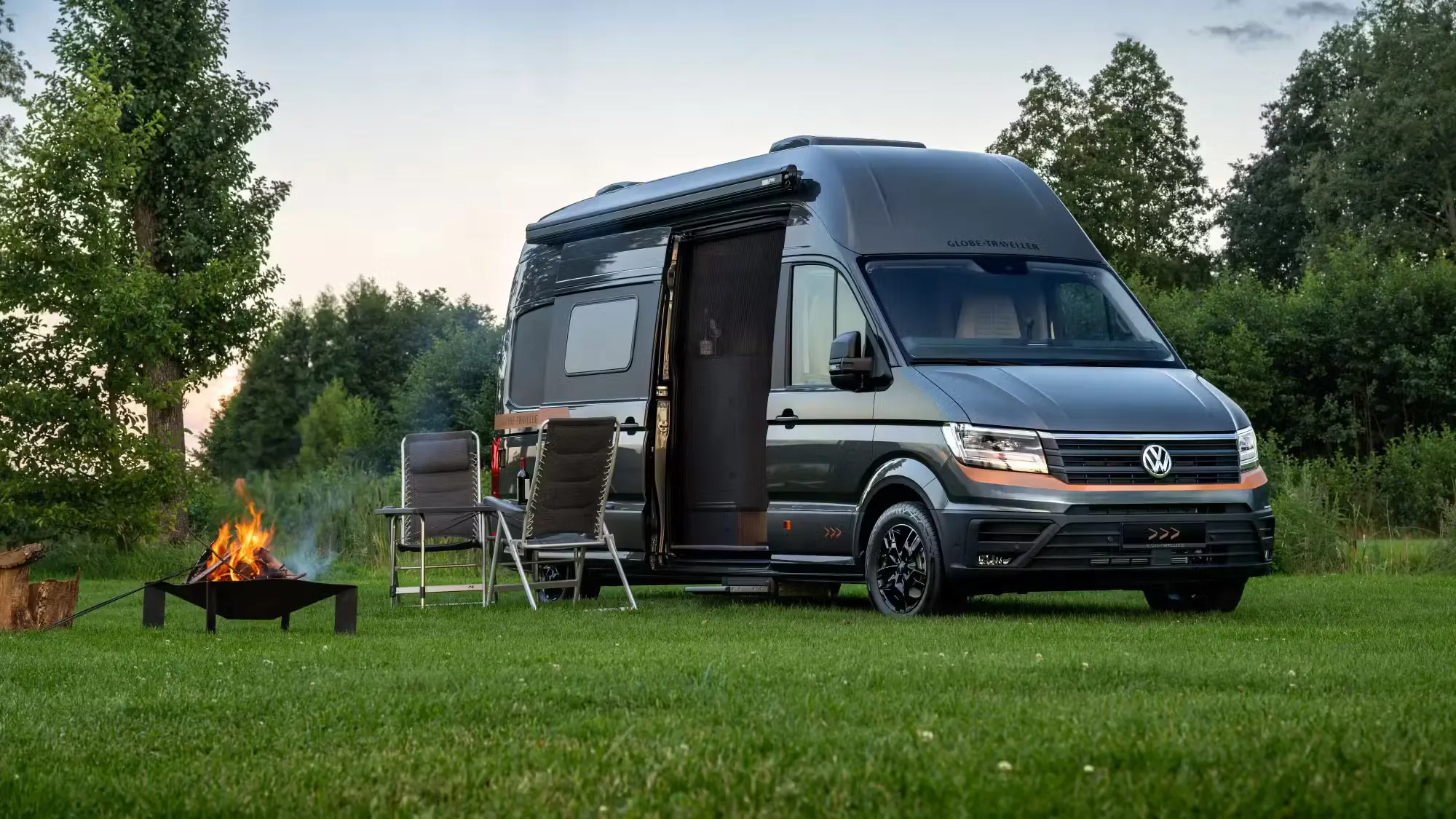
The VW Crafter is very similar to the Sprinter (mechanically identical for some model years) but offers a slightly more budget-friendly, high spec alternative. It still has excellent build quality and reliability while providing a spacious cargo area, but you might find that some premium features which come standard with the Sprinter are optional add-ons for the Crafter.
That said, you'll still find more tech than the average Ducato, and overall it's an amazing choice if you're after premium features and feel without the Mercedes price tag, making it an excellent base for a premium conversion project where quality craftsmanship in the finished build really shows.
Same as:
- Mercedes-Benz Sprinter (Second Generation)
- MAN TGE
- Volkswagen Grand California
- Torsus Terrastorm
Iveco Daily
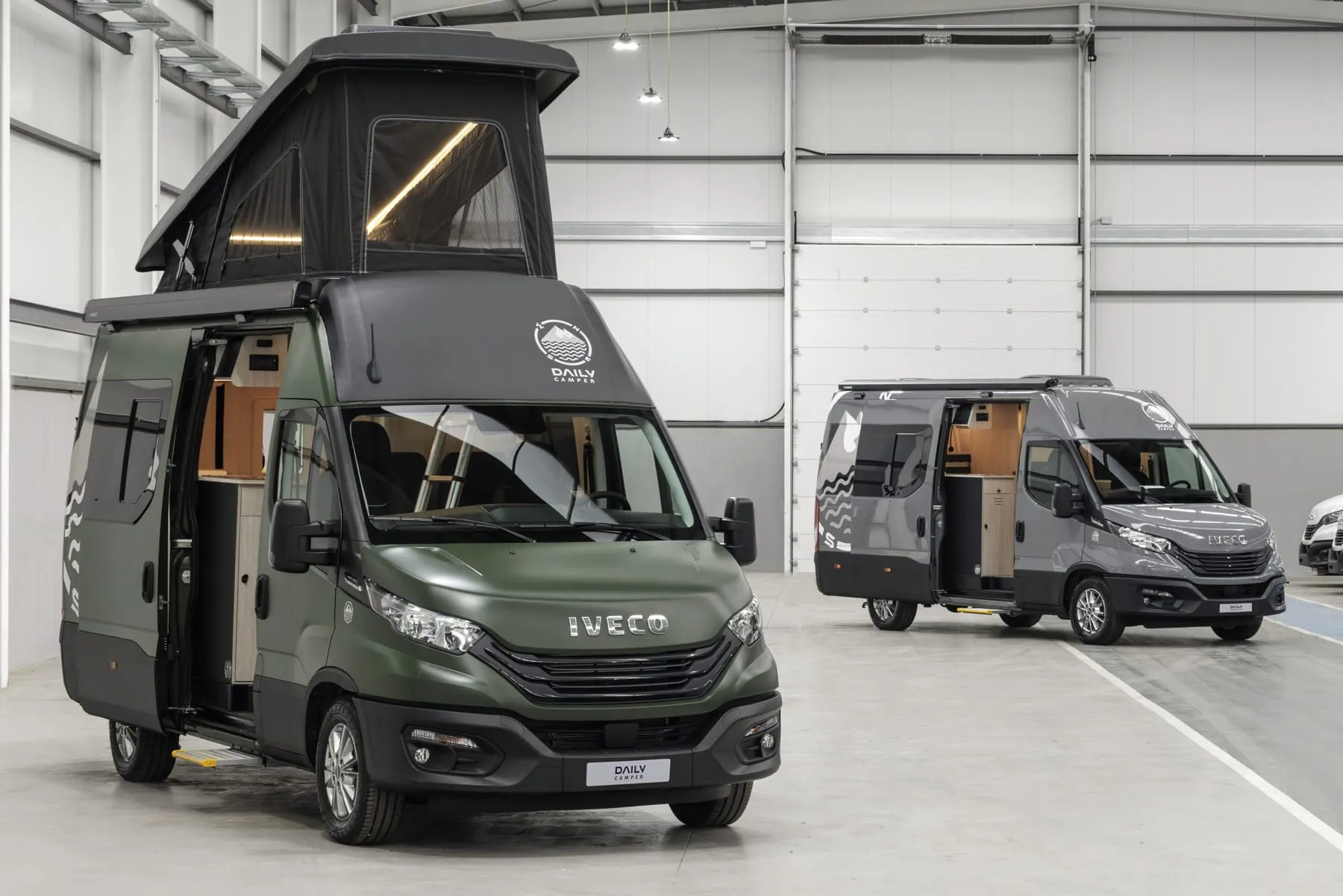
The Iveco Daily is a robust and highly durable large van, often used for commercial and heavy-duty applications. Its 1362 kg maximum payload is a major advantage for heavier camper builds. It's got one of the largest cargo areas available out of any of these options, which is ideal for full-time living and spacious luxury camper builds. The truck-like construction also makes it feel more traditional and van like than more car-like rivals, while helping it handle heavier loads, which is great if you plan to go all in on house-levels of amenities. Most versions are built for heavy-duty work, so they suit weighty camper builds well.
The best 4x4 vans for a camper conversion
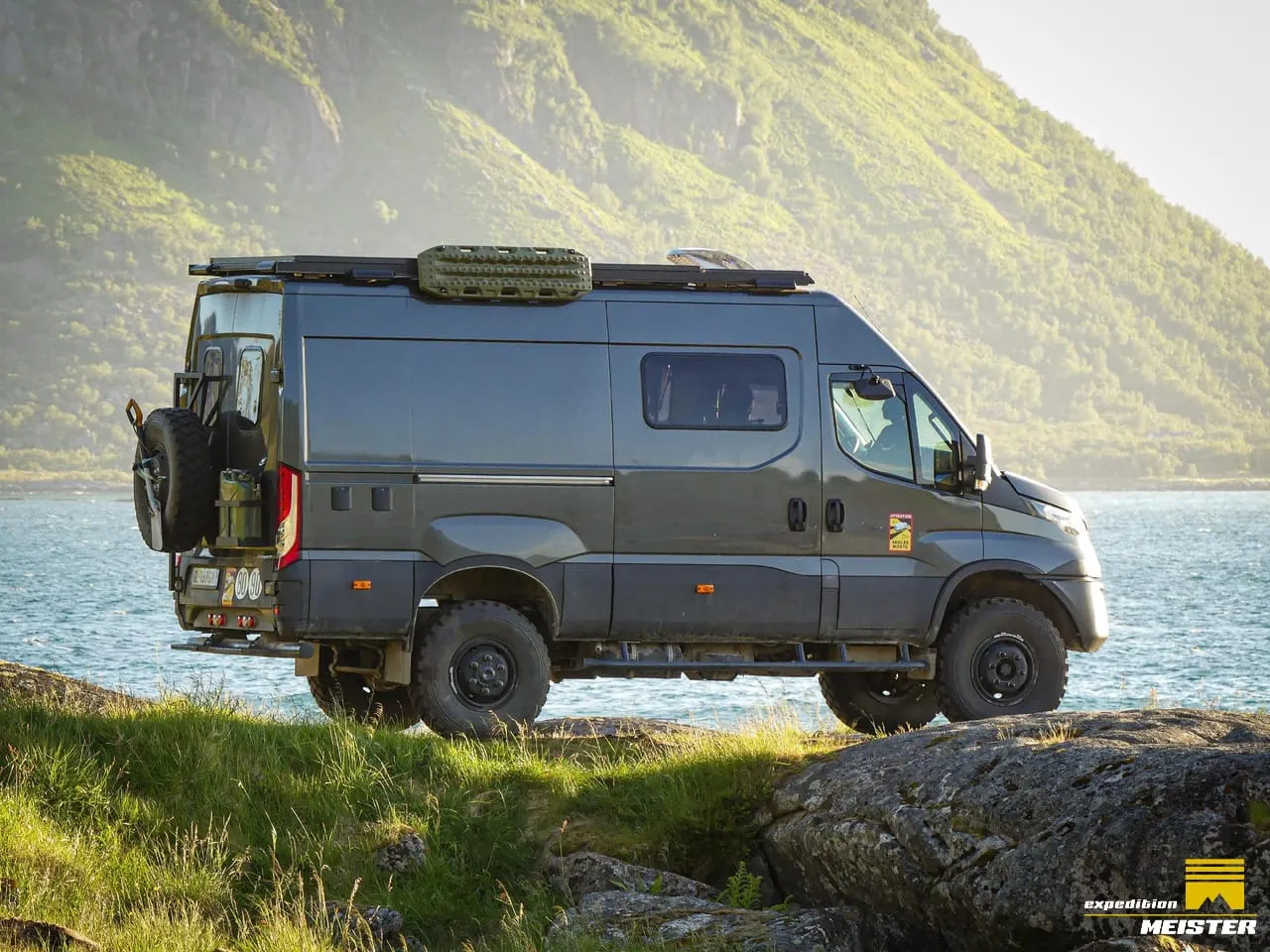
You can also get many of these medium and large models as four-wheel-drive variants (often called 4x4 or AWD) for adventures off-road. The best 4x4 vans for a camper conversion include:
- Iveco Daily 4x4 (pictured above)
- Mercedes Sprinter 4x4
- Ford Transit Trail AWD
These often come at a premium over the front-wheel drive versions due to the increase in mechanical complexity. However, with the right tyres, you can significantly expand the range of places you'll be able to get to.
The best electric vans for a camper conversion
With an increasing interest in eco-friendly travel, electric vans are becoming more viable for camper conversion by the year. In addition to their often higher initial cost, it's important to be aware of range limitations with these models as well as charging infrastructure in different countries. If these factors aren't an issue, two great models to consider include:
Volkswagen ID. Buzz
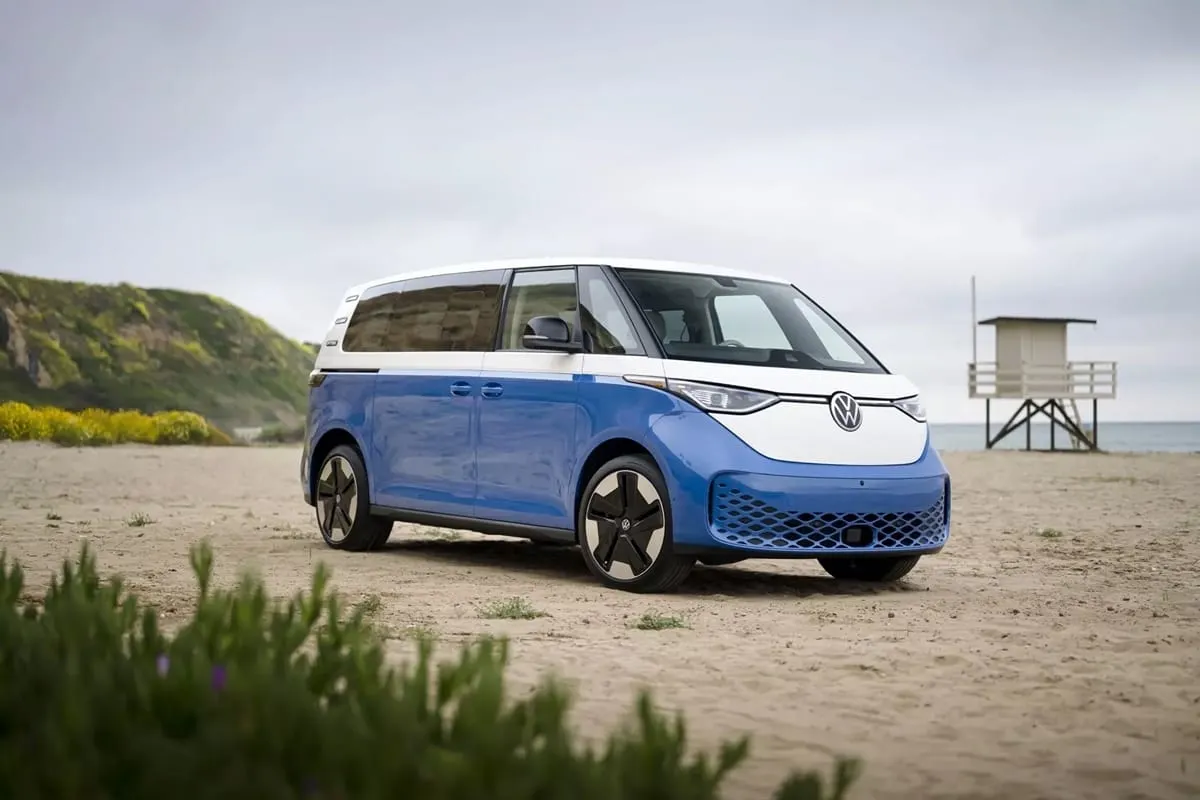
The super cool retro-modern VW ID. Buzz is a new electric van inspired by the classic VW camper. While the range is limited compared to petrol and diesel competitors, there isn't a more stylish eco-friendly alternative available on the market for short trips and urban adventures. Just be prepared to need deep pockets with prices starting at about £60,000.
Renault Master ZE
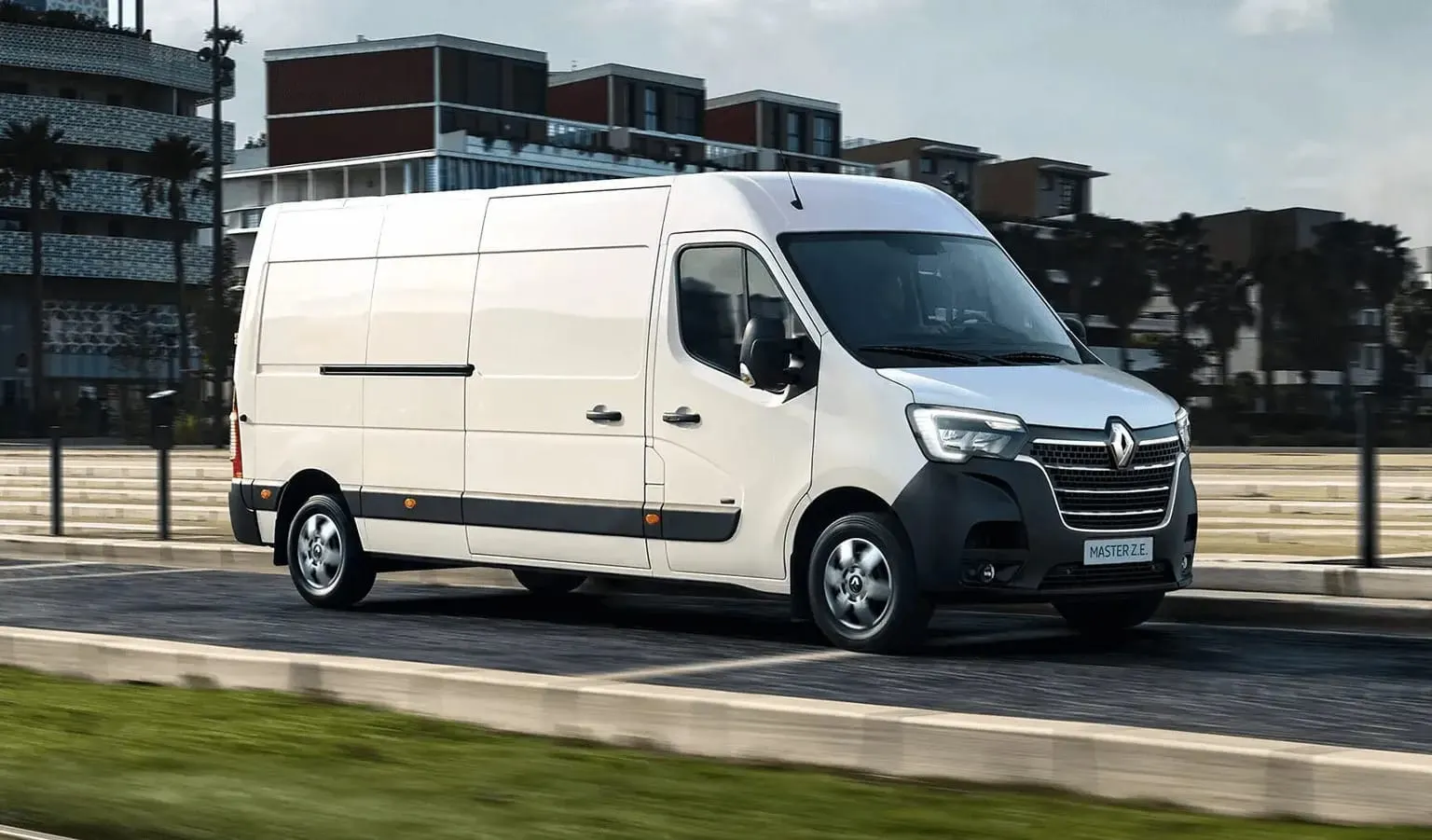
The Renault Master ZE family is one of the first full-size electric van ranges with genuine potential for a camper conversion. With large options similar in size to a Sprinter as well as massive box-van variants there's ample space for a comfortable experience. However, the limited range of 120 miles per charge might be a sticking point for some.
Best alternative vans for a camper conversion
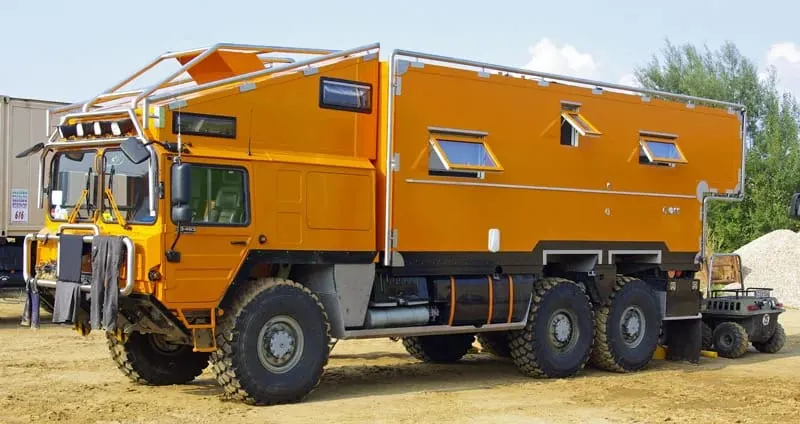
If all of these options seem boring and you want something truly unique there's a massive list of alternative and specialist vehicles that might be worth looking at. Older vehicles in these categories might require some more in-depth mechanical aptitude but there's some excellent value to be had if you're prepared to put in the work.
Vintage van models like the VW T2, Citroën HY, and Bedford CA offer nostalgic charm and the scope for some extremely cool builds. Just be wary of rust, electrical gremlins, and signs of a hard life.
There are also options like rugged ex-military Land Rovers, troop transporters, or even massive trucks like the MAN CAT 4x4, 6x6 (pictured above), and 8x8. All of these can be awesome for remote off-road travel and spacious off-grid living but don't expect anything more than the most spartan of interiors.
Parts availability can also be a concern for more niche options, but shouldn't be too much of an issue for militarised variants of widespread vehicles. Sites like Govsales and L Jackson & Co are worth a look if you're interested in going this route, and you can find some great cost-to-size ratio options.
Retired ambulances can also be worth a look as many have pre-insulated interiors and electrical system infrastructure which can save you money down the line. Just hope they're not haunted by any unfortunate ex-passengers.
Converted buses and coaches are also well worth a look. These can be converted to offer a truly home-like experience but you'll need to be aware of special parking and licensing considerations depending on their size.

The Vunked bottom line: In our humble opinion, we think the Mercedes Sprinter and Renault Master are two of the best vans for a camper conversion. Both can easily clock up to 200K miles, with the Sprinter offering the luxury you would expect from Mercedes and the Master being more affordable.
Make any van the perfect off-grid base
We hope you've found this guide useful. As you can see there's no ‘right' answer when looking for the best van for a camper conversion. Everything comes down to what you'll use it for and the type of adventures you want to have.
Whichever van you choose, to be able to fully enjoy the great outdoors you'll need the ability to head off-grid and into the wilderness. To do that, you'll need a solid electrical system, whether that’s a full-time setup or a compact weekender campervan electrical kit for shorter trips.
This can be one of the hardest parts of building a camper. Endless trawling on forums, multiple parts orders from different suppliers, and trial and error installation are required to get everything working properly.
Vunked offers an easier way. We've done the hard work for you so you can buy the perfect complete electrical system ready to plug-and-play in kit form. We use industry-leading Victron components and supply every little part needed.
From affordable weekend set-ups for charging phones and laptops to full-blown solar powerhouses designed for 24/7 vanlife, our kits come with every component, diagram, and instruction you need.
You can also build a bespoke system using our easy online tool or reach out via our campervan electrics contact page. Simply select the features you need and the appliances you plan to use and we'll put together a complete electrical system based on your requirements.
FAQs
Which is the best van to convert to a camper?
The best base van depends entirely on your specific needs, with popular options including the Mercedes Sprinter and Volkswagen Transporter. The Mercedes Sprinter is ideal for full-time van life, while the Volkswagen Transporter might be more suitable for weekend trips or frequent city driving.
Is it cheaper to buy a van and convert it to a camper?
Yes, converting a used van yourself is usually significantly cheaper than buying a professionally converted campervan, and this DIY route is a common camper van conversion approach. The main investment will be your time since you'll need to do the physical work yourself as well as learning some basic mechanics and DIY skills.
Yes, it's completely legal to convert a van into a camper in the UK. However, if you want your van to be legally recognized as a camper it will have to meet certain DVLA requirements to technically be a ‘Motor Caravan'.
You don't need to register your campervan as such and you can keep it as a van on paper, just be aware that commercial vans usually have higher insurance premiums than legally registered campervans.
Can you live permanently in a campervan in the UK?
Technically, yes, but there are some challenges involved. Residential parking restrictions and insurance policies are likely to be your main hurdles. However, with the popularity of vanlife there are now specialist insurers.
You'll also need somewhere to register as a full-time address for things like mail and taxes. Many full-time van dwellers use a family home or friend's address to get around this. Check out our full guide to UK vanlife for more information around this.