
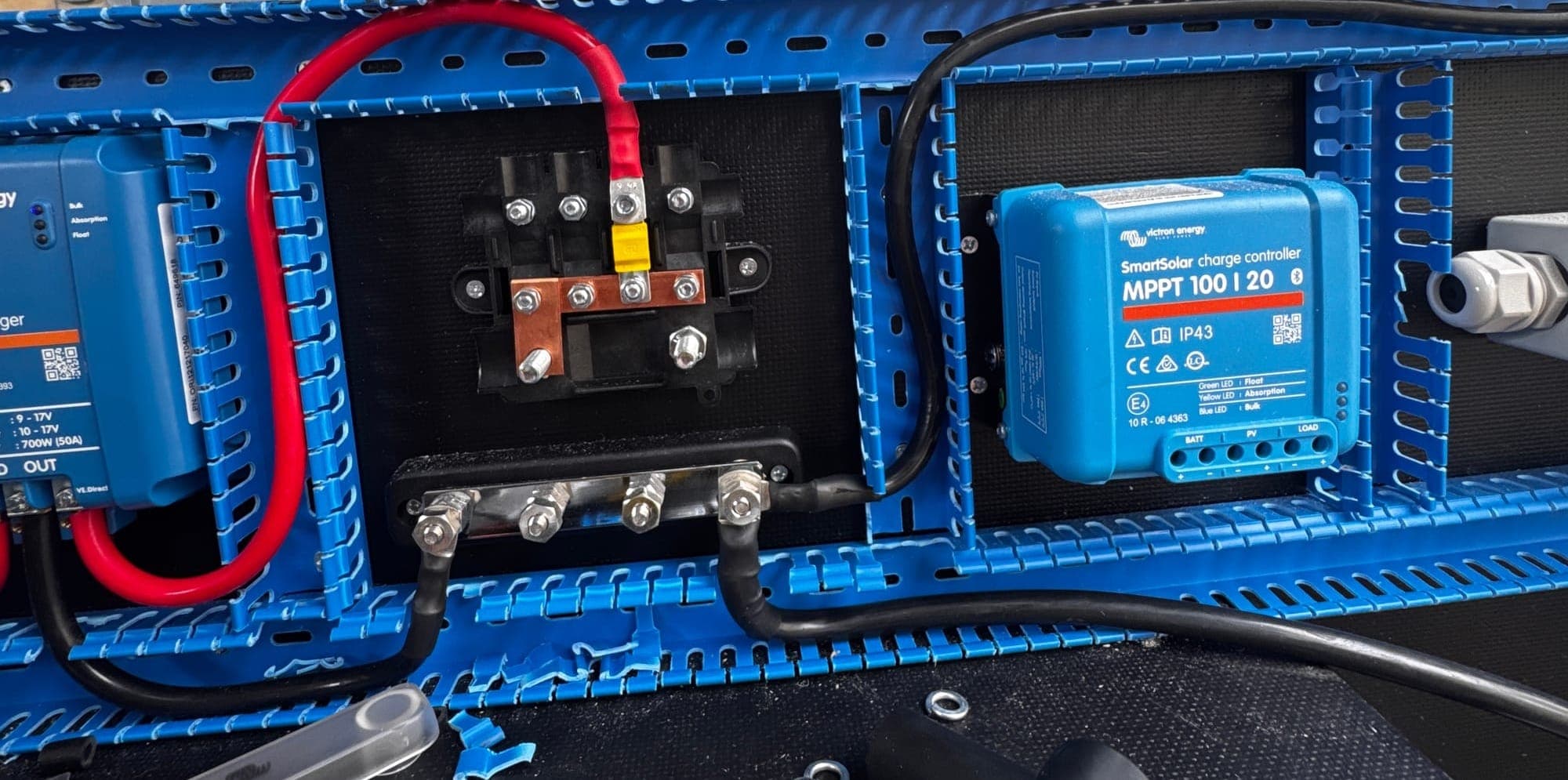
As modern campervan electrical systems get more complex, effectively managing wiring can be a real challenge. Multiple devices attached to a single terminal can get messy fast, increasing the risk of uneven distribution and electrical faults.
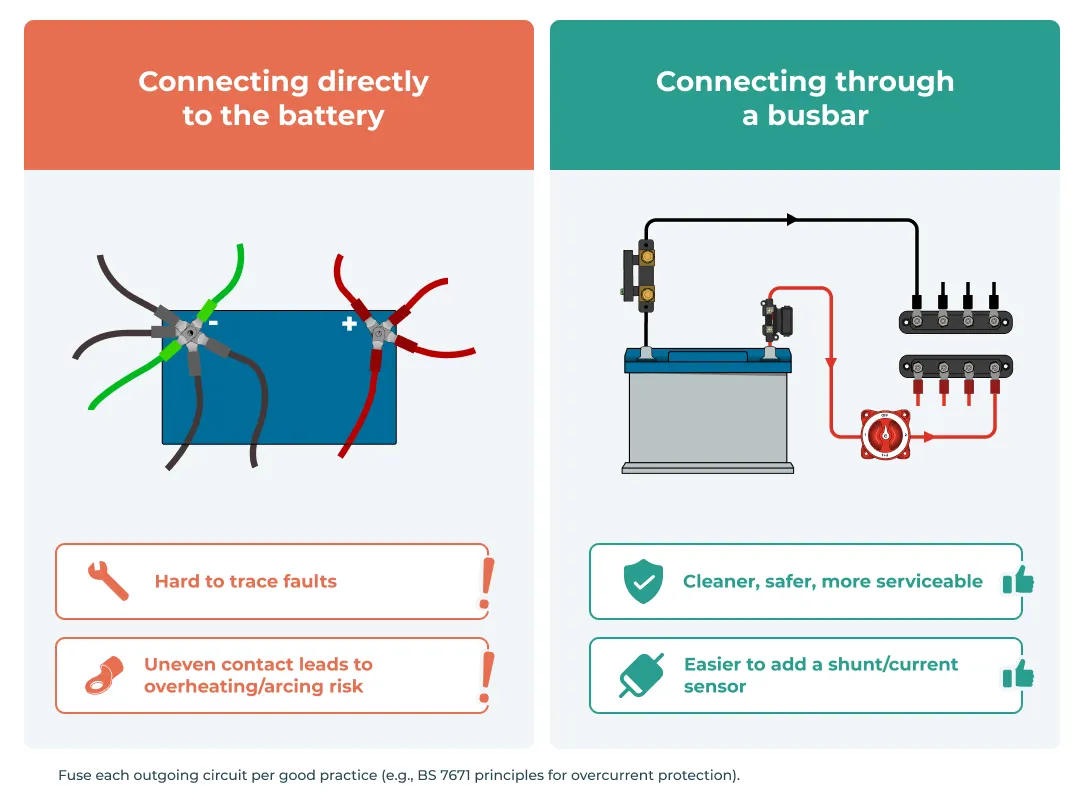
A busbar is a conductive metal bar, usually copper, brass, or aluminium, that acts as a common connection point for multiple electrical cables so power can be organised and distributed cleanly around a system. In campervan electrics, that makes it a simple way to manage high-current wiring, keep cable runs tidy, and make faults, upgrades, and future changes easier to handle.
If you're building or upgrading your own van in the UK or EU, especially if this is your first or second electrical install, understanding busbars helps you design a safer, more reliable off-grid setup. In this quick guide, we'll explain what a busbar does, where it fits in a campervan system, how it differs from fuse blocks and distribution blocks, how to size and wire one correctly, and how to choose the right type for your build.
What is a busbar?
Essentially, an electrical busbar is a conductive metallic strip or bar that centralizes electrical connections for power distribution and acts as a junction point for multiple electrical circuits. It's usually made of copper or aluminium and gives multiple electrical cables a single neat connection point.
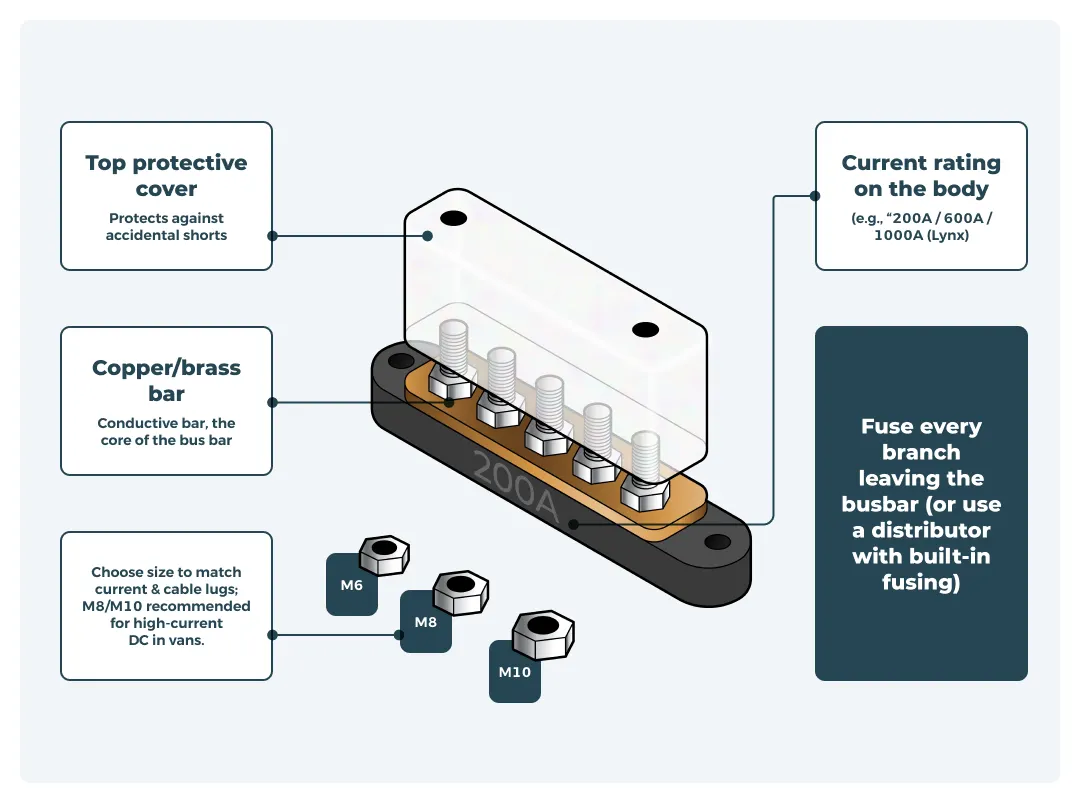
That means there are normally two busbars in an electrical system — one for the positive wires, one for the negative wires. The busbars serve as the main power hub, bringing together key components like the battery, solar panels, and inverter into a single, organised connection point.
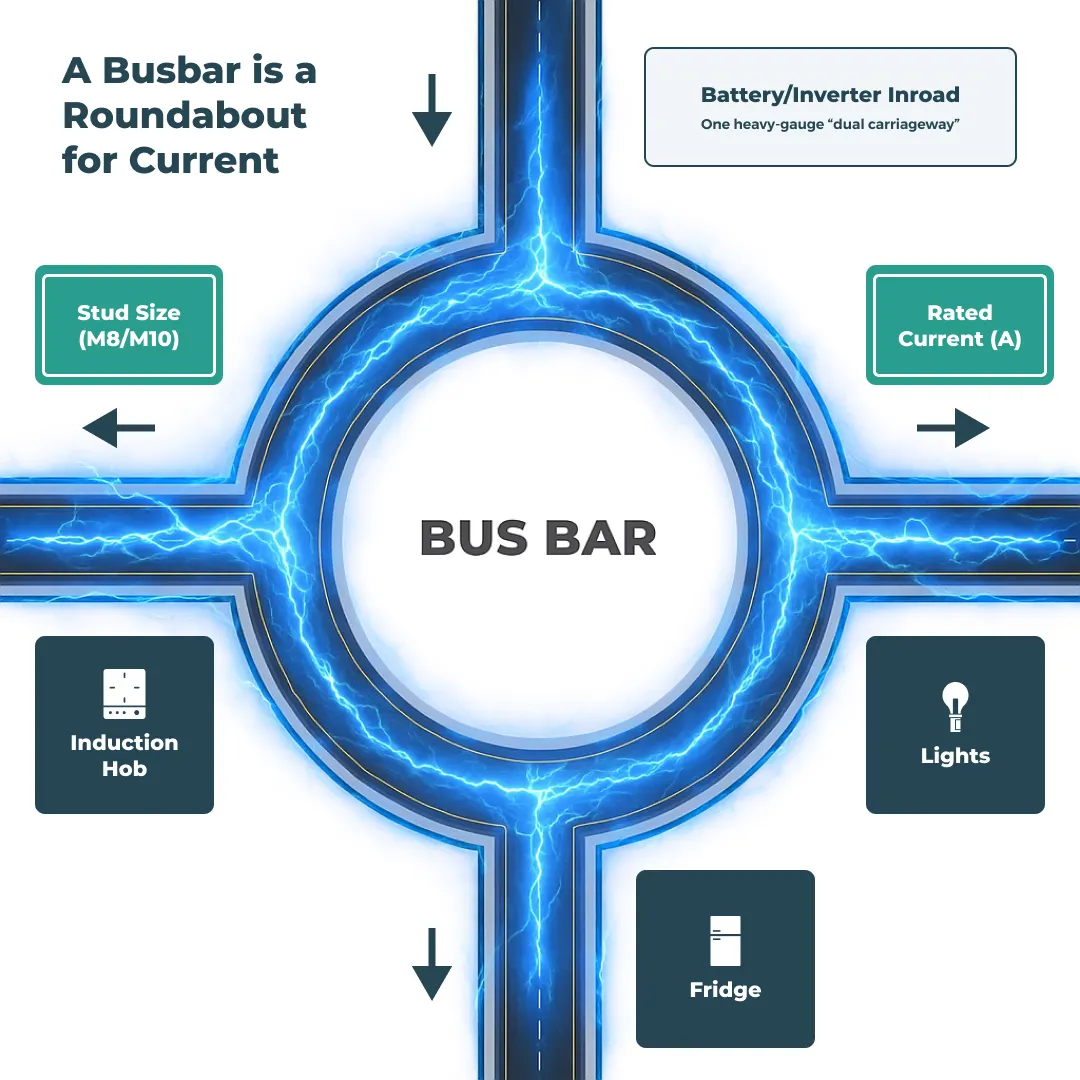
Think of it like a roundabout. Instead of having multiple roads crisscrossing each other, the roundabout provides a central point for everyone to come in and choose where they wish to exit. This is similar to a busbar, which provides a central point for the current to flow in and out, making it convenient to manage wiring and evenly distribute power. It also provides a low impedance path for current flow.
A busbar is not to be confused with a fuse block, like the one we use for our 12V appliances. It acts similarily but sits between your battery and your 12V appliances, distributing power to everything from USB sockets and lights to 12V fridges and other onboard devices.
These common connection points are available in two flavours: insulated and non-insulated. Insulated comes with protective covers and plastic bases to reduce the risk of an accidental short circuit, which is what we always want inside a campervan.
Non-insulated busbars are meant for industrial applications where the surrounding components are fully isolated and access is limited for safety. We want to avoid these in our campervans.
When people fabricate their own DIY busbars from a simple strip of metal bar, they're often these non-insulated types. While they can still be completely functional, we wouldn't recommend them for this reason.
Whichever type of busbar is used, the wires running to them are usually attached to pieces of threaded metal attached to holes in the bar called studs. These range in size from M6 to M10, with larger studs being used for bigger electrical systems with higher current. You will need to make sure you buy lugs that match these terminals…
And if that sounds boring, believe us it is! We have done this for 1000s of electrical systems. Want to spend more time exploring and less time looking at lug sizes? Build an electrical system with our online electric builder tool or use our step-by-step guide on how to build your own campervan electrical kit.
This means you'll find busbars rated to the current they can handle, usually given in amps. For example, a small electrical set-up with a couple of basic appliances might get away with a 200A busbar, whereas a more advanced build with an inverter and solar set-up might need closer to 600A. These busbars will then need to be connected to fuses for safety, and if you add more electrical components over time, you might need to upgrade to a beefier busbar down the line. They're also used in both AC and DC power systems.
(We get around this in our electrical kits by using Victron's Lynx Distributor, which is essentially a 1000A positive and negative busbar combo with built-in fusing, LED light indicators, and compatibility with monitoring devices to future proof the system).
The benefits of using a busbar in campervan electrical systems
Whether you use an advanced modern distributor-type busbar or a basic metal strip type, busbars offer multiple advantages over individually run cables, including:
Managing multiple connections
The first and most obvious reason to use a busbar is how easy they make it to manage multiple electrical connections without a mess of wires everywhere, improving organization and reducing wiring clutter as electrical systems grow.
As modern systems become more advanced and you start adding more components, each needs to directly connect to the battery system. Without a busbar, you're relegated to having to stack ring terminals onto battery posts or inverter studs. This not only looks messy, but stacking terminals can also lead to loose connections that reduce safety and reliability.
With a busbar, you simply need to connect one heavy-gauge cable to the busbar, and then branch all other loads from there, following proven campervan 12V wiring diagram layouts. This ensures each connection is individually secure and easily traceable in case of a fault. It also gives you one clean point for multiple circuits or multiple loads, rather than relying on lots of individual cables, and makes it easier to fit things like shunt-based battery monitors or current sensors.
Improving safety and system reliability
With the high currents possible through shore power or modern inverters, campervan electrical safety is just as important as it is inside your home, and choosing the right capacity using an inverter size calculator for campervans is a key part of that.
Dodgy connections can lead to overheating, arcing, short circuits, and even electrical fires in the worst cases. Busbars reduce these risks by acting as a purpose-built connection point that can handle significant current loads, helping maintain stable electrical performance and reliable operation across the entire system without the risk of slippage or uneven contact.
This added safety is enhanced by how easy it is to pair or integrate circuit breakers and other protective devices into bus bar systems. This enforces proper overcurrent protection instead of relying on a handful of large fuses near the battery and makes it easier to isolate individual circuits for maintenance or troubleshoot an issue without affecting the entire electrical system.
In addition to adding safety, they also reduce voltage drop across the system. This is great when you're dealing with long cable runs and sensitive modern appliances which require stable input voltages, and insulated bus bars also improve safety in compact layouts by preventing accidental contact.
Keeping wiring tidy and serviceable
It might not seem like a big deal at first, but visual cleanliness and serviceability are massive factors in a campervan electrical system, especially when you need to carry out maintenance and repairs.
Trust us, having every wire neatly routed to a busbar with each one clearly labelled and accessible can be a godsend when you need to trace a fault or make a fix months down the line after initially setting up the system.
For example, if one device fails, you can quickly locate and isolate the problem. It's then easy to remove a clearly labelled fuse or uncouple the cable while sorting said problem, without disturbing the wiring from other unrelated components.
Compare this with messing around detaching and attaching a stack of six or more ring connectors and the advantages are clear. It's also easy to upgrade down the line. For example, if you add more components down the line, you have a clear access point ready to simply bolt a cable to.
This is much easier than trying to squeeze another terminal under a nut, instead creating a modular system that scales as your system grows.
Busbar vs. fuse block vs. distribution block: what's the difference?
You'll sometimes see these phrases used interchangeably in places like internet forums discussing builds. Here's the difference.
Busbar
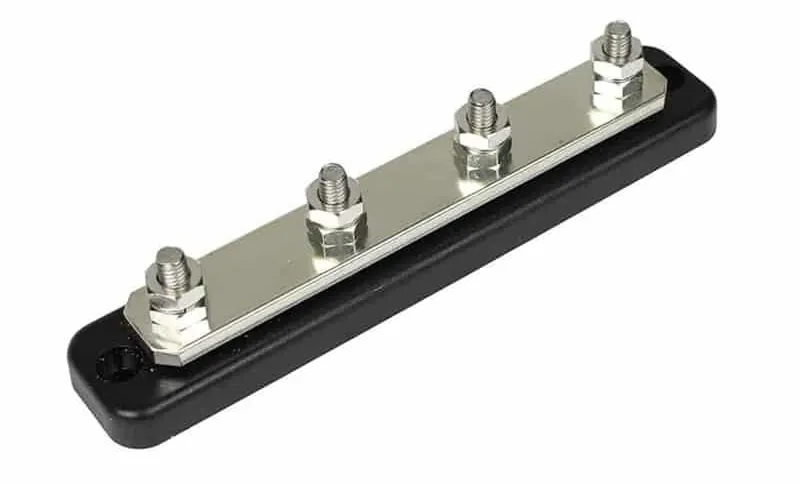
Whether it's on the positive or negative side, a busbar is purely a passive power distribution device. There are no moving parts, fuses, or relays, and its job is solely to act as a central hub for electrical power, carrying electrical current efficiently to multiple circuits through a solid junction point for multiple cables. It can also safely handle high currents in compact layouts more effectively than running multiple individual cables.
What to watch for
Current Rating (A). Busbars range from 150A to 600A, so choose the size from your system’s maximum current draw. It should be larger than your highest current draw — usually from an inverter. For example, a 3000W Inverter will draw about 200A continuously, but this can jump up to 400A when it is initially turned on, and its current carrying capacity also depends on the cross sectional area of the bar. Larger busbars also provide improved heat dissipation compared with equivalent cable bundles. Busbar systems come in solid, flexible, and insulated forms, with some designs also being rigid or hollow.
Fuse block
A fuse block normally refers to a distribution device with built-in circuit protection. Outside campervans, similar devices are often used in switchgear, control panels, and distribution boards to route the power supply to multiple outgoing circuits, and busbars are integral to these setups. Essentially, this is what should be paired with a basic busbar and sits between the busbar and each electrical device for safety. It's basically a neater alternative to individual fuses separately fitted to each fire from the busbar.
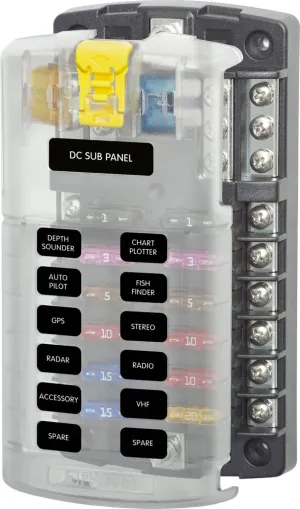
In a campervan, we use this to connect all our separate 12V appliances, letting us fuse each one individually, whether they are simple 12V loads or part of a more complex setup that also includes 230V power in your campervan. The rating of these fuse blocks varies, but a good one should be rated to 100A (about 1200W at 12V) and each individual circuit rated to 30A (about 360W at 12V).
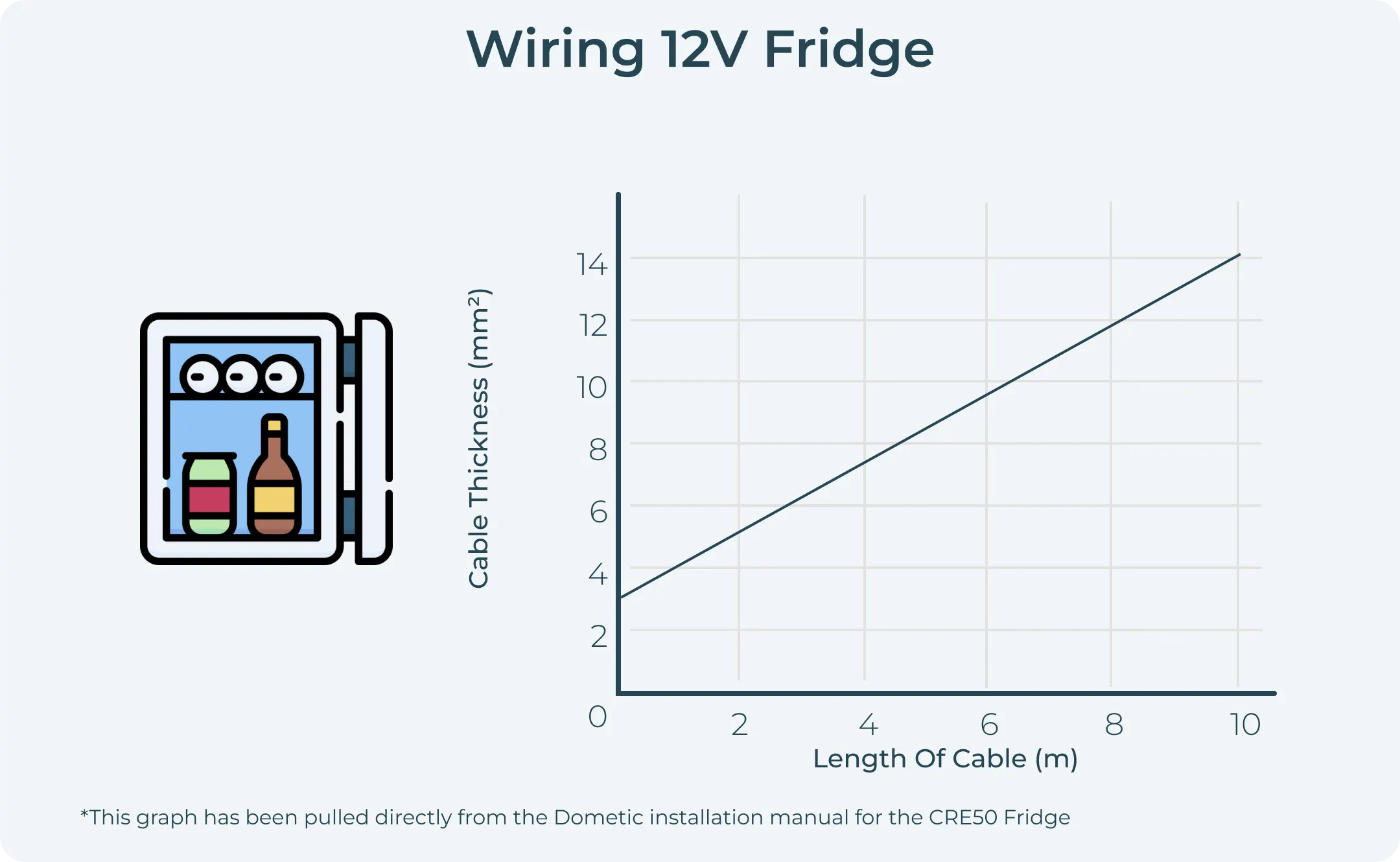
As such, most appliances will work fine with this and a 2mm twin automotive cable leading from the fuse block to the appliance. The most common exception is your 12V fridge; this will likely need a 6mm cable.
Another common exception is a 12V air-conditioner, these can be up to 800W at 12V. If this is the case, it will be too large a current for the individual circuit and you will need to bypass it with its own fuse.
Distribution block
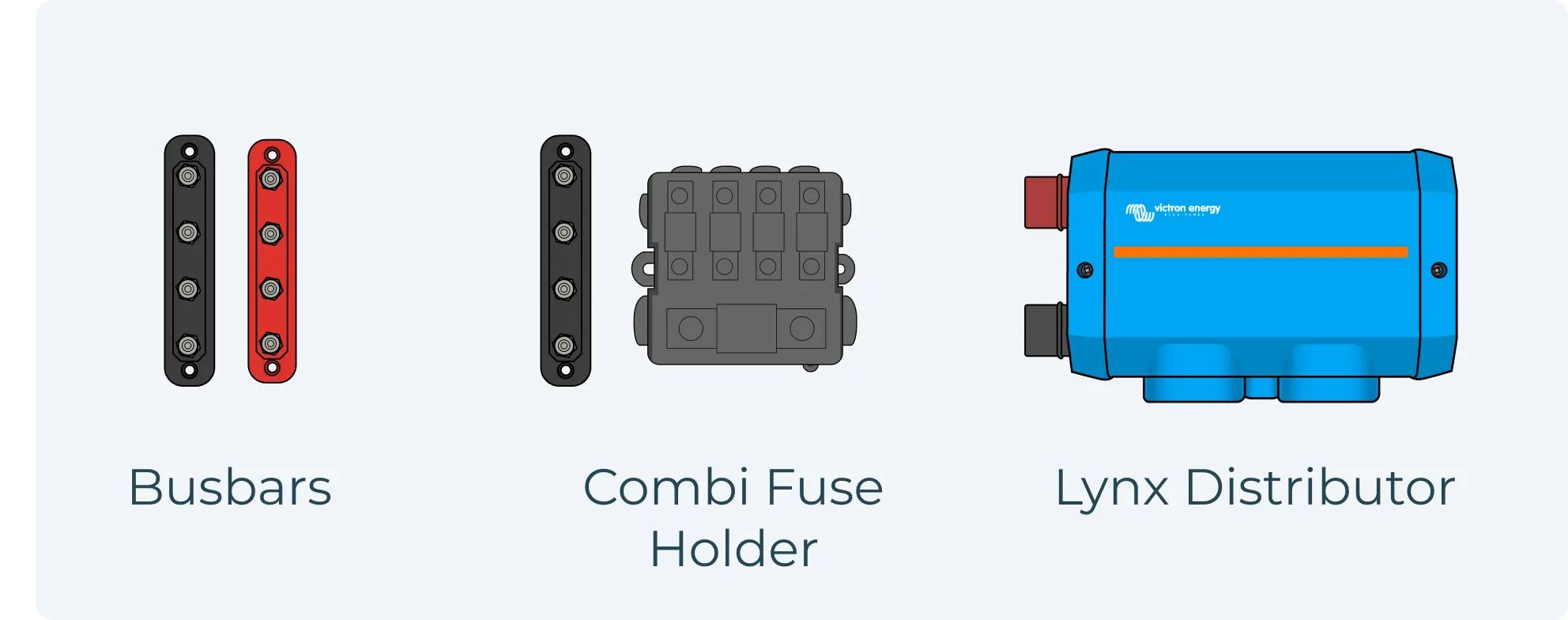
We often refer to these as busbars, but really they are busbar arrangements used in a larger power distribution system, combining a busbar and a fuse block into one compact unit. Models like the Lynx from Victron have other features like LED lights to show fuse condition and plug-in compatibility with more advanced energy monitoring systems.
These are our favourite due to their usability. At Vunked we either recommend a Combi Fuse Holder for electrical systems that have 12V only or an Inverter less than 1600VA. With the Lynx, one of the key benefits is integrated protection, which also makes future expansion easier in a wider introduction to campervan electrical systems.
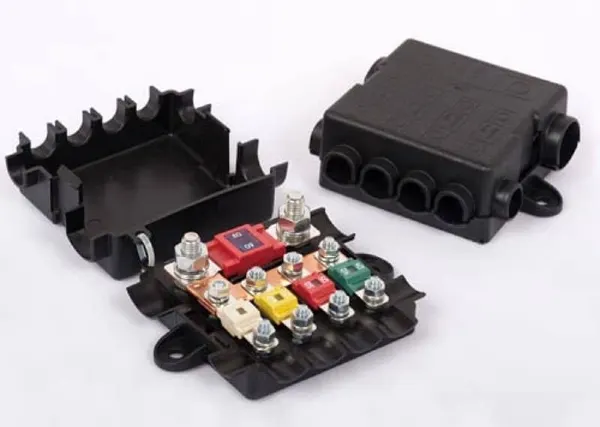
If you have an electrical system with an inverter larger than 1600VA, you want to use the Lynx Distributor.
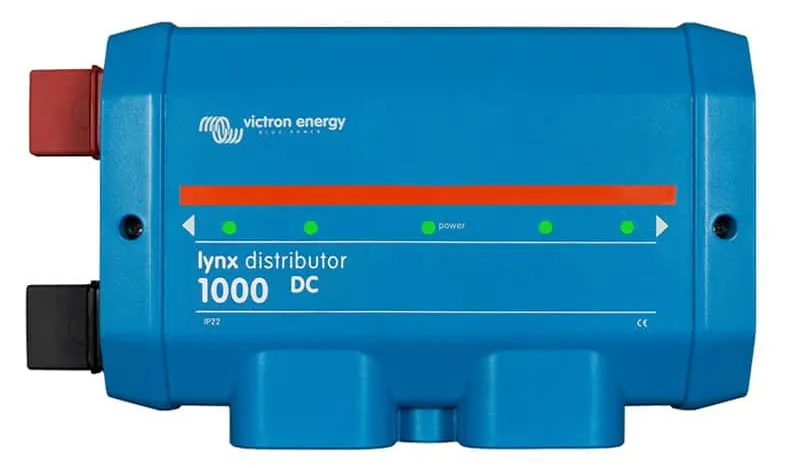
Going a step further, if you have a 5000VA Victron Multiplus installed in your electrics, you will need two of these to share that load. If that sounds confusing, then don't worry we are here to help: get in touch. You can also book a free campervan electrics consultation for one-to-one advice on your specific system.
Component | Primary purpose | Built-in fusing? | Pros | Cons |
|---|---|---|---|---|
Busbar | Connect many cables to one common point (pos/neg) | No | Simple, cheap, very compact, flexible layout, ideal for negatives | Needs separate fuses. No circuit isolation |
Fuse block | Distribute many small 12 V loads with individual protection. Perfect for 12V appliances. | Yes | One place for fuses, labels, easy troubleshooting, safer than ad-hoc inline fuses | Usually not rated for very high continuous currents; stud size & bus rating can be limiting; |
Distribution block | Connect multiple high-current electrics (Inverter, battery, solar) to a central point with fuse protection | Yes (per branch) | Clean, modular, safer (each branch fused & covered), easier to service, often supports current monitoring & future add-ons | Bigger, pricier, less flexible stud count |
Busbar, Combi Fuse Holder & Victron Lynx Distributor Wiring Diagrams
So, we've covered what is a busbar, What about how to wire busbars? Here's some helpful diagrams to break it down.
Wiring a Busbar
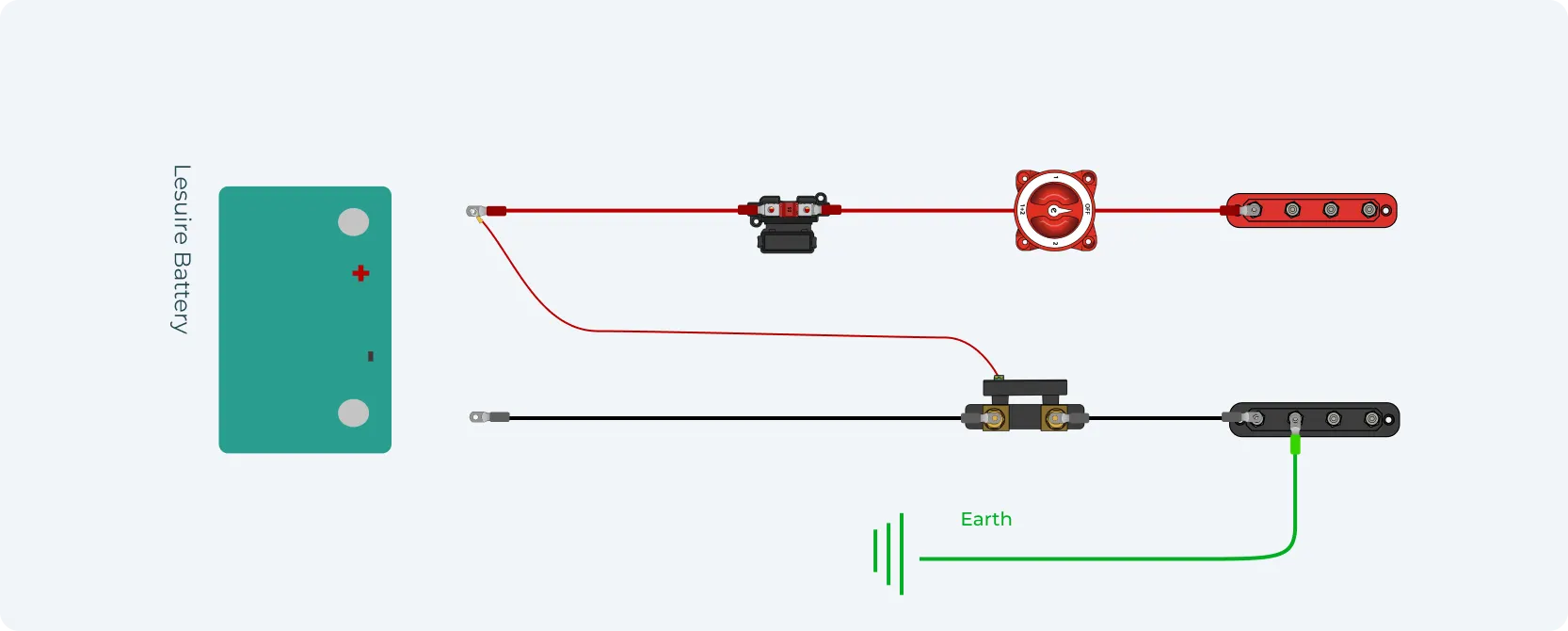
Busbars also link battery packs and other major components in the system, including connecting batteries in renewable energy systems.
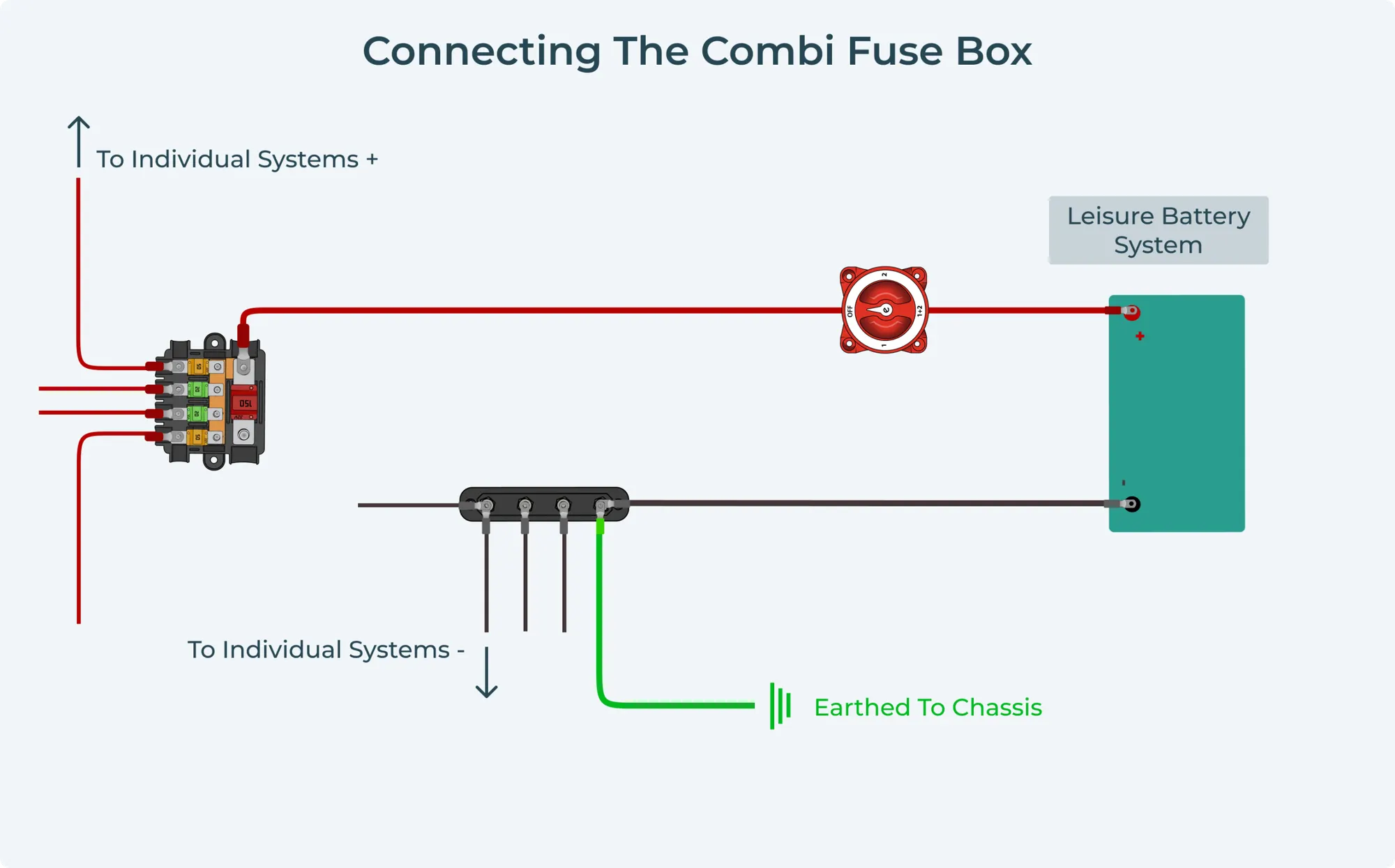
Wiring a Combi fuse Holder
This is how you wire the power distribution block. Remember, you will need a regular busbar for the negative side and a master switch so you can turn off the battery. Don't forget to make sure both the Combi, busbar and switch are rated properly.
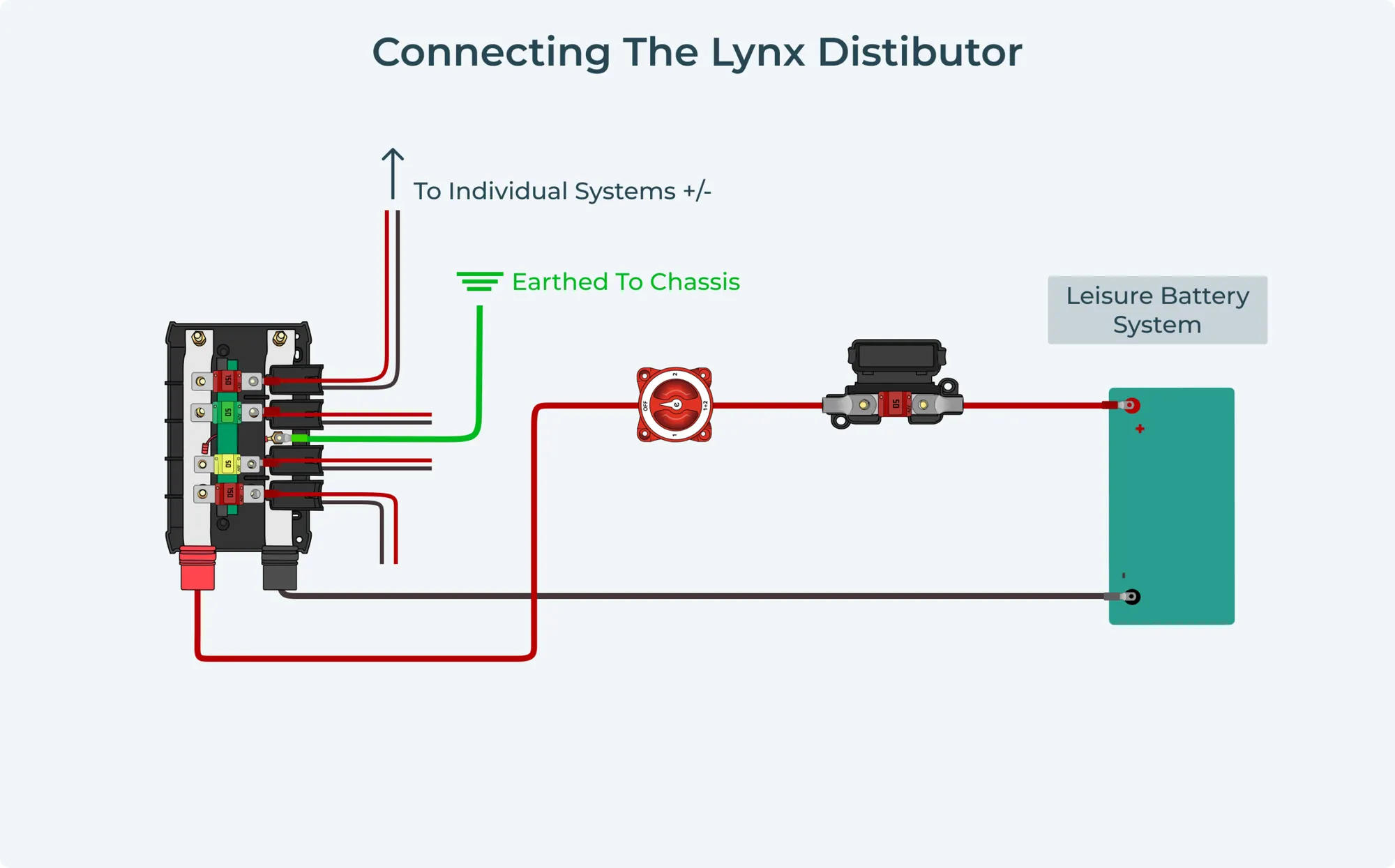
Wiring a Victron Lynx Distributor
Want to know how to wire your Victron Lynx Distributor power distribution block? Look no further. Perfect for those who have an Inverter or Multiplus larger than 1600W. The Lynx distributor does not have a fuse for the main battery connection so you will need to add that in too, alongside a master switch.
Do you need a busbar in your campervan?
The Vunked bottom line: In short: yes. While we use the more modern solution of a distributor in our systems, even simple set-ups should at very least use a basic busbar as it's an objectively cleaner, safer, and more convenient way to wire your electrics. Busbars are used far beyond campervans too, including in renewable energy systems, electrical installations such as substations and data centres, electrical transformers, and industrial machinery. Without one, your wiring can quickly get messy, unsafe, and be more of a hassle to add new devices too down the line.
How to size a busbar for your system
First, you'll need to choose between insulated or open-air. We would recommend insulated on a safety level and for the relatively minute uptick in cost, it seems like a no-brainer. You'll also need to consider amperage rating, stud size, and number of connectors to pick the right one for your system, ideally as part of a broader DIY campervan electrical system checklist.
For the amperage rating, you'll need to consider the maximum current your system could draw. This basically means each load from each appliance. For example, let's say you have multiple 230V appliances like a TV, a Microwave, an E-bike charger, and an induction hob. Your draw might be 3000W, which equates to around 250A or current, similar to some of the higher-demand setups covered in our guide to the best campervan electrical systems for different lifestyles.
In this case, you would probably be looking at a 300-350A busbar to give yourself plenty of headroom. Then, there's stud size. M8 and M10 studs are best for high-current devices with thick cables. M6 can be fine for small 12V loads, but we would advise going with at least M8 for safety and to minimise voltage drop.
Then factor in the number of terminals and ensure it corresponds with the number of devices you plan to run, ideally giving yourself some wiggle room for new gadgets in the future.
To understand the electrical load drawn by common devices, you can check out Vunked's electrical system builder tool or explore our complete campervan electrical systems and conversion kits. You'll be able to highlight the devices you want to run and then see the supporting electrics needed to safely power them.
Plus, if you decide to order from us, we can supply the full set-up in kit form, ready to install, along with detailed wiring diagrams and comprehensive fitting instructions, helping you plan around realistic campervan electrical system costs and budgets!
FAQs
What is the busbar used for?
A busbar is used to centralise electrical connections from multiple cables in an electrical system, acting as a junction point within electrical circuits to distribute electrical power from one common connection in an organised and safe way. This reduces voltage drop and makes troubleshooting or adding new electrical components easier in the future.
When should you use a busbar?
Any electrical system that involves more than two or three major components should ideally use a busbar for easier cable management and reliable electrical distribution.
What does a 12V bus bar do?
A 12V busbar evenly distributes power between each electrical device in your campervan, acting as an organised junction point for both positive and negative connections and supporting stable current flow to multiple devices across the campervan’s electrical circuits.
What is the difference between a busbar and a circuit breaker?
A busbar's sole purpose is to distribute power and manage cabling, while a circuit breaker protects individual circuits from overcurrent. A simple busbar doesn't provide this protection on its own, so each cable will need its own circuit breaker or fuse for safety, helping protect electrical equipment when faults occur. That also helps avoid system downtime by isolating the problem to the affected circuit.