
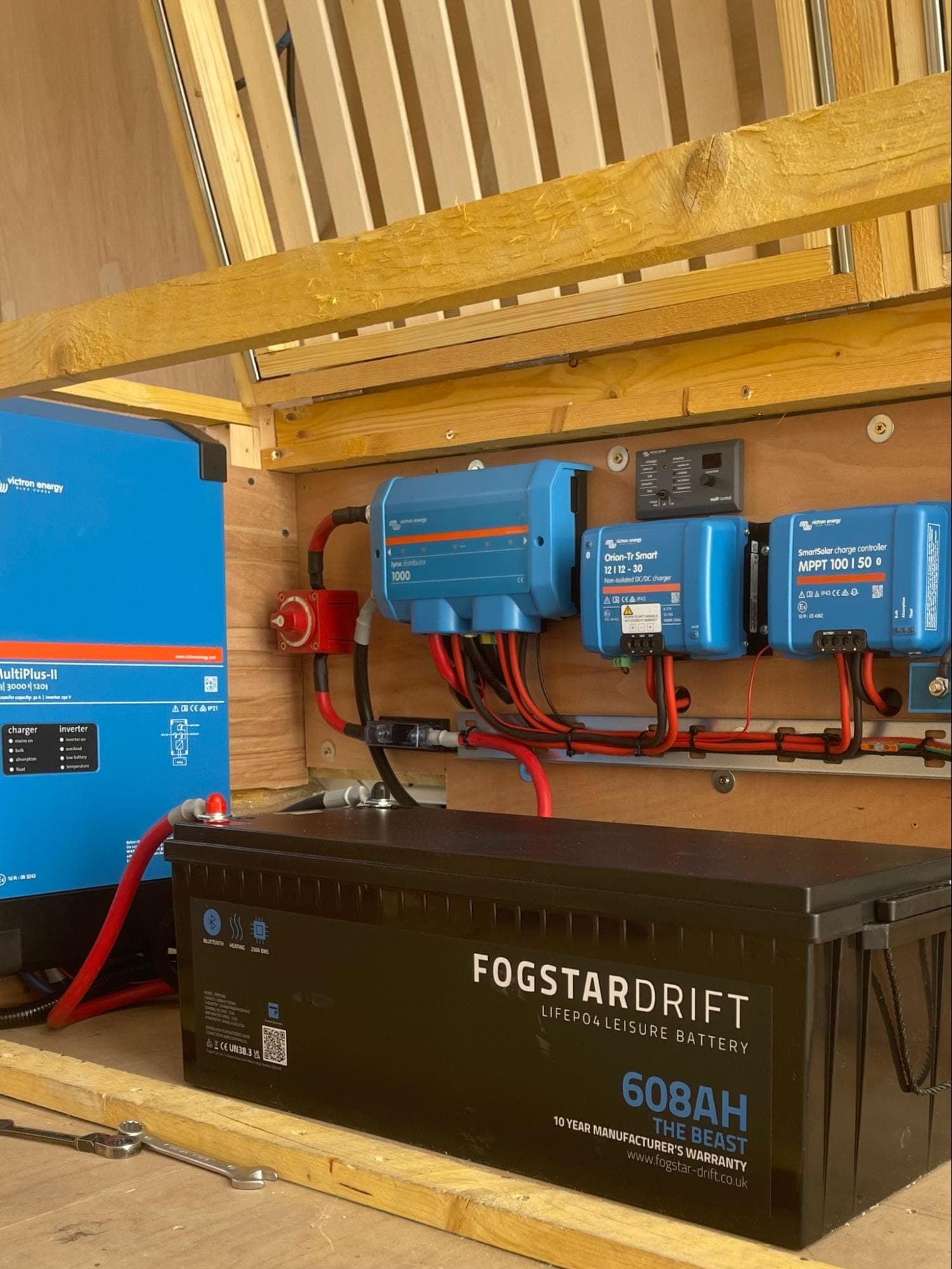
Designing a van's electrical system is where most people get overwhelmed, or make expensive mistakes. It's hard to know what's essential and overkill between solar panels, battery banks, inverters, and charging gear. Online advice varies wildly, and most blog posts are too technical or vague to be useful.
We set out to fix that using real-world data: second-hand van listings and interviews with vanlifers living on the road full-time—real setups from real people. We looked at what systems they use, what components show up consistently, and where people tend to overspend or underspec, starting with solar.
Solar Power Systems
| Solar Wattage | Approx. Roof Space | Use Case | Typical Appliances Powered |
| 100–200W | 1x medium panel | Weekend trips / partial builds | Lights, phone, USB fans, small devices |
| 300–400W | 2–4 panels | Full-time solo/couple setups | Fridge, lights, fans, laptop, phone, Wi-Fi router |
| 600W+ | 4+ panels | Remote work / power-heavy users | Induction cooktop, blender, fridge, Starlink, tools |
Our analysis found solar is nearly universal in many van builds. Most DIY or professional rigs include roof-mounted solar panels to support off-grid living. Panel capacity varies based on intended use, available roof space, and energy demands.
BUILD A FULLY PERSONALISED CAMPERVAN ELECTRIC SYSTEM IN JUST A FEW CLICKS
100–200W: Basic Coverage
Small setups, often a single panel, appear in partial builds and weekend rigs. These systems handle lights, small fans, and phone charging. Builders usually supplement with an alternator or shore power.
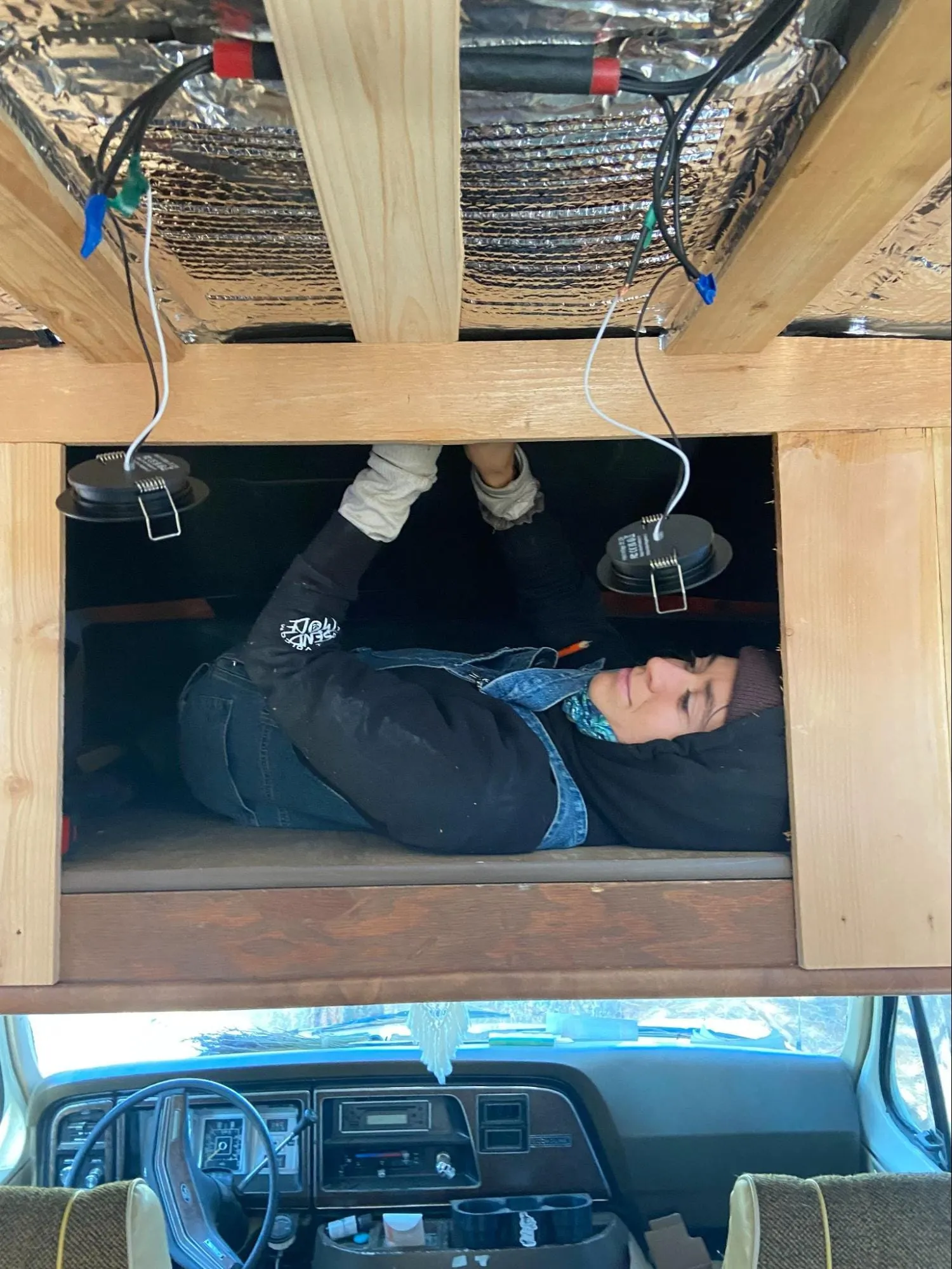
Katarina uses a single 200W panel in her self-built van. Thanks to sunny conditions and strategic power management, 200W of solar powers her lights, water pump, diesel heater, and Starlink internet. She switched her fridge to propane so she only powers the basics.
300–400W: Most Common Size
Most full-time vanlifers have 300-400 watts of solar. Typical setups include two 150W or four 100W panels—enough to support lighting, refrigeration, and remote work power needs. Many vans in this category also include 200–400Ah lithium battery banks.
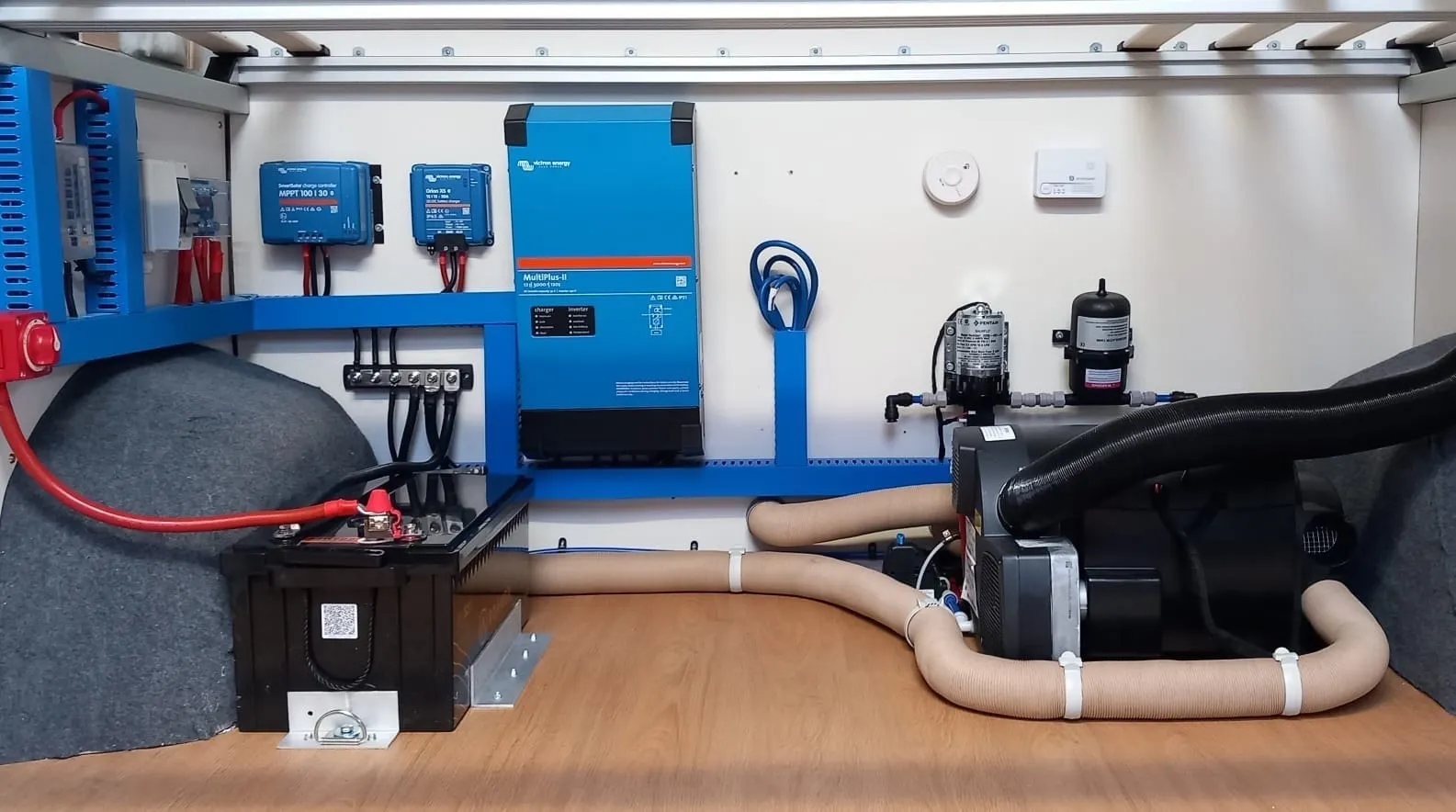
Georgina runs a 400W solar panel system on her Fiat Ducato, paired with a DC-to-DC charger and shore power inlet. This setup supports her off-grid lifestyle while keeping essential devices powered.
600W and Up: High-Load Use
Larger systems appear in vans with high-demand gear like air conditioners or induction cooktops. Vans in this category feature extended roofs or added awnings to accommodate more panels. We found one Sprinter with a 700W solar array, which goes with our recommendation to all customers—max out your roof space with as much solar as possible.
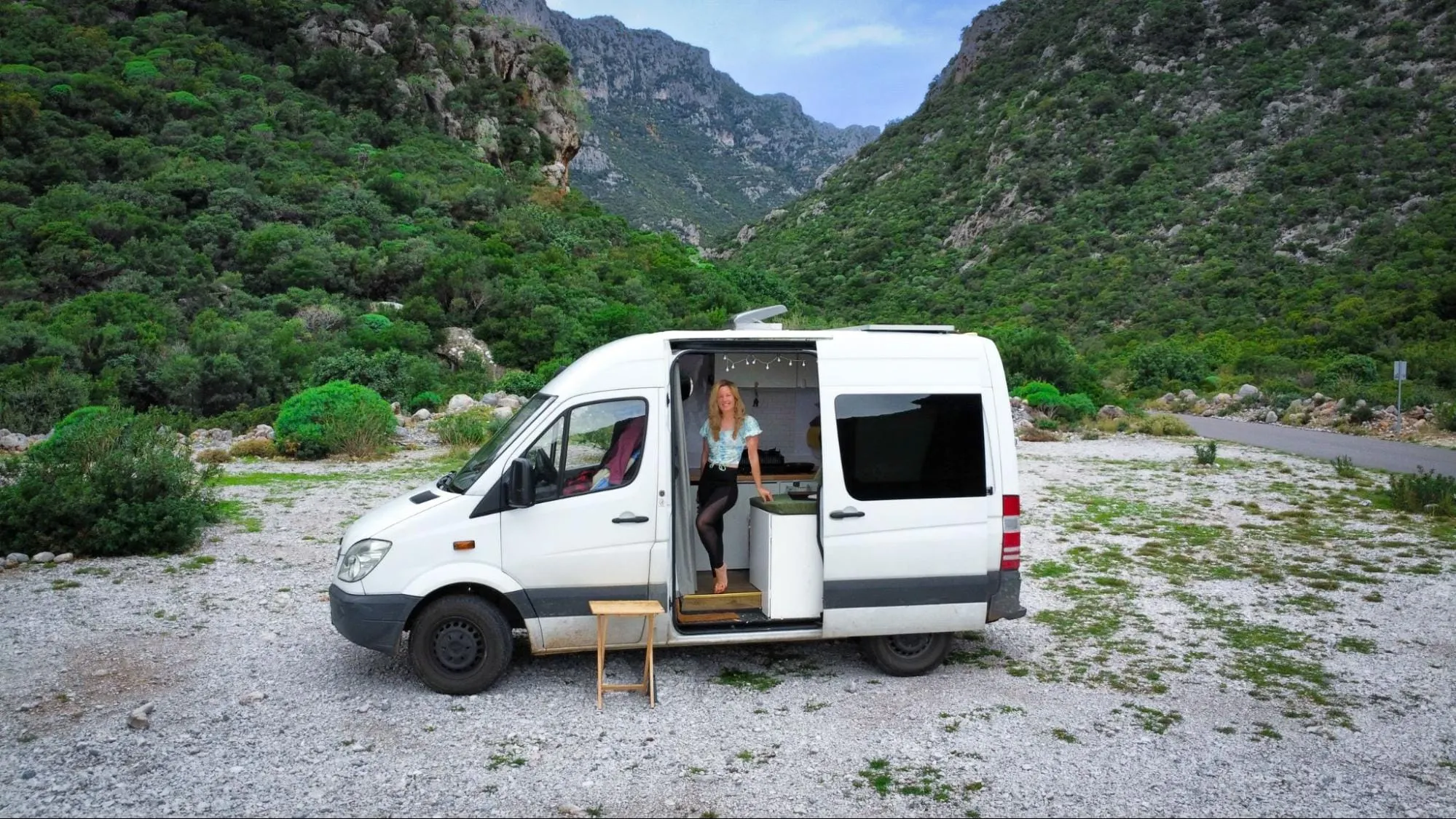
Lucinda Norris runs a 750W system on her short-wheelbase Sprinter, using Z brackets to mount hard-wearing panels lengthways due to space constraints. She works full-time from the road and relies on Starlink internet to maintain a stable connection, even while parked on mountaintops in Portugal.
Battery Bank Capacity & Type
Our research found most campervans built for off-grid use rely on battery banks between 200Ah and 400Ah (12V), with ~400Ah emerging as the standard for full-time or high-usage builds. This capacity supports essentials like lighting, refrigeration, device charging, and occasional high-draw appliances.
Lithium vs. AGM Batteries
Lithium iron phosphate (LiFePO₄) batteries are now the dominant choice in modern van builds. They're lightweight, charge faster, allow deeper discharges, and last significantly longer than AGM batteries.
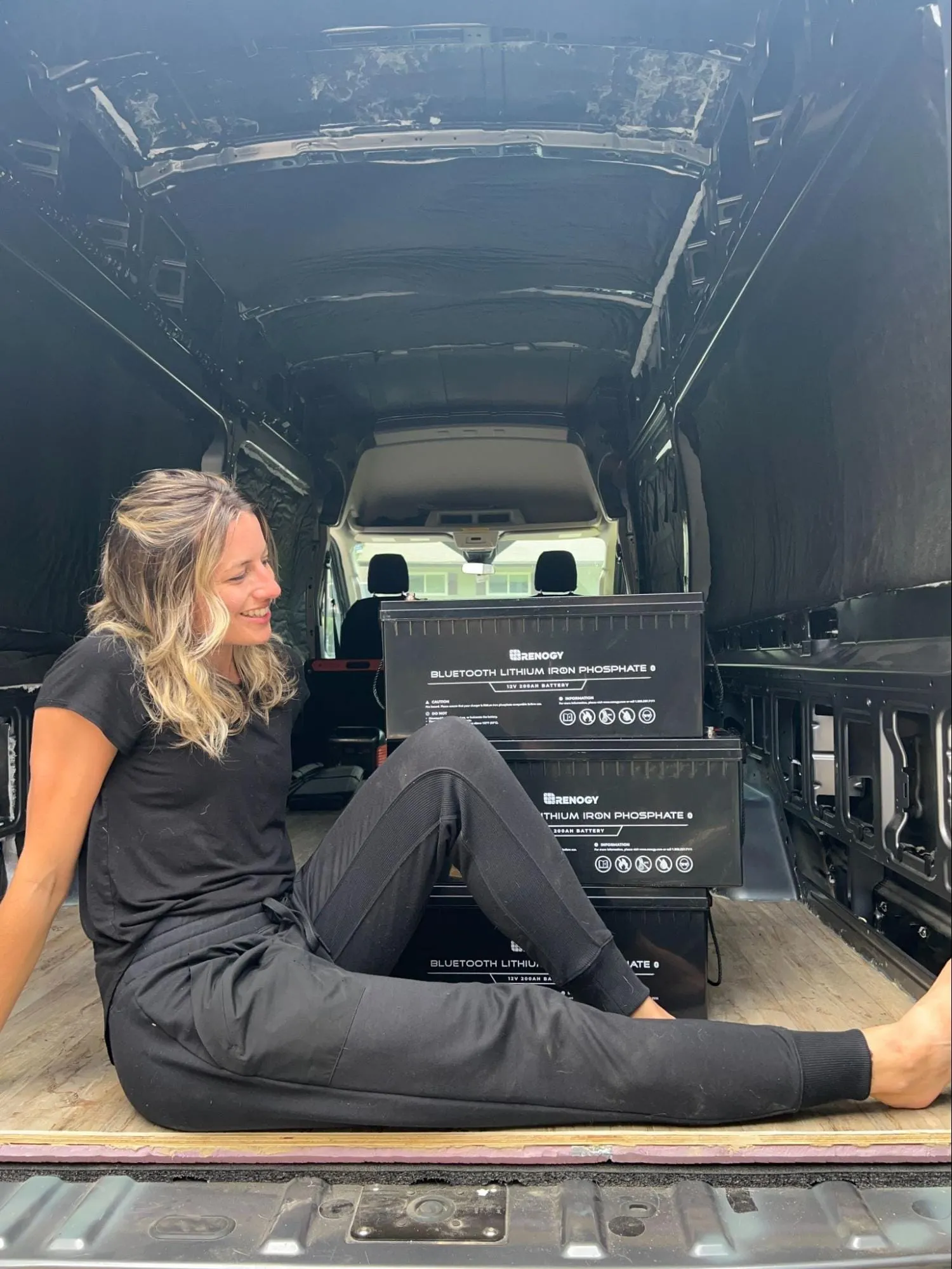
Canadian vanlifer Dominique Richie runs a 600Ah lithium setup (3×200Ah batteries), managed through a 12V system. She charges the batteries via a 3,000W inverter/charger, a 60A DC-DC charger, and 400W of solar. This configuration supports a fully electric lifestyle without propane.
In contrast, AGM (sealed lead-acid) batteries appear primarily in budget-conscious or older builds. These systems are heavier and less efficient, but still occasionally used in lower-cost or part-time builds.
Typical Bank Sizes
- 100Ah - 200Ah lithium setup is typical for those using their vans for the weekend and occasional week trips with moderate needs
- 200–400Ah lithium is typical for solo or couple full-timers, often using one 400Ah or two 200Ah batteries.
- 400Ah + setups support heavy usage, remote work lifestyles, or if you want an induction hob.
- Some advanced builds go further. We found one Ford Transit Diesel with a 1100Ah lithium bank to power the vehicle's demanding appliances.
System Voltage
Nearly all builds use 12V systems to match standard van appliances and wiring. 12V avoids the need for voltage conversion, reduces energy loss, and ensures compatibility with widely available components like fridges, fans, and lights.
A few specialist rigs use 24V or 48V battery banks to improve efficiency for high-power systems like air conditioning or large inverter setups, but these configurations are rare and usually require custom components and professional installation.
Inverters, Chargers, and Electrical Control
Most full-time van builds include a power inverter, DC-DC charger, solar charge controller, and a battery monitor. These components manage energy flow between solar panels, alternators, batteries, and 230V or 120V outlets.
Inverter Sizes and Use Cases
Inverters convert 12V battery power into AC power for appliances. Most vans typically feature pure sine wave inverters between 1000W and 3000W.
- 500W inverters cover basics, i.e., laptops, camera gear and starlink
- The 1600W Inverter is perfect if you enjoy the finer things and want to power a kettle, toaster, or air conditioner off grid.
- 3000W models are for those who want a home on wheels with all the modern conveniences. These support high-draw devices like induction cooktops, coffee machines or power tools.
Many builds integrate inverter/charger units for shore power charging and simplified wiring.
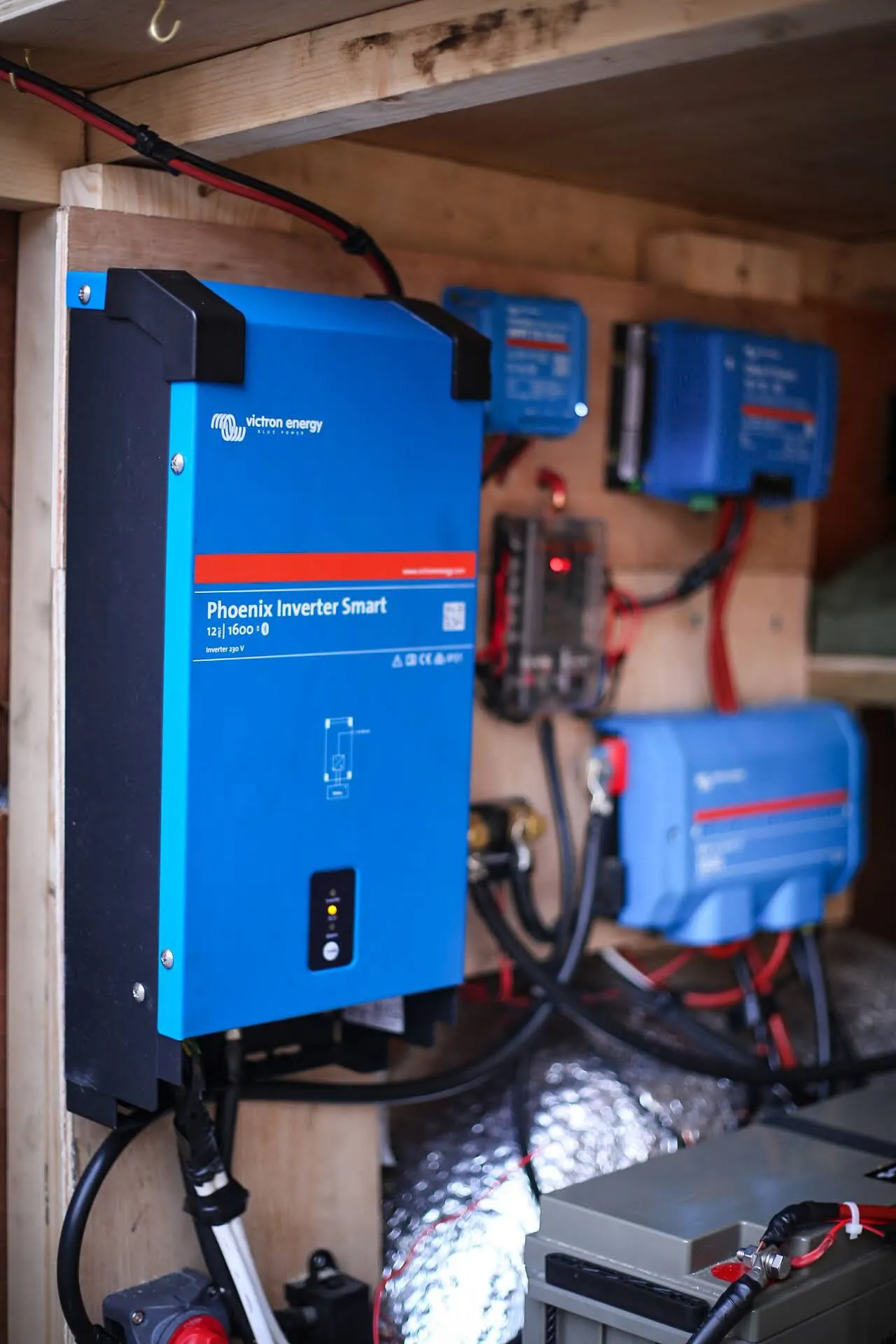
Full-time vanlifer and remote worker Lucinda Norris uses a 1500W inverter in her short-wheelbase Sprinter to power her 240V appliances, including a laptop, low-voltage hair dryer, and a small electric kettle. Her setup supports full-time remote work across Europe. After exceeding her original build budget, Lucinda chose her inverter to balance cost and function.
Smart Charging Systems
Smart charging systems provide multiple ways to keep batteries charged—whether the van is parked in shade, moving between destinations, or plugged into shore power. They ensure consistent power for essentials like refrigeration, heating, and remote work, especially during cloudy weather or high energy use.
The three most common components we found are:
- DC-DC chargers pull power from the vehicle's alternator while driving. These are critical for lithium battery banks, which require voltage regulation to avoid damage. Unlike older relay systems, DC-DC chargers deliver steady, safe charging, even on short drives.
- MPPT (Maximum Power Point Tracking) solar charge controllers are standard in quality builds. They adjust to changing sunlight conditions and extract the maximum possible energy from solar panels, outperforming cheaper PWM controllers.
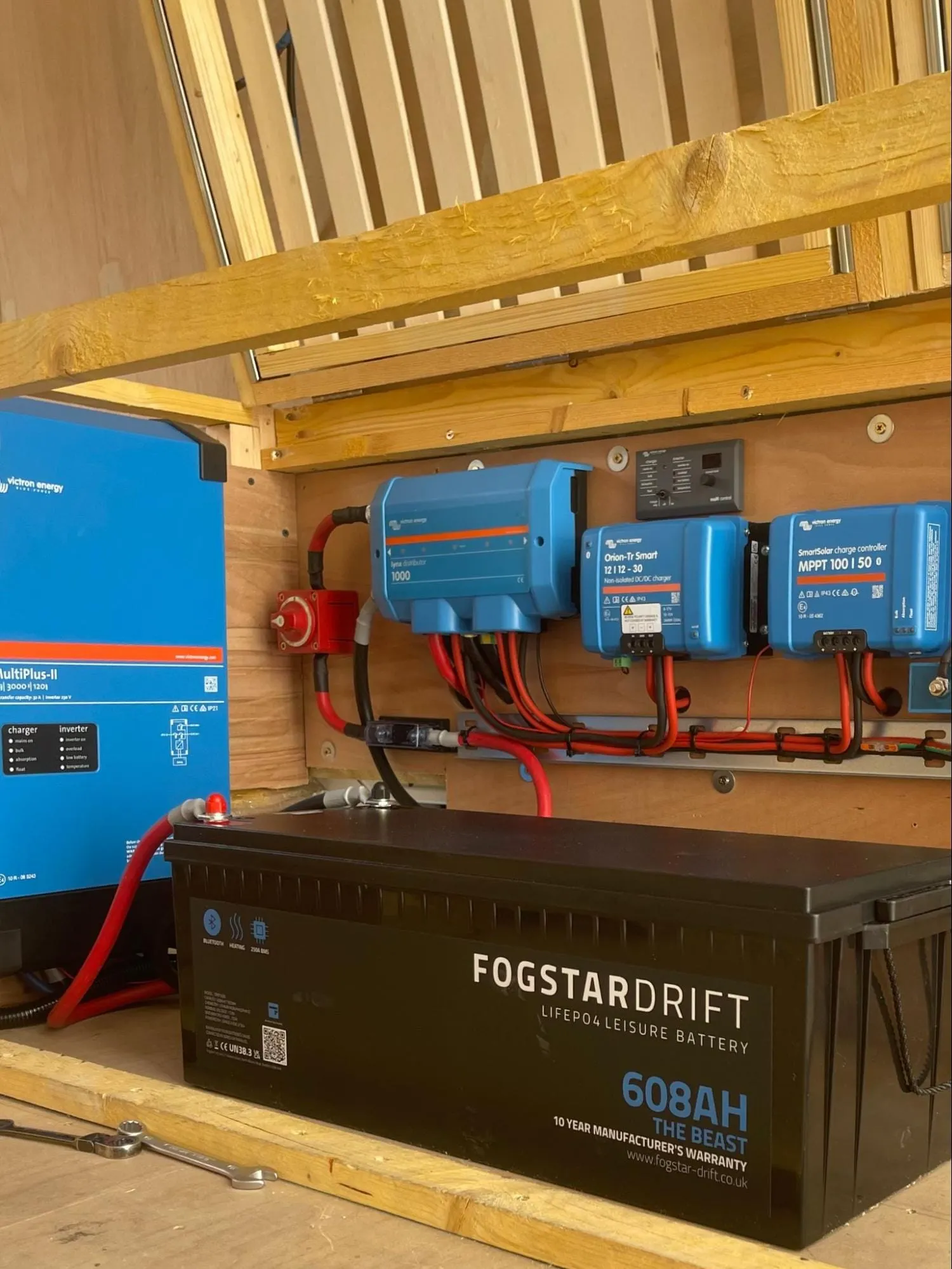
- Inverter/chargers, like the Victron MultiPlus, allow your van to charge its battery bank from a 230V or 120V shore power hookup (if reading from the US). At the same time, they act as inverters, converting 12V battery power into usable AC power for appliances. These all-in-one units simplify installation and provide seamless switching between shore power and battery use.
Many vanlifers combine both charging methods to create redundancy, to ensure they can recharge on driving days and continue topping up batteries from solar when parked.
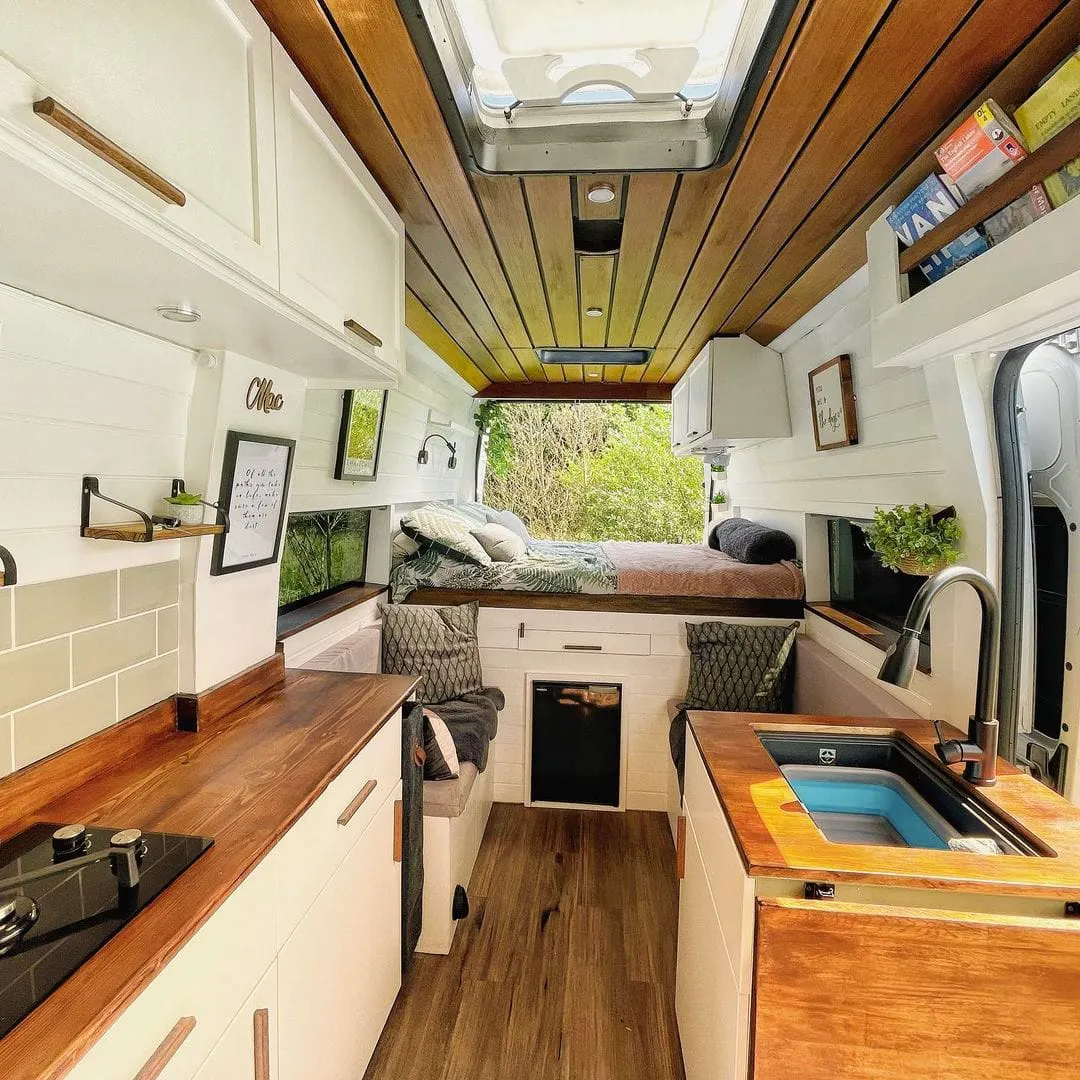
British vanlife couple Nige and Diane use alternator charging as a major part of their setup, combining it with solar to maintain a 460Ah lithium battery bank for full-time European travel in their converted Scottish ambulance.
Monitoring Tools
Battery monitors are essential for managing off-grid power by tracking real-time energy use. This monitoring helps vanlifers avoid over-discharging their batteries—a mistake that can shorten battery lifespan or leave users stranded without power.
Two brands dominate the space:
- Victron appears most often in mid-to-high-end builds. The SmartShunt and BMV-712 models connect via Bluetooth and display voltage, current, state of charge, historical usage, and even estimated run-time remaining.
- The Victron Cerbo GX goes further. It acts as a communication hub for the entire electrical system, integrating with inverters, solar charge controllers, and the SmartShunt to display all data on a central screen. It supports multiple battery banks, tank and temperature sensors, and sends alerts if battery levels drop too low or approach overload.
- Renogy offers integrated battery monitors typically found in DIY or budget setups. These provide basic stats like voltage and percentage, but often lack advanced data logging.
Accurate monitoring is critical for anyone staying off-grid for more than a day or two, especially with lithium batteries. Monitoring helps vanlifers manage loads, predict recharging needs, and detect system issues before they escalate.
Vanlife couple Maisie and Nikita rely on the Victron app and monitoring ecosystem: "We would definitely recommend the Victron monitoring system. It's very easy to use with the app. You can monitor everything." They describe it as an integrated solution where their Victron components work together seamlessly.
Wiring and Safety Components
Most vanlifers overlook electrical safety when budgeting, but every van conversion incorporates wires, fuses, and breakers. As professional skoolie builder Gabe puts it: "People think they can get away with $500... You might be able to—but your bus might catch fire."
Our research confirms that most builds consistently include fuse panels, cutoff switches, bus bars, and other components designed to protect the van and its occupants.
Fuse Panels and Circuit Protection
Properly sized fuse boxes and circuit breakers are standard in professionally built and higher-end DIY vans. Most systems also include master battery disconnect switches, allowing users to isolate the power system for maintenance or emergencies.
Main battery lines often include high-amperage fuses or resettable breakers—typically in the 200A–300A range—to prevent catastrophic shorts or overloads.
Bus Bars and Grounding
Larger battery systems require centralised wiring hubs. Bus bars connect multiple loads or battery units to a single point. One advanced Transit build listed a "250A bus bar" for managing power distribution.
Components like the Victron Lynx Distributor combine bus bars with built-in fusing in more sophisticated setups. One van with a high-capacity battery bank referenced a "Victron Lynx Distributor 1000A fused bus bar"—a clear sign of professional-level design focused on current handling and safety.
Wiring and 230V Protection
Quality wiring is a safety requirement—never cheap out on wiring, it's the quickest way to start a fire. Many high-quality builds use marine-grade or automotive-rated cables, often with resettable breakers or fused disconnects at inverters and chargers.
Shore power systems (used to plug the van into external mains electricity) should include safety features RCDs (Residual Current Devices) and MCBs (Miniature Circuit Breakers), or GFCIs (Ground Fault Circuit Interrupters) to prevent electric shocks. Vans must also use proper AC breakers to protect against overloads when running 230V or 120V appliances.
Frequently Mentioned Brands & Components
These are the most frequently used van electric brands and why vanlifers choose them.
Victron Energy
- Widely used in premium and full-time van builds in Europe, Australia/New Zealand, and North America.
- Excellent after-sales support and warranties.
- Offers a complete electrical ecosystem: inverters, MPPT solar controllers, DC-DC chargers, battery monitors, bus bars, and more.
- Victron designs complete systems to work together, reducing compatibility issues and simplifying system monitoring via Bluetooth.
- Victron gear is known for high reliability, smart features, and long-term support.
Renogy
- Common in budget DIY and mid-range builds, frequently used as complete kits.
- Popular components include solar panels, pure sine inverters (1000–2000W), DC-DC chargers, and AGM or lithium batteries.
Battle Born Batteries
- One of the most popular lithium battery brands for US van builds.
- Inconsistent performance and reliability.
"I went with Battle Born batteries because they're tried and true in the vanlife world. I wouldn't recommend Battle Born anymore just because of the issues we've had. I know a lot of people love them, but I've had a few fail. We ended up replacing them." Lance — Full-time US vanlifer.
Jackery
- Common in partial or budget builds where users avoid hardwired systems.
- Examples include the Jackery Explorer 1000, often paired with rooftop solar.
- Provide a plug-and-play power solution with limited capacity compared to built-in custom systems.
Full-time vanlifer and seasonal worker Siena has minimal electrical requirements (charging her phone and laptop) and gets by on a simple portable battery setup in her Ford Transit Connect.

"I have a deep cycle battery and Jackery which powers like my laptop and my phone and I'll charge that up when I'm driving. And that's enough for me for a week or two off-grid."
This portable setup works for charging phones, laptops, and other small devices, but it's not enough to run appliances like fridges or anything that draws power continuously. For that, you'll need a more permanent and robust electrical system.
How to Design an Electrical System to Meet Your Needs
After struggling through two van builds and spending far too long in "Vanlife YouTube University", we thought, "there has to be a better way to design a campervan electrical system." We couldn't find one, so we built it!
Our builder tool simplifies van electrics with a comprehensive component list (down to the nuts and bolts) of everything you'll need for your specific lifestyle—from weekend warrior to living for weeks off grid.
Start building today and join over 500 vanlifers living their best life with a custom campervan electrics system from Vunked.